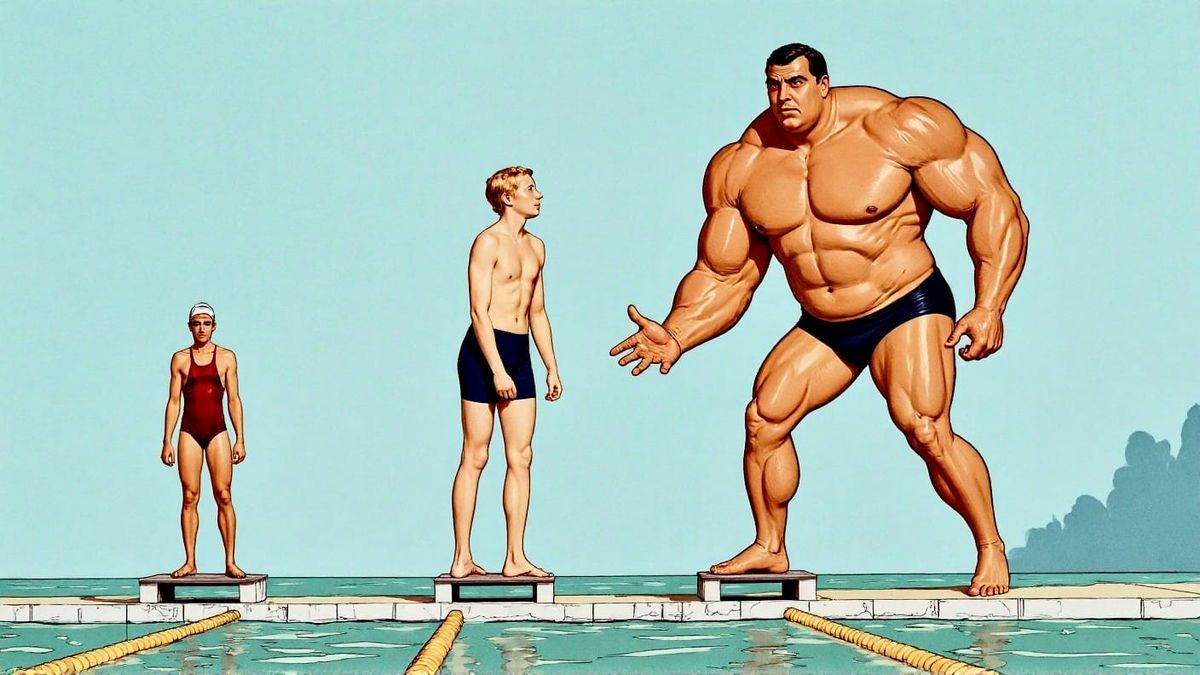
FORUM: Will This Season's Athlete Bloom Be The One That Lifts The Olympic Game To Next Level?
By aping the Olympic status quo that says no matter how wealthy we become, sports stars should not be paid, Kirsty Coventry has triggered a revolution, in which the real Athlete Voice could finally be heard through the truly independent collective that is essential to change

THEMA: Growing Pains & Gains Of The Olympic Child
Think of it this way: jellyfish bloom when a combination of ideal environmental conditions - warm water, abundant food, and favourable currents - align to trigger massive, rapid reproduction.
Its alignment season in the Olympic ocean right now, a bloom of Athlete Voice offering more hope of lifting the Games game to the next level than at any time since the amateur era came to an official end in the late 1980s but was never actually laid to rest. Time it was. Here's how:
Disband the IOC athletes commission. Thank the departing members, while explaining to them and the many others they were supposed to represent that there's a better way to a brighter day.
That's what a mature organisation with faith in its own code, and charter and wedded to integrity would do in response to the bloom of an Athlete Voice that wants Olympic bosses to listen to it through independent, collective representation in an adult conversation about revenue shares.
The child has grown up - works hard, and is no longer happy to be handed pocket money to make the multi-billion-dollar estate thrive without due reward. It remains to be seen if the child has grown up enough to realise that if it wants a professional pay day from the challenge that brings the biggest test of its sporting life into billions of households around the world once every four years, then it needs professional representation of the kind that Global Athlete and peer organisations do and can provide:



Athletes are the asset of the Olympic movement. Without them, and without the best of them, there is no business. No multi-billion dollar business, that is. No governance required, no lifestyles to offer, no $30 million of wages to pay out to 10 directors in one Olympic cycle.
A mature organisation with faith in its own code, and charter and wedded to integrity knows this of course.
The question for the IOC is clear: is it ready to grow up and make itself relevant to athletes in the second century of its existence?
It’s 2026. Elite athletes are professionals. They want Fair Pay for Fair Play. And now, as a result of Kirsty Coventry’s clear statement as IOC president that she does not believe in paying athletes, the world’s top Olympians have spoken back with one, powerful athlete voice to an organisation that has only ever listened to the voice of the hand-picked who are 'willing, able and on-message’ as part of an in-house team heeding the voice of leaders rather than conveying any message from athletes that the leadership does not want to hear.
That’s how it’s been. Time it wasn’t.
We've quoted and cited several voices that sum up the collective voice of Olympians in the thread of our coverage on this issue. Here are a few more. Retired Italian sprinter Filippo Magnini, in his criticism of the enhanced clown show recently, said the event was one “where the values of sports are trampled on for the sake of show", then added:
"But let us remember that athletes sacrifice their lives to pursue a dream, and once they retire, 90 percent do not have a future. Without athletes, you [governors] wouldn’t even be here.”
Australian Grant Hackett, 1500m and distance free great in the pool, described the thinking of swimming peer Coventry “backwards”, the swimmers' views backed by many from other sports, including Canadian gymnast Felix Dolci and British field athlete Greg Rutherford, who said of the IOC president's comments:“This won’t age well.”
Retired long-jumper Rutherford raised the stakes further when he added:
“... the quicker an athlete union can be formed, the better”.
He's detailed his own financial struggles in the sport in which he earned "a decent wage: when compared to many other Olympic sports, telling media that a lot of what he earned went straight back into further pursuit of excellence, not luxury lifestyle, with training, nutrition and competitions all part of costs in a life without access to the kind of earning power of, for example, a top tennis player:
 Craig Lord
Fellow track and field athlete, the now retired Olympic champion hurdler Sally Pearson, of Australia , noted in a social post:
“The Olympians, the athletes that are out there on the stage performing and competing for everyone’s entertainment don’t get paid. The volunteers and the Olympians don’t get paid at the biggest sporting event in the world. Can you imagine telling a rockstar ‘you’re going to go on a tour and perform in front of thousands of people but we’re not going to pay you’; do you reckon they would go?”
You certainly wouldn't want to tell the Eltons, Drakes and Jaggers of the world: “Well, they get beautiful venues. They get beautiful hotels. They get a beautiful experience. And all of that comes from the money that we raise [by talking to accountants, signing contracts with broadcasters, putting up the super-troupers and arranging the flowers... etc". [Original quote: “Well, they get beautiful venues. They get beautiful villages. They get a beautiful experience. And all of that comes from the money that we raise."].
That comment from Coventry was described by American Paralympic champion Hunter Woodhall as “embarrassing”.
American rapper Flava Flav agreed, and noted on social: “This is why I had to step up” ... as private sponsor to Olympic athletes, including the US women’s water polo team he backed in their campaign for Paris 2024.
The in-house precedent has already been set, of course: World Athletics became the first governing body to award athletes $50,000 in prize money for an Olympic gold medal.
World Athletics president Sebastian Coe, the 1980 and 1984 track Olympic champion who was among the first Olympians to be able to accept fees without being banished to a lifelong sin-bin back in his day at the dawn of the setting of the amateur era, paid a price when it came to an in-house vote for the IOC presidency: Coventry got the nod, which included a nod to the status quo of not paying athletes.
The IOC generated more than $7 billion (some suggestions of $12bn rely on counting some revenue twice and/or including revenue that belongs to others) in the Tokyo2020one to Paris 2024 cycle. Most of that, according to the IOC's own figures, is accounted for by global broadcast rights (a long-established flow of spice that is not guaranteed, of course, but does not get close to representing the hardest of hard sells, athletes and their entourages the very reason - they bring in a massive global audience, and do so in a way that, for the mist part, is thrilling and inspiring).
Almost three quarters of the revenue is said to be redistributed back into international sport. Precisely where and to whom all of that flow goes requires investigative inquiries. Meaning, it is not something stakeholders can check by going through the accounts of one organisation (nor many more).
Coventry's annual income is believed to be around $350,000 a year, so, $1.4m in each Olympic cycle, which makes her poorer that the top tier of directors in a top 10 paid more than $30m between them in the Tokyo-Paris cycle; and makes them and her much, much, wealthier and better paid, through sport, than almost every Olympian out there.
Coventry has, of course, already done very well given the kind of poverty that led to her believing that paying athletes is the wrong way forward. That quote, to New Zealand's Sport Nation, once more:
“I don’t believe in paying athletes. I come from a small country, I came from a sport that doesn’t necessarily pay athletes very well and I still don’t think we should be paying athletes at the Olympic Games.”
Then US-based Coventry retained the Olympic 200m backstroke title for Zimbabwe in 2008. She then accepted a cash prize of $100,000 from her country's then leader Robert Mugabe on live television. At the time, many Zimbabweans were struggling to feed themselves, hyperinflation on the march. Here's what the man who handed the swimmer $100,000 was presiding over and directing at the time, from the UNHCR:
"The Zimbabwean leadership engaged in a renewed violent crackdown on the political opposition in 2007, including hundreds of arrests and scores of beatings by security forces and pro-government gangs. A series of bans on political gatherings and ad hoc curfews further restricted political and civil liberties during the year, and the authorities continued to repress independent media. Nevertheless, negotiations between the government and the opposition Movement for Democratic Change (MDC) led to an apparent consensus on political reforms and plans for presidential and parliamentary elections in 2008, although there was scant evidence that the polls would be either free or fair. Meanwhile, Zimbabwe's economic crisis worsened, with inflation reaching almost 8,000 percent by November. Public health and development was threatened further by a breakdown in basic services."
... "The collapse of Zimbabwe's economy has resulted in large-scale food shortages. In August 2006, the World Food Programme estimated that 3.3 million Zimbabweans would require additional food aid in 2007. Food, humanitarian, and educational aid are often distributed or withheld to serve political ends. Basic utilities such as electricity and water are deteriorating, threatening health as well as economic activity. Health services are also strained by a high HIV prevalence rate; about 20 percent of Zimbabweans are infected with the virus. The continuing political and social crisis in Zimbabwe has highlighted the unwillingness of the African Union and the African Commission on Human and Peoples' Rights to act against even its most abusive members."
Of course, none of that is the fault of sportspeople pursuing their sporting goals far from the reach of such harm.
However, if there is to be no politics in sport, there must be no sport that shakes hands with politics, be that Mugabe, Putin or any other despot, dictator to one side, or the kind of admired leader who is careful to celebrate sport in appropriate ways but stand well clear of interference and glaringly obvious influence grabs and propaganda opportunities.
Coventry's history is important to the story, and I write that in the context of journalistic work of any kind in any realm in the much more serious points on situations far more critical that the worth of athletes to a multi-billion-dollar business that needs to catch up. Here's a sense of what I mean expressed very well by Slovakian journalist Beata Balogová, a member of the board of the European Press Prize, who writes this in a Guardian editorial today:
"The journalism that will endure, by contrast, is often not about politics or ideology. It is about people uprooted and cast into uncertainty by upheaval and social turbulence, forced to piece together some kind of life. It is about people whose identities were worn down by history like stones in a river. It is about people whom politicians regarded merely as extras in the grand scenes of their own glory, yet who learned through their suffering something that may one day help the rest of us endure our greatest losses."
 Beata Balogová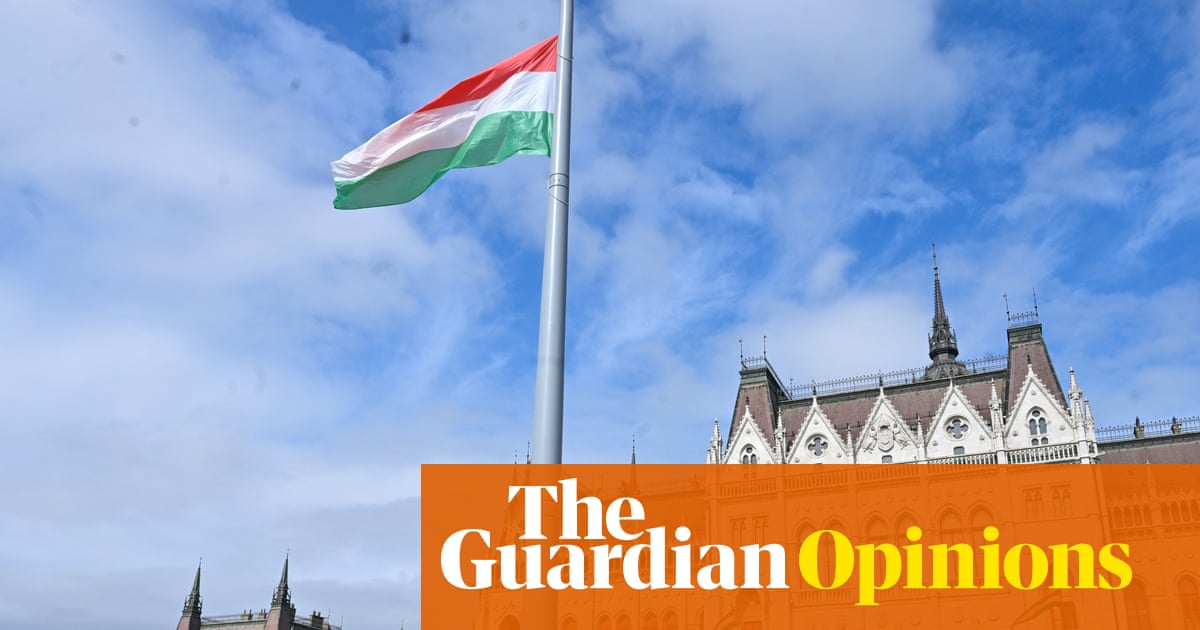
That's geo-politics. Apply it to sport and this is what happens:
 Craig Lord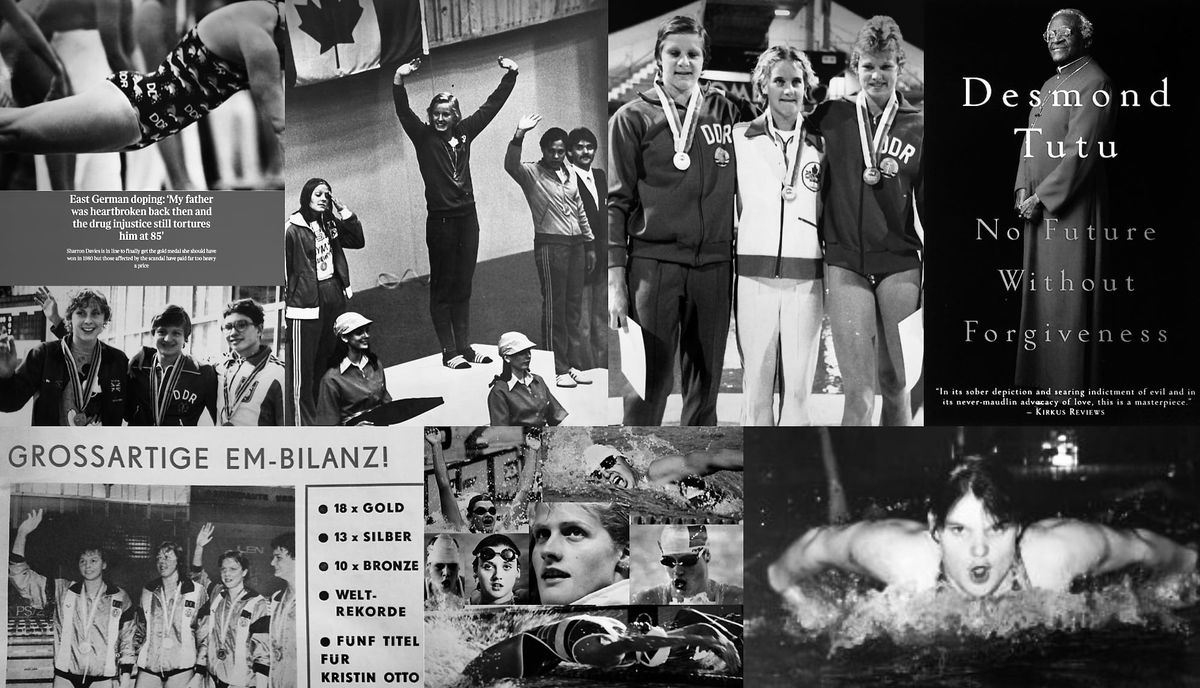
Swimming was all of that (and for those involved remains so) but is not that cliff-edge of geo-politics, of course, but some of the same poor human behaviour, attempts to close down scrutiny and debate, has shadowed my experience of sport for decades, and many of my colleagues have felt the same shadow at times when they have tried - and even succeeded - to shine light in dark corners. Some of that work is to be found at the interface of politics and sport where sports leaders invite danger and potential harm to those working in and on sport. That should never be.
If we look back at the Sochi 2014 source of the reason why Russia was thrown in the sin bin by most sports (tragically not swimming) and banished from the Olympic arena as a nation, we find FINA's leader at the time, a man backed by all the leading swim nation representatives of federations in the world - either actively or through silence - hand-in- glove with Putin and paying an agency in the UK $150,000 for four months of work aimed at 'discrediting' its critics. That represents catastrophic governance, and some of those responsible remain in positions of authority, while national federations remain silent yet.
Ultimately, and in various ways, the price is paid by athletes, and many of them are either oblivious or find it easier to go along to get along, in a situation often seen as win-win, but actually adding up to lose-lose when it comes to any hope of their sport growing beyond its amateur ties, which today come with massive budgets the athletes see very little of in terms of a decent return for their professional work.
These past few paragraphs are not here because many athletes know about them or even care. They are here because they matter in ways those same people do not always appreciate. It is why I've turned my gaze away from simply relating the efforts and times of swimmers in qualification season. Nothing could be more important for elite athletes that the debate Coventry has sparked.
When the tide turns, a chance for real change rises up the aerial, athletes would be wise to see the moment as the gun going off on the biggest of race days. Be ready - and then do the very best you've prepared to do. It's as simple as that.
The reason Coventry and Co now face a backlash is much more simple: Fair Pay for Fair Play - no excuses. The idea that a 'non-profit' organisation with a cyclical surplus of over a billion doesn't believe in paying the folk who provide the fuel that drives the engine is absurd.
Consider this lot, the stats rough averages collated from various sources:
- 30% - 50% of elite athletes struggle significantly after retirement (that includes many who made the medals and a lot more still just beyond - seriously world-class)
- 10% - 20% experience anxiety or depression
- In one sense or another more than half of all Olympians receive no financial compensation for making it to the Games
- Of that $7bn plus cyclical revenue, the surplus is over $1bn
So, the logjam is not economic, not a funding issue. It's a cultural issue related to the way the Olympic Movement has evolved. Why has the matter not been dealt with long ago?
- Athletes do not have a unified collective voice
- Athletes have allowed a commission of athletes untrained for professional representation to represent them - often without any direct permission ever having been given
- Former athletes morph into the people that governed them once they start to govern others
That's also absurd. Only those wedded to the status quo model and structure of Olympic House, erected for a different time and other world, could possibly think otherwise. Changes that tinker round the edges of amateurism and never get to the moment where the apron string, the tie that binds, the master and servant, emperor and gladiator, grace and favour relationship, are cut away. It's a relationship that's long past sell-by date.
Athletes have their job to do, former athletes have a life to build and many find it a mission impossible to hold true to the values they had as an athlete when invited out of relative poverty and into the house of governance, the 5-star hotels, the endless business-class trips, travel and health insurance packages and many other perks that come with a rifle that ought to help bring about the changes athletes and other stakeholders want. But they often don't, because the kind of athlete who is no longer an athlete but part of the status quo they joined, has now morphed into the kind of blazer the athlete can do without: many words and pledges on 'athletes first', but reach for a magnifying glass and you'll still struggle to spot any action.
And when a national federation says 'we don't want that ... we want to say who represents us', the international federation kicks back with threats of whole-nation ban unless their pick gets to be vice-president. Recognise that swimmers and coaches? It is of your sport.
Lewis Carroll's 1871 novel Through the Looking-Glass holds many a lesson for Olympic sport and its stakeholders.
For those last reasons and all the above, it is now essential for athletes who know they have a different job to do, know they only have so much energy to give to campaigning, to understand that while their Voice is strong and critical, no wave of quotes from thousands of athletes is nearly as powerful as all of that sound carried collectively by independent, professional athlete representatives to the negotiating table to sue for peace, harmony, a stake shared, a true belonging felt and meant, an expansive future for the Olympic Movement solidly in place.
Call it a union, call it a collective, call it by another name, but the purpose is clear.
The settlement must accept that Fair Pay for Fair Play is the only way forward if the Games and all its international and national stakeholders are to avoid having their stars turn to alternative events and competitions - the palatable alongside the unpalatable - for their money, their profiles, their futures. If they do that, in time, the Olympic coin will drop in value, the tide will not be nearly as easy to stem the tide, let alone turn it back.
The Olympics would become a husk of its former self, a showcase used in the way multi-millionaire tennis players do: a nice and quaint thing to be a part of, but not essential and 'really not part of my professional job'.
So, time to build that independent global athletes’ organisation and make your voice as professional as your approach to the pursuit of excellence in whatever sport you excel at. Appoint a body that is completely outside the control of regulators and governors, and even beyond the influence of anyone doing the bidding of such authorities.
That would be the start of athlete maturity and unlock a great many other benefits that might (I believe would) ripple out far and wide in sport and even the world at large.
The IOC can choose to join this transformation and play a leading role, or it can be washed on to the rocks of its own mistakes and refusal to swim with the tide.
This and a few more of this FORUM series have been offered free to view alongside a couple of related editorials. You'll find them below. We can offer them at all because of the contributions of subscribers who make it possible to stay in this space. A heartfelt thanks to all of you. Digital development and the apparent torture that advertisers go through when told they will lose their deals if they support independent journalism (aka 'critics', the short word for 'anyone who doesn't agree with us or points out where we've taken a wrong turn') mean that models like ours, with no commercial input at all and relying on direct support from you, the reader, is our answer. Like athletes, it's always better if your work is paid for by those who are willing and able. That the IOC is able to pay you, the athlete, is in no doubt, whether it is willing remains to be seen.
Our Latest FORUM mini-series
Part 1
 Craig Lord
Part 2
 Craig Lord
Part 3
Craig Lord
Part 4
Craig Lord
Part 5
 Craig Lord
Editorials
 Craig Lord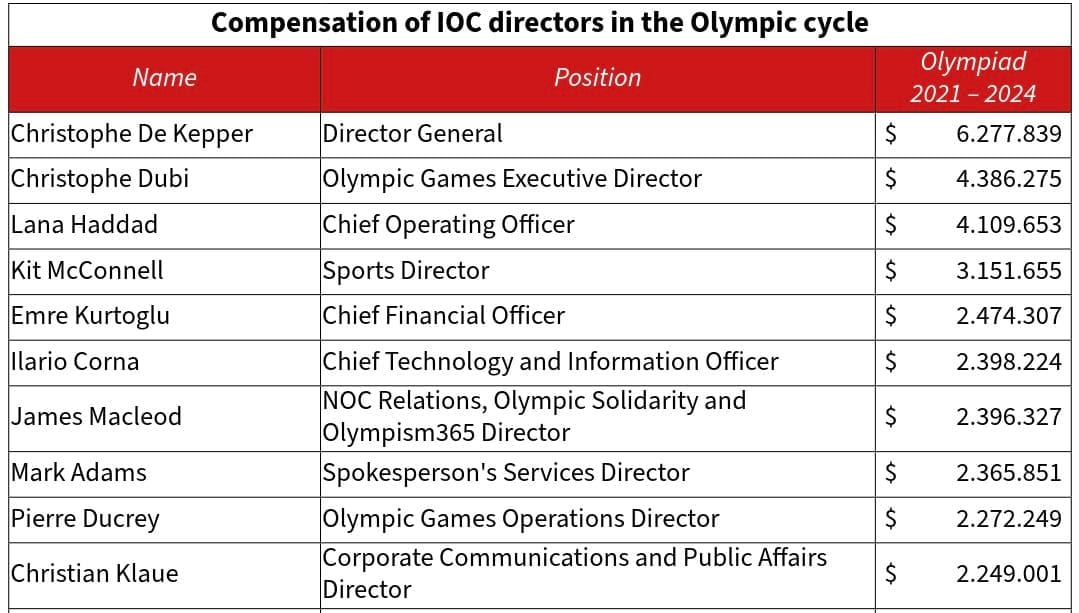
 Craig Lord
 Craig Lord