Olympic Boss Of A Business Slipping Directors $55m A Cycle Tells Athletes 'No Pay Day For You!'
Analysis: Kirsty Coventry says she doesn't believe athletes should be paid for their work. Then again, she presides over a business that pays directors more in an Olympic cycle than any single international federation gets as a share of Olympic revenues for its entire sport

Kirsty Coventry, the president of the IOC, has opened a can of worms at a tipping point in Olympic evolution, athletes sick and tired of being the unpaid professionals who bring in the money like moths to the flame of a multi-billion-dollar business paying directors $55 million a cycle, the top 10 accounting for more than $30m of that.
Here's what the 2004-2008 Olympic backstroke champion for Zimbabwe told media this week as the prize pot at a damp-squib of an Enhanced Games placed the relative poverty of Olympic athletes back in the headlines around the world:
“I don’t believe in paying athletes. I come from a small country, I came from a sport that doesn’t necessarily pay athletes very well, and I still don’t think we should be paying athletes at the Olympic Games. Now I do think we should find more ways to directly impact athletes ... to find ways to directly help them on their journey to becoming Olympians, while they are Olympians, and as they are finding ways into their new career transition.”
Before we get to the Olympic economy and where the money goes and who has the power to decide what happens to it, worth asking some relevant questions:
- who paid the bill for Kirsty Coventry, of Zimbabwe, to be based long years in the United States, at college and after college as a 'professional' athlete?
- which single financial resource rewarded Kirsty for her excellence in sport?
- what models does Kirsty advocate for Olympic athletes and their families, given that the vats majority of athletes getting anywhere close to Olympic selection in nations where that requires world-class performance may spend 10 years of their youth and then 10 or more years as an adult working unpaid and largely relying on the bank of mum and dad, without ever seeing a direct reward for their contribution to the multi-billion-dollar business Kirsty presides over?
- what is Kirsty's objection to the model launched by World Athletics ahead of Paris 2024, a model supported by athletes and rather more part to keep the Enhanced wolf from the door than saying 'I don't believe in paying athletes':

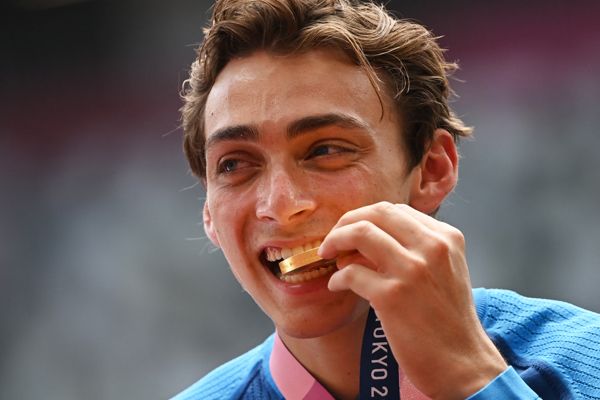
When sharing details of the decision, World Athletics President Seb Coe - Olympic 800m and 1500m track champion for Great Britain in 1980 and 1984 - among those who lost to Coventry in the in-house vote for the IOC presidency that athletes have no say in, said:
"While it is impossible to put a marketable value on winning an Olympic medal, or on the commitment and focus it takes to even represent your country at an Olympic Games, I think it is important we start somewhere and make sure some of the revenues generated by our athletes at the Olympic Games are directly returned to those who make the Games the global spectacle that it is."
Coe's stance had and has very wide support among athletes.
Meanwhile, when Coventry was invited to list some off the 'benefits' athletes do get, she said:
"Well, they get beautiful venues. They get beautiful villages. They get a beautiful experience. And all of that comes from the money that we raise."
Well, they don't actually get those 'beautiful' things anymore than a holiday maker gets the villa they stay in on a two-week holiday; and the 'we' raise begs the question 'what is the we'?
Such views are canon fodder for the likes of the Enhanced Games, of course, even though, there are many reasons why the pumped-up bonfire of vanities show is one most athletes would not support in any way if they had moire financial security to lean on - see links to out SOS Forum series below - and this:
Craig Lord
Meanwhile, our main image gives us a glimpse of one of the most obvious fault lines in Kirsty Coventry's standpoint at a time of tectonic shift in athlete attitudes and alternatives to the Olympic model.
Thanks to the investigative passion of Jens Weinreich, our sleuth partner over at The Inquisitor, we know the above - and this is how and where and why he told us all about it:
 Jens Weinreich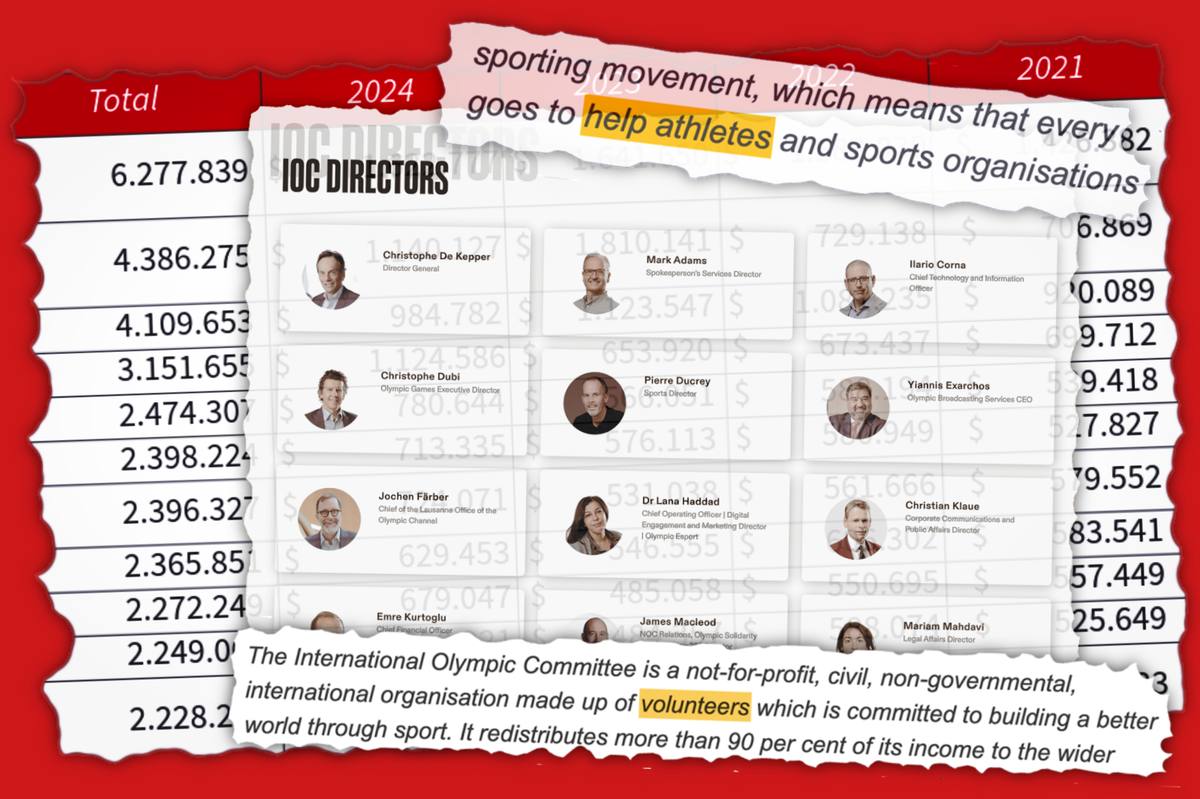
More on the staggering sums in that Olympic business athletes generate but have almost no direct access to:
 Darren Coughlan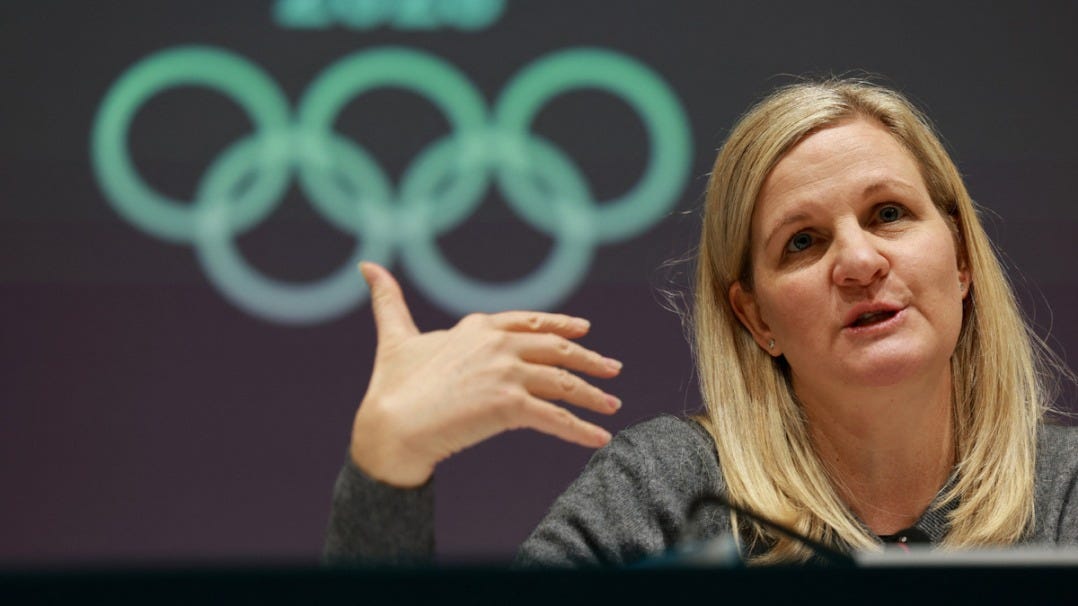
There's no point in writing out what's been written before, but here's some of the many words we've published at SOS, on the back of much more at SwimVortex before it - and much of it has not only fallen on deaf ears of swimming governors but resulted in attempts to 'discredit' our work and that of others by blazers who see discussion about integrity, models of running the show that place the athlete front and centre of all and any priorities vs models that place politics and blazers front and centre, conflicts of interest, inappropriate relationships, top awards for Putin and other folk who ought to be kept well at bay if the Olympic Charter is to be honoured, and much else in a toxic mix:
Our take on Jens' fine work:
Craig Lord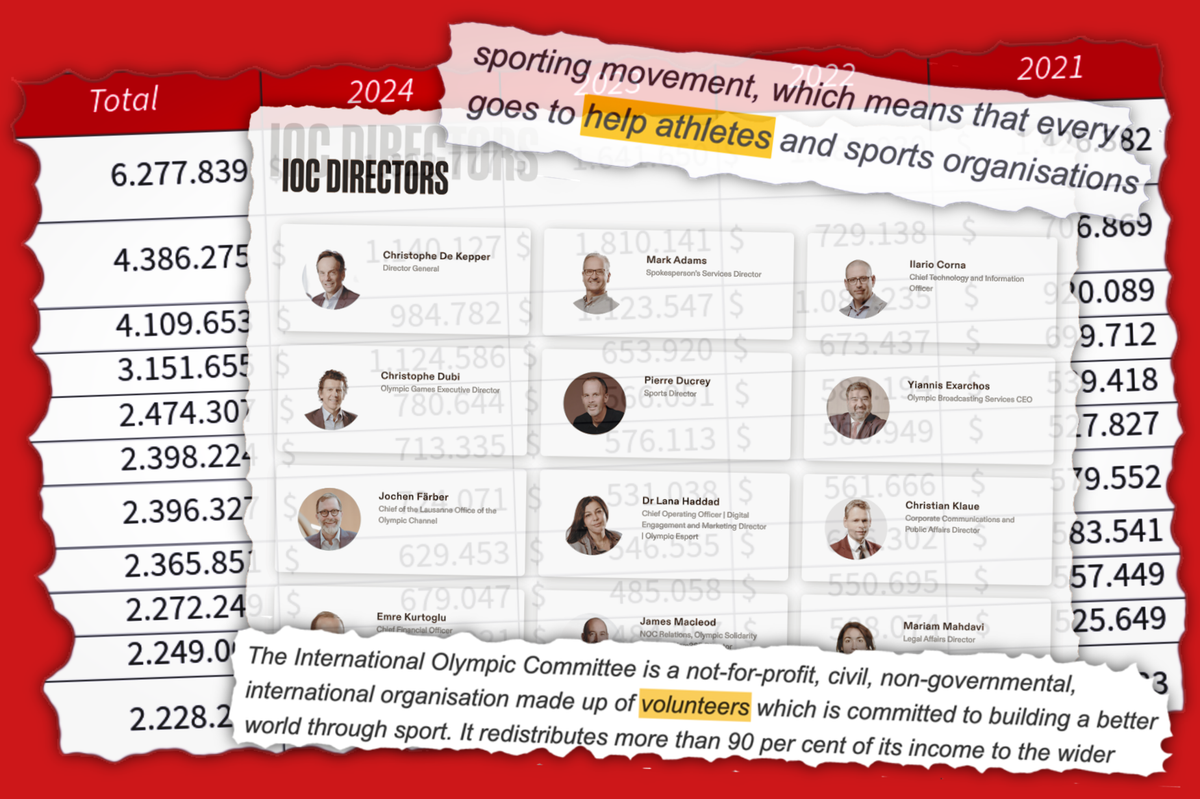
Our take on the biggest governance blind eye in Olympic history:
Craig Lord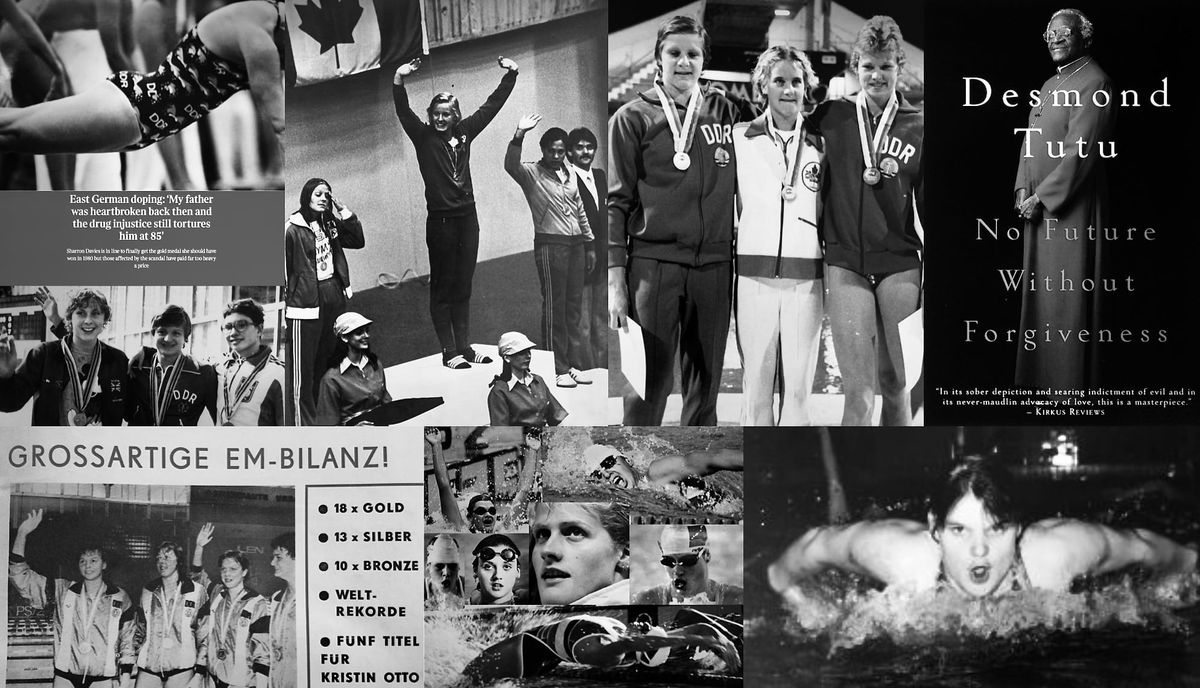
Our latest series:
SOS FORUM - How Can Swimming Build Real Growth & A 'Wage' Economy/ Pro Rewards For Pro Athletes?
Part 1
Craig Lord
Part 2
Craig Lord
Part 3
Craig Lord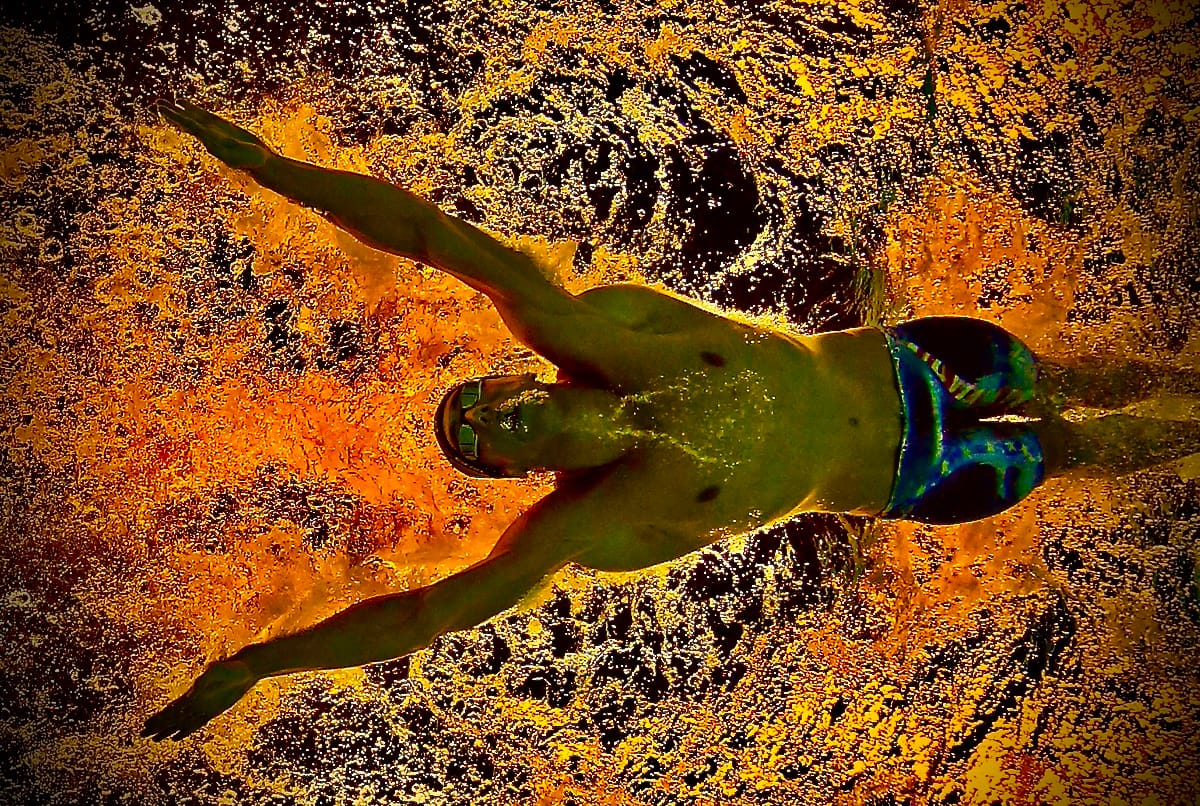
Part 4
Craig Lord
What Are Athletes Saying About Coventry's 'No Pay Day'?
Australian Sally Pearson, a legacy advocate, athlete mentor, and high-profile ambassador for Brisbane 2032, had this to say to Coventry:
“You could have just crushed a few dreams there, for the Olympics…
"...Imagine telling a rock star, you’re going on tour in front of thousands of people, but we’re not going to pay you."
Vladyslav Heraskevych, the Ukrainian skeleton athlete banned from the Winter Olympics for refusing to remove a helmet displaying the images of sportspeople from his country slaughtered by Russian military strikes ordered by former Olympic Order recipient Putin, raised this issue:
"It’s easy to talk about not needing to pay athletes when you are the “Golden Girl” of the bloody dictator Mugabe.
"I would like to remind that after retiring from swimming, Coventry entered politics in 2018 when she was appointed Minister of Youth, Sport, Arts and Recreation by Mugabe’s successor, President Emmerson Mnangagwa.
More on that and other entries in the history of challenging links in the Olympic Movement:
Jens Weinreich
It’s easy to talk about not needing to pay athletes when you are the “Golden Girl” of the bloody dictator Mugabe.
— Vladyslav Heraskevych OLY (@heraskevych) May 27, 2026
I would like to remind that after retiring from swimming, Coventry entered politics in 2018 when she was appointed Minister of Youth, Sport, Arts and Recreation by… https://t.co/hpGLdlh65Y pic.twitter.com/jRskiVFGkE
What Coventry bases her stance on:
Arguments against paying Olympic athletes stem primarily from the Games' founding amateur ethos, economic concerns over competitive inequality, and the preservation of national pride. While professionalisation has crept in, these core philosophies continue to shape the debate.
1. Preservation of the "Amateur" Spirit
- The Olympism Philosophy: The International Olympic Committee (IOC) was founded on the concept of amateurism - competing for honour, glory, and the love of the sport not financial gain. Counter argument: Olympic athletes have costs, and many could not continue to compete without the luck of having supporting parents able to foot the bill, Coventry among examples of a model that works for this lucky enough to have access to it, not for a great many others. 'Honour and glory' don't pay the bills; and in 2026, athletes have alternatives to Olympic sport, and that can be an erosive force.
- Core Values Over Commercialization: Traditionalists argue that injecting direct salaries or prize money into the Games turns a symbol of global unity into a commercial league. Counter argument: there is a very serious risk that the Olympic Games, blinded by the vastness of their empire and the strength of the movement's magnet in the way that the leaders of East Germany didn't believe their Wall would fall practically until the day it did, will flounder because athletes will vote with their feet and embrace alternative ways of earning a living that are truly anathema to clean sport. Here's a prime example of that risk:
Hunter And The Hunted
World Aquatics has not yet explained what it will do in the case of Hunter Armstrong, the American backstroke swimmer who raced un-doped and tested at the Enhanced Games event last weekend. He won the 50 back and a $250,000 prize etc... his key role was not the quality of his performance nor the lack of surprise that he won up against opposition he is simpler much better than, shiny suit or no shiny suit. His key role, whether he thinks off it that way or not, was to promote the Doping Games concept.
So, here's the risk: while all the others who signed up for more than a shiny suit and took PEDs and embraced the use of PEDs in whatever role they serve in, including coaching, cannot return to the world of tested World Aquatics/ Olympics/WADA Code sport, under bylaw 10 of the international swimming regulator, there may not only be no impediment to Armstrong doing so, even though he competed at an event where several World Aquatics rules were not complied with. Two points:
- the row and legal dispute with the International Swimming League instructed World Aquatics that it cannot prevent athletes from making professional work/ earning choices outside of WA-controlled competition by threatening them (or their federations) with penalties and/or expulsion
- A shift of World Aquatics headquarters to Budapest reinforces the above: WA is now in direct European Union jurisdiction - and here's why that a touch more significant than it was when WA HQ was in Lausanne, Switzerland... from a previous SOS feature:
In key ways, the ISL Vs FINA dispute, which has cost both parties many millions of dollars, was the wrong fight at the wrong time.
The principal anti-trust argument had already been won in Europe, where EU competition authorities had ruled in favour of ice speed skaters in a dispute with their regulator’s attempts to control which events they could compete at – and therefore control how athletes eared their living. The EU ruling instructed the skating federation to change precisely the kind of rules at the heart of the swimming case in the U.S.. Further, the EU judgment came with a warning to all other international sports federations that should similar complaints be filed against them, the same judgement and order to rewrite the rules restricting trade would be rolled out to the sport in question.
Those issues raise two obvious points of caution from different angles:
- Just as Coventry needs to be aware of that her stance is unsustainable without doing long-term, harm to the Olympics and many of its best principles, so too, do athletes need to be careful what they wish for, regardless of the $ signs: those apparently watching Hunter's case with interest and hoping to follow him as a promoter of what could and would, in my opinion, harm the Olympic movement, would be nothing without their clean-sport home and reputation.
2. Widening the Competitive Gap
- Dominance of Wealthier Nations: Sports funding varies hugely around the world. Wealthy or well-sponsored National Olympic Committees could pay their athletes handsomely, while athletes from smaller or developing nations might receive nothing. The counter argument: while Olympic finalists get no direct financial reward from the Olympic business for their efforts, vast sums of money flow to 'development' programs in poorer nations, subsidisation sometimes stretching to athletes ranked well outside the elite world-class enjoying training and living conditions that far out-class what is available to athletes ranked in the best 20 in the world. Kirsty Coventry's own nation and those of many others high up in the Olympic movement are beneficiaries of "Olympic Solidarity" and have reason, you might say 'vested interest', in seeing the current model alive and flowing.
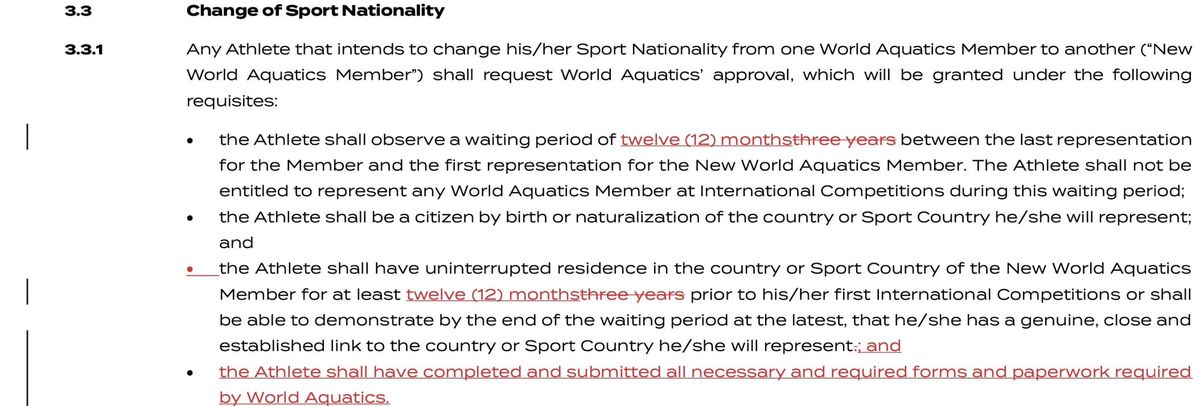
NB: The IOC has a programme called Olympic Solidarity, which helps to fund, for example, scholarships and training courses for athletes worldwide. The accuracy and effectiveness of OS have never been independently verified. Furthermore, the IOC claims that 90 per cent of its revenue goes towards sport and the support of athletes. The latter has been described as 'unsubstantiated propaganda.’ - Competitive Imbalance: Paying athletes directly could create a "pay-to-win" dynamic, where the wealthiest nations naturally hoard the best talent and resources, ruining the underdog and amateur stories the Games celebrate. Counter argument: this is already happening, as swimming's shift in nationality rules showed us recently:
Craig Lord