
The Arrival Fallacy ... in Swimming & Life - How To Dodge The Danger
'The Illusion of Finding Happiness Through Achievement and Learning to Enjoy the Journey'. The final part in a three-part guidance special from Dr. Bruce Lawrie for SOS

My two previous articles in this mini-series explored the importance of developing individual wellbeing, building a strong personal identity and recognising that self-worth should never be defined by sporting performance:
Managing Stress, Regulating Thoughts, Reaching Your Potential
 SOS Guest
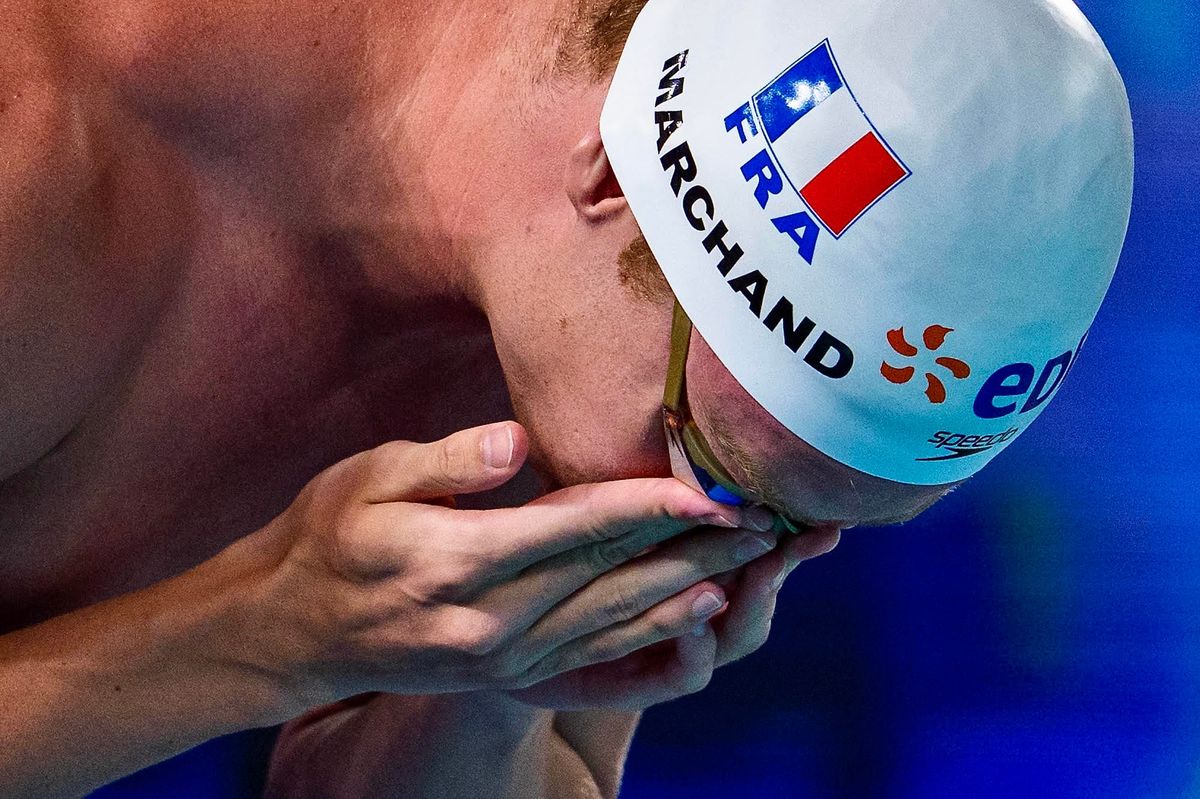
More Than a Swimmer – The Benefits of Looking Beyond Performance
 SOS Guest

Building on these themes, this article examines another common but fundamentally flawed belief: that happiness, satisfaction and fulfilment lie somewhere in the future, waiting to be found through our next achievement.
- A Paper By Dr. Bruce Lawrie
It explores how swimmers can become trapped in the relentless pursuit of future success, convincing themselves that their next personal best, medal, qualifying time or championship achievement will finally bring the happiness and fulfilment they seek.
This belief reflects a psychological phenomenon known as the Arrival Fallacy, a term popularised by positive psychology expert Dr Tal Ben-Shahar in his book Happier: Learn the Secrets to Daily Joy and Lasting Fulfilment. It describes the mistaken assumption that reaching a particular goal or desired destination will finally deliver lasting happiness and fulfilment.
However, once we achieve what we have been striving for, the anticipated satisfaction is often short-lived, and our attention quickly shifts towards the next goal. As a result, we can become caught in a continuous cycle of striving for more, always believing that the next achievement will finally provide the happiness and fulfilment that previous achievements have failed to deliver.
In other news:
- Coaches Titley, Pearson, Meloni & Gabrilo To Lead Europe Into ISL Comeback All-Star Battle
- Johnson Keeps The Gold Rush Going With World Cup Double Season-Starter
- Wellbrock Back To Winning Ways After October 1 Return To Fray
The Arrival Fallacy and Its Impact on Swimmers
This way of thinking is particularly relevant to swimming, where athletes are continually encouraged to set targets, strive for improvement and pursue higher levels of performance. While ambition and goal-setting are important aspects of sporting development, problems arise when swimmers begin to believe that achieving their next milestone is what will finally make them happy, successful and fulfilled.
Read on for deeper insight into the impact of Arrival Fallacy far beyond the swimmer:
The Arrival Fallacy is not simply an issue for swimmers themselves. Its implications extend to everyone involved in their development, including coaches, parents, teachers, clubs and sporting organisations. Indeed, it is a message that applies equally to all of us, regardless of whether we are involved in competitive sport.
Related:
 Craig Lord
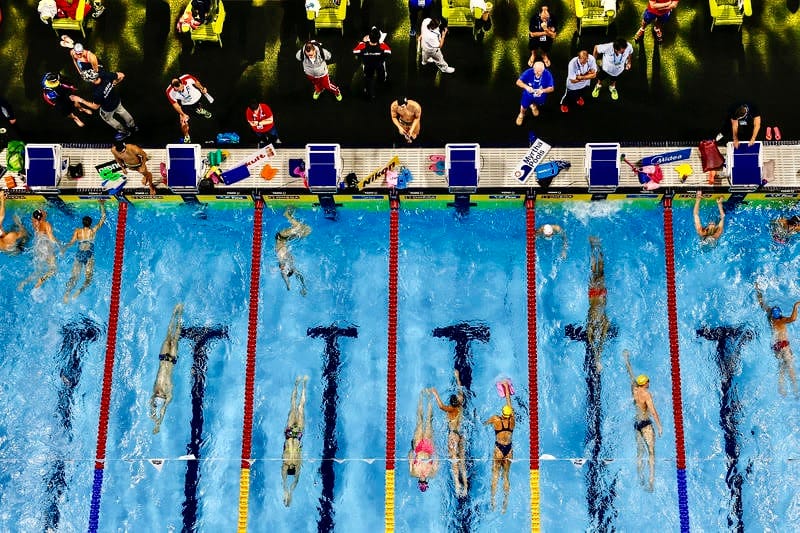
The working environment:
 Craig Lord
One psychological process that helps explain this is known as hedonic adaptation, whereby we gradually become accustomed to our achievements and the happiness they initially generate begins to fade. In swimming, a personal best or championship success that once brought enormous excitement and satisfaction can soon become something we simply expect of ourselves. Rather than appreciating how far we have progressed, we begin focusing on the next goal and what we have yet to achieve.
The danger is that swimmers can become trapped in an endless cycle of striving for more, continually moving the goalposts and believing that the next achievement will finally deliver the lasting happiness and fulfilment they desire. In doing so, they risk overlooking the satisfaction of what they have already accomplished and, more importantly, missing out on the enjoyment of the journey itself.
When Achieving Your Ultimate Goal Doesn't Bring the Happiness You Expected
"I felt lost. I'd had this one goal from the outset to win the Olympics."
The experiences of some of the world's most successful swimmers demonstrate that achieving the highest levels of sporting success does not necessarily bring the lasting happiness and fulfilment many athletes anticipate.
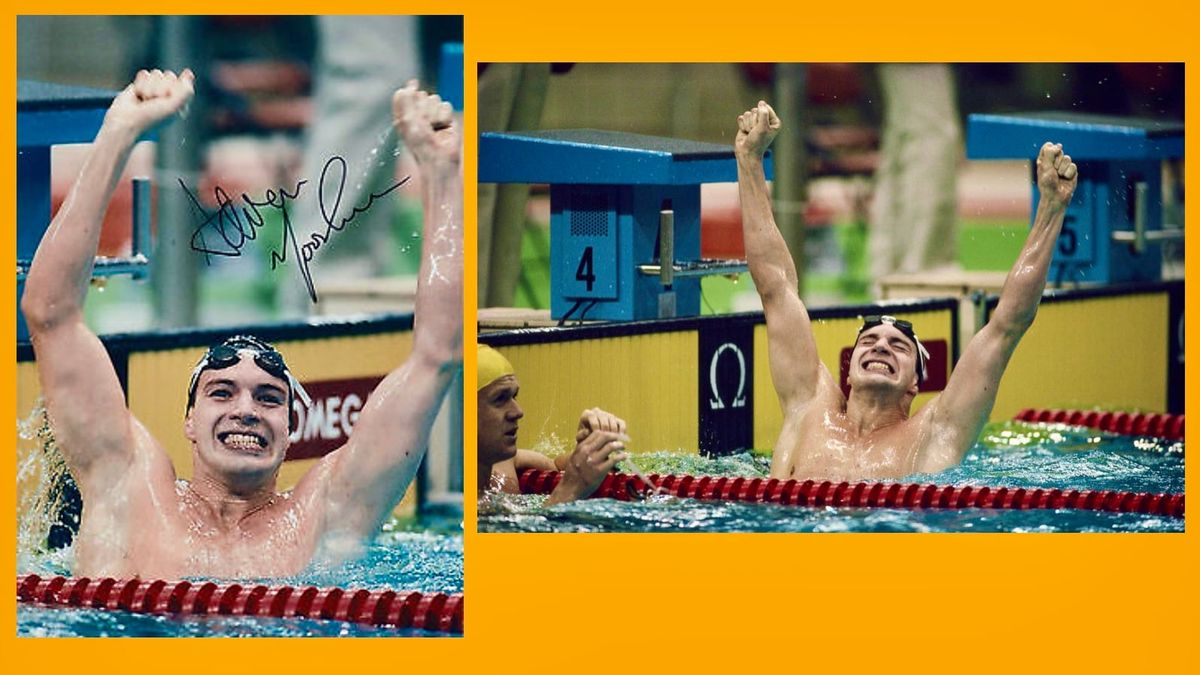
Former Olympic champion Adrian Moorhouse, reflecting on winning the 100m breaststroke at the 1988 Seoul Olympics, spoke openly about the unexpected emptiness that followed achieving his lifelong ambition. Despite reaching the pinnacle of his sport, he admitted: "I felt lost. I'd had this one goal from the outset to win the Olympics."
 Craig Lord
 Nick Friend

Similarly, Australian Olympic champion Bronte Campbell reflected on the expectation that winning an Olympic gold medal would somehow fulfil all her dreams. However, she recognised that although it fulfilled her swimming ambitions, it did not fundamentally change how she felt as a person or resolve the unhappiness she may already have been experiencing.
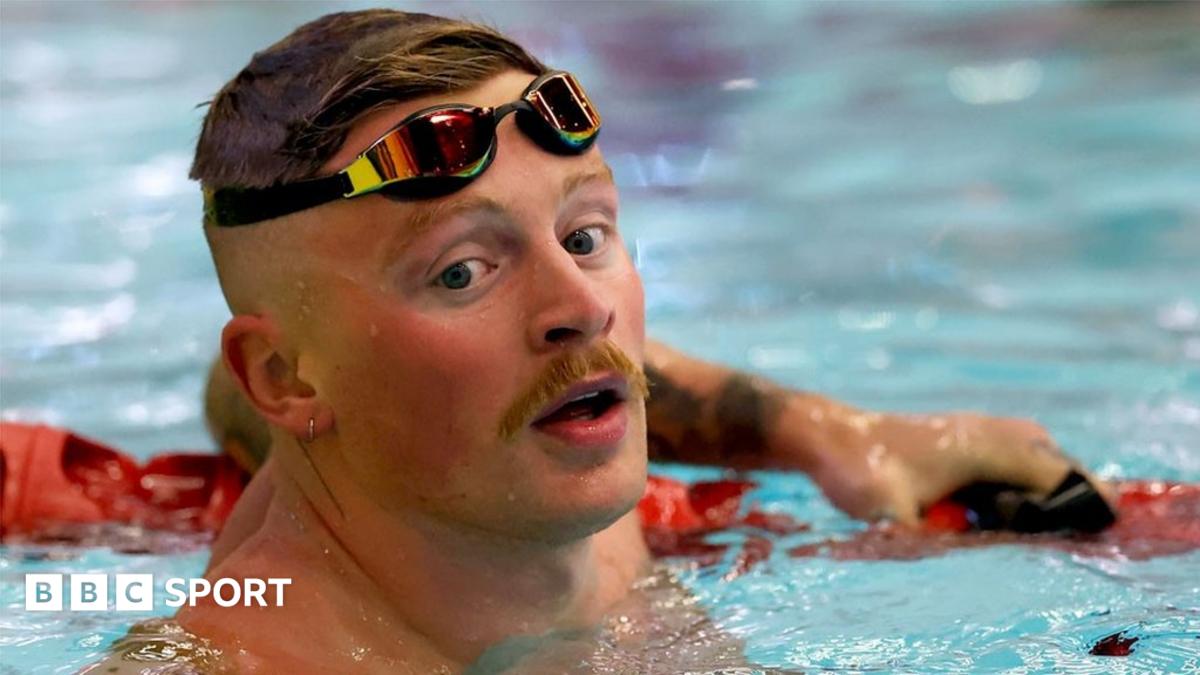
Adam Peaty has also spoken about the misconception that winning an Olympic gold medal will somehow fix everything in life. As he explained, "A gold medal is the coldest thing you will ever wear." His message was that sporting success cannot automatically resolve personal struggles or provide lasting happiness.
Related - Articles in The Times by Craig Lord
- 23/04/2023 - Adam Peaty: I’ve been on a self-destructive spiral - The monastic demands of his sport led the superstar to drink with ruinous effects, but he is smiling again after a mental health break, Craig Lord hears - The Times, exclusive
- 10/10/2023 - Adam Peaty: how religion put swimmer back on Olympic path - After mental and physical issues shattered his invincible aura, the swimmer turned to Christianity and trusted confidants to prepare for his Olympic title defence - The Times, exclusive
- 06/04/2024 - How Gordon Ramsay helped Olympian Adam Peaty get back in the pool - The gold medal-winning 100m breaststroke specialist credits the restaurateur, father of his girlfriend Holly Ramsay, for inspiring his return to competitive swimming - The Times, exclusive



Adam Peaty - photos by Craig Lord
Perhaps most strikingly, Michael Phelps, the most decorated Olympian in history, has spoken about experiencing depression following Olympic competitions, despite winning an extraordinary collection of medals. He described the difficulty of adjusting after spending years working towards a single event, only to find himself feeling lost once it was over.
 SOS Guest

Taken together, these experiences highlight an important psychological reality: achieving something extraordinary does not necessarily change how we feel about ourselves or provide the lasting happiness we expect.
The danger is that swimmers can spend years believing their ultimate goal will finally make them feel successful, confident and fulfilled, only to discover that the satisfaction they anticipated is temporary.
Rather than recognising that happiness and personal fulfilment need to be developed alongside their sporting ambitions, they can find themselves continually searching for the next achievement, hoping it will provide the fulfilment they are looking for.
How the Arrival Fallacy Can Create Problems for Swimmers
This way of thinking can have significant consequences for swimmers, affecting not only their enjoyment of the sport but also their confidence, motivation and overall experience of swimming.
- Never feeling satisfied: Swimmers can struggle to appreciate their achievements because their attention is already focused on the next target. Even when they achieve a personal best, win a medal or qualify for a major competition, the satisfaction can be short-lived. Nothing ever seems quite enough, as they continually look towards what they still want to achieve rather than recognising how far they have progressed.
- Increased pressure and anxiety: When swimmers believe their happiness and sense of success depend on achieving specific outcomes, they can place enormous pressure on themselves. Every competition becomes another opportunity to prove their worth, rather than an opportunity to perform, learn, develop and enjoy the experience. The fear of not achieving their goals can become as powerful as the desire to succeed.
- Losing enjoyment of swimming: The constant focus on future achievements can take away from the enjoyment of everyday training, friendships, personal development and the satisfaction of improving. Swimming can gradually become something they feel they have to do rather than something they genuinely enjoy. The process of working towards a goal becomes less important than the outcome itself.
- Difficulty coping with disappointment: When swimmers attach their happiness to achieving particular outcomes, setbacks can become especially difficult to manage. Missing a qualifying time, failing to achieve a personal best or performing below expectations can feel like much more than a disappointing result. It can leave them questioning their ability and confidence, particularly when they have come to view sporting performance as a measure of personal success.
- Continually moving the goalposts: Each achievement can bring new and increasingly demanding expectations. A swimmer who once dreamed of qualifying for a national championship may, after achieving that goal, immediately begin focusing on winning a medal or qualifying for an international competition. Even when swimmers achieve something they once considered a major success, their satisfaction can quickly give way to new expectations. Rather than taking time to appreciate how far they have progressed, they shift their attention towards the next challenge, continually raising the bar and convincing themselves that further success will finally bring the fulfilment they seek.
Over time, this can create an endless cycle in which no achievement ever feels quite enough, regardless of how successful the swimmer becomes.
- Neglecting life beyond swimming: When so much attention and energy are directed towards future sporting achievements, swimmers can overlook other important aspects of their lives, including friendships, family, education, personal interests and experiences outside the pool. They may continually postpone these important parts of life, believing they will have more time to enjoy them once they have achieved their sporting ambitions.
Ultimately, the Arrival Fallacy highlights the danger of continually postponing happiness until the next swimming achievement. Swimmers can become so focused on where they want to be that they fail to appreciate where they are now, how far they have travelled and what they have already accomplished.
The issue is not having goals, being ambitious or striving for success. These are important and positive aspects of sporting development. The problem arises when swimmers begin to believe that achieving those goals is a prerequisite for happiness, satisfaction and personal fulfilment. They risk spending their swimming careers chasing the next achievement without ever feeling that what they have already accomplished is enough.
The real danger is that swimmers can achieve extraordinary things in the pool yet still struggle to feel happy, confident or fulfilled in themselves.
The Risks to Self-Worth, Wellbeing and Happiness
When athletes continually attach their happiness and sense of fulfilment to future achievements, they risk undermining their self-worth, becoming increasingly dependent on results for confidence and compromising their overall emotional wellbeing.
There are several important risks:
- Self-worth becomes conditional on performance: Swimmers can begin to judge their value as individuals by what they achieve in the pool. A good performance may bring temporary feelings of confidence and self-worth, while a disappointing result can leave them questioning their ability and personal value. They risk losing sight of the fact that they are worthwhile individuals regardless of their sporting achievements.
- Self-confidence becomes dependent on results: Rather than developing a stable sense of self-belief, swimmers can become reliant on personal bests, medals and qualifying times to feel confident. This makes their confidence vulnerable to fluctuations in performance, meaning that even relatively minor setbacks can have a disproportionate emotional impact.
- Increased stress, anxiety and emotional exhaustion: When swimmers believe they must continually achieve more to feel happy or successful, they can place themselves under relentless pressure. The fear of not achieving their next target can become as powerful as the desire to succeed, potentially contributing to ongoing stress, anxiety, emotional exhaustion, burnout and a loss of enjoyment.
- A loss of identity beyond swimming: When so much of a swimmer's identity becomes wrapped up in performance and achievement, they can struggle to recognise their value outside the sport. This can become particularly challenging during periods of injury, poor performance, deselection or retirement, when the achievements and recognition that have shaped their identity may no longer be available. Without a strong sense of identity beyond swimming, these experiences can leave athletes questioning who they are and what gives their lives meaning.
- An underlying sense of never being good enough: Perhaps most damaging is the possibility that swimmers spend years achieving things they once dreamed of, yet still feel dissatisfied. Each achievement raises expectations for the next, creating a persistent feeling that they have not quite done enough or become good enough. Even considerable success may fail to provide the sense of fulfilment they have been searching for.
Ultimately, swimmers can achieve extraordinary sporting success while still struggling with their self-worth, wellbeing and happiness. They may reach the highest levels of their sport, even become Olympic champions, yet continue to feel that something is missing because they have learned to measure their happiness and personal value through what they achieve rather than who they are.
The important message is that sporting success does not automatically bring personal happiness or fulfilment. We should never allow the pursuit of achievement to come at the expense of our self-worth, wellbeing or enjoyment of life.
How Can We Combat the Arrival Fallacy?
If the Arrival Fallacy highlights the dangers of continually postponing happiness until the next achievement, how can swimmers develop a healthier relationship with success, ambition and personal fulfilment?
The answer is not to stop setting goals, reduce ambition or become less competitive. Rather, it is about recognising that sporting achievement should contribute to our happiness, not become the condition on which it depends.
- Develop a strong sense of self-worth: Swimmers need to understand that their value as individuals is not determined by their performances, personal bests, medals or qualifying times. They are worthwhile individuals regardless of whether they win or lose, succeed or experience disappointment. Developing a more secure sense of self-worth allows swimmers to pursue ambitious goals without feeling that their personal value is at stake every time they compete.
- Build an identity beyond swimming: Swimming can be an important part of who someone is, but it should never become everything they are. Encouraging interests, friendships, education, relationships and experiences outside the pool helps swimmers recognise and appreciate the many other dimensions of their lives. This becomes particularly important when they experience injury, setbacks or eventually leave competitive swimming.
- Prioritise individual wellbeing: Wellbeing should not be treated as something that can be addressed once a swimmer has achieved their goals or has more time available. It needs to develop alongside their sporting ambitions. This means recognising the importance of mental and emotional health, positive relationships, enjoyment, recovery, balance and having time to experience life outside the demands of training and competition.
- Learn to appreciate the present and find enjoyment in the journey: Rather than continually looking towards the next personal best, medal or championship, swimmers need to learn to recognise and appreciate what they are experiencing now. This includes celebrating progress, enjoying training, valuing friendships and recognising the satisfaction that comes from working towards something meaningful. Goals should provide direction and motivation, but they should never become conditions that must be met before swimmers allow themselves to feel happy or successful.
- Develop a broader definition of success: Success needs to mean more than winning medals, achieving qualifying times or reaching championship finals. It should also include personal development, resilience, commitment, learning from setbacks, supporting teammates, developing positive relationships and becoming a confident, well-rounded individual. When swimmers recognise these wider dimensions of success, they become less dependent on external recognition and sporting results to feel satisfied with themselves.
- Develop a healthy relationship with future goals: There is nothing wrong with looking ahead, having ambitious dreams and wanting to achieve great things. The important distinction is understanding that future achievements can add to our lives without being responsible for our happiness. Swimmers should be encouraged to pursue their ambitions while recognising that achieving a particular goal will not suddenly make everything perfect. Learning to appreciate what they have already achieved, while remaining excited about what lies ahead, helps prevent them from becoming trapped in the endless pursuit of something more.
A Message for Coaches, Parents and Everyone Involved in Swimming
The Arrival Fallacy is not simply an issue for swimmers themselves. Its implications extend to everyone involved in their development, including coaches, parents, teachers, clubs and sporting organisations. Indeed, it is a message that applies equally to all of us, regardless of whether we are involved in competitive sport.
Coaches and parents have a particularly important role in shaping how young swimmers understand achievement, success and self-worth. The language we use, the expectations we establish and the way we respond to performances can all influence whether young people begin to associate their personal value with what they achieve.
If our attention focuses predominantly on results, medals, qualifying times and championship performances, we risk reinforcing the belief that these are the things that make a swimmer successful and worthwhile.
Instead, we need to recognise and celebrate the individual behind the performance. We should value effort, commitment, improvement, resilience, enjoyment, personal development and the qualities that make someone a good person, not simply a successful swimmer.
It is equally important that coaches and parents reflect on their own relationship with achievement. Are we continually postponing our own happiness until we reach the next professional, financial or personal milestone? Do we place too much emphasis on future outcomes at the expense of appreciating what we already have? The Arrival Fallacy is not exclusive to sport, and we can all become caught up in the belief that happiness is waiting somewhere in the future.
Ultimately, our responsibility is not simply to develop successful swimmers, but to help develop happy, confident and well-rounded individuals who understand that their happiness, identity and self-worth are not dependent on what they achieve in the pool.
 Craig Lord

What Really Matters:
Enjoy the journey, celebrate your achievements and take pride in what you accomplish, but never lose sight of what truly matters.
Happiness should not be postponed until the next success, self-worth should never be measured by performance, and wellbeing should never be sacrificed in the pursuit of achievement.
When we feel good about ourselves, recognise our own worth and experience genuine happiness and fulfilment, this also positively influences those around us. We become better teammates, coaches, parents, friends and people.
Ultimately, our greatest success is not simply measured by what we achieve in the pool, but by the person we become along the way, the positive impact we have on others and the happiness and fulfilment we experience both in swimming and in life.
References
1. Moorhouse, A. (2018). “I felt lost – I’d had this one goal to win the Olympics”: Adrian Moorhouse on swimming as escapism, Olympic gold and the mental strain on today's athletes. Sports Gazette, 24 February 2018.
- This is the source for Moorhouse's reflection on the emptiness and loss of direction he experienced after winning Olympic gold in Seoul in 1988. It contains the direct quotation: "I felt lost. I'd had this one goal from the outset to win the Olympics."
2. Campbell, B. Bronte Campbell – Olympic Gold Medallist in Swimming. Online Courses Australia, podcast interview.
This interview contains Campbell's reflections on the expectation that Olympic gold would fulfil her dreams, and how she realised that it fulfilled her swimming ambitions but did not fundamentally change how she felt about herself:
3. BBC Sport (2023). Adam Peaty: Three-time Olympic champion says winning gold medals will not solve problems. 30 May 2023
This BBC interview followed up on The Times exclusive in which Adam Peary revealed the crisis he had been living through.
It contains Peaty's reflections on the mistaken belief that winning gold medals will fix personal problems, including the quotation about a gold medal being "the coldest thing you will ever wear".
 BBC Sport
4. Lovett, S. (2018). Michael Phelps considered taking his own life at height of Olympic career. The Independent, 19 January 2018.
Watch and listen to the full source and interview from which the above article came: Phelps's discussion at the Kennedy Forum in Chicago about his experiences of depression following Olympic competitions, including his statement: "After every Olympics I think I fell into a major state of depression."
Dr. Bruce Lawrie ©2026 (published at SOS with kind permission)
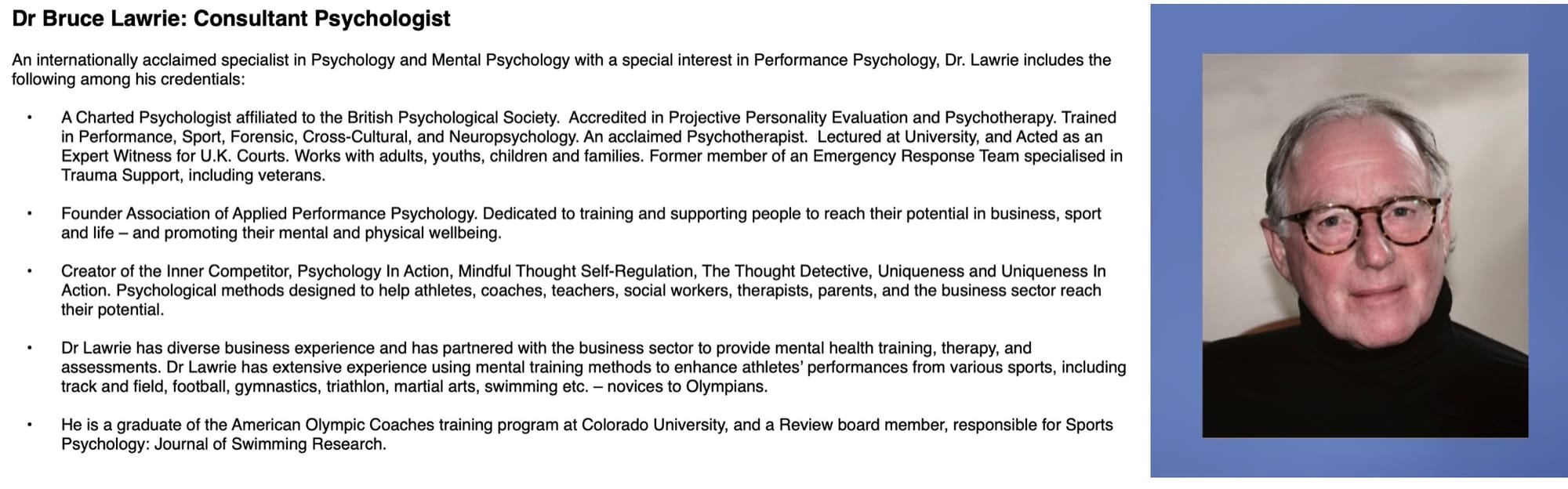
You can find more information about the work of Dr. Lawrie at his website:


- State of Swimming thanks Dr. Lawrie for his outstanding contribution to swimming - its athletes, coaches and others with an ear to hear wisdom that is not confined to sport, but extends to every sector and facet of human life.

