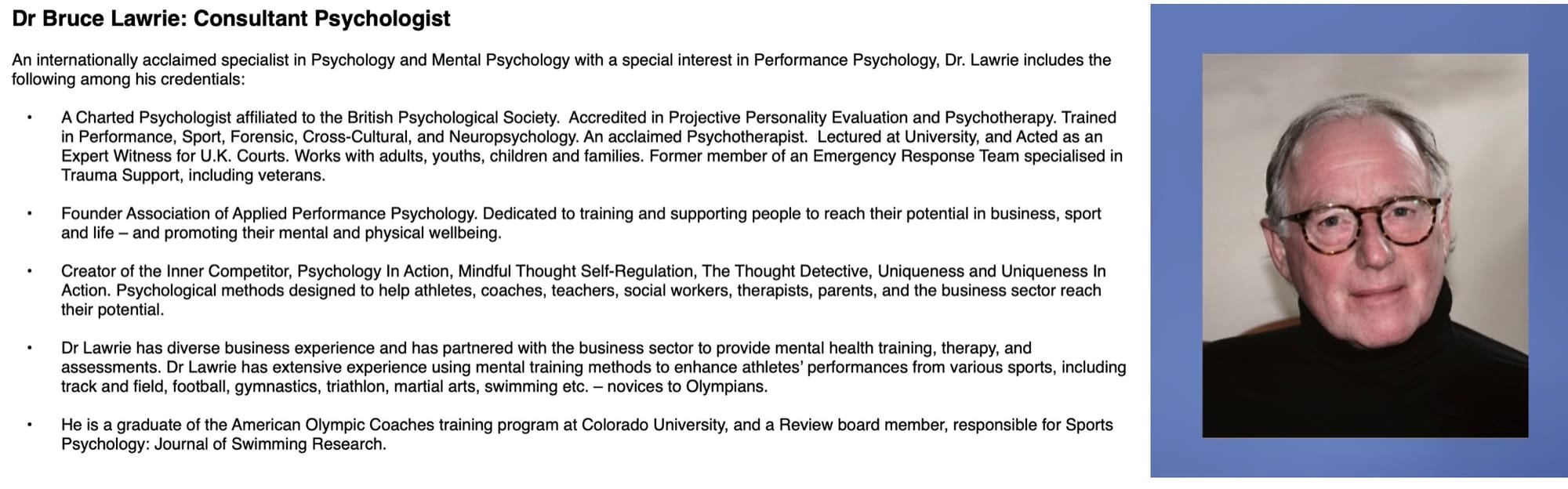
Managing Stress, Regulating Thoughts, Reaching Your Potential
Dr Bruce Lawrie, an internationally acclaimed Performance Psychology expert, on the Mindful Thought Self-Regulation (MTSR) model he developed as a practical approach to managing stress by developing greater awareness of your thoughts and learning how to regulate your responses

- "The Importance of Stress Management: Regulating Your Thoughts to Optimise Your Health, Sporting Performance, Academic Success and Everyday Life"
- A Paper By Dr. Bruce Lawrie
“You have power over your mind – not outside events. Realize this, and you will find strength.” ~ Marcus Aurelius
According to the World Health Organization (WHO), stress can be defined as a state of worry or mental tension caused by a difficult situation. Stress is a natural human response that prompts us to address challenges and threats in our lives. Everyone experiences stress to some degree. In fact, a certain amount of stress can be helpful, motivating us to take action, overcome challenges and perform at our best.
The way we respond to stress, however, makes a big difference to our overall wellbeing.
Whether you are competing in sport, preparing for exams, managing schoolwork or balancing the demands of everyday life, developing effective stress-management skills can help you reach your potential.
Understanding stress from a 24-hour viewpoint
Stress is a natural response of your body and mind to pressure, challenges and demands that you encounter throughout the day and night.
Importantly, stress doesn't simply switch on and off during the day. It can influence how your body and mind respond to challenges, how effectively you unwind in the evening and how well you recover during sleep.
Consider this in three phases:
1. Daytime – Stress and activity:
We can all face various demands from sport, school, family, relationships and daily responsibilities.
When we perceive these situations as challenging or stressful, our body activates its stress response. This involves the release of hormones such as cortisol and adrenaline, which help prepare us to respond to challenges by increasing alertness and mobilising energy.
These responses are perfectly normal and can be beneficial when we need to concentrate, make decisions, solve problems or perform under pressure.
2. Evening – Winding down:
As the day comes to a close, it is important to give your mind and body opportunities to slow down, unwind and prepare for sleep. Although stress doesn't automatically disappear in the evening, developing a consistent bedtime routine, limiting stimulating activities and making time to relax can help you transition from the demands of the day towards rest and recovery.
Developing a consistent evening routine, limiting stimulating activities and making time to relax can help prepare your body and mind for sleep.
3. Night-time – Recovery and repair:
Sleep provides your body and mind with an essential opportunity to recover and repair. It supports hormonal regulation, tissue repair, memory consolidation and the restoration of energy.
Quality sleep also supports immune function, learning and concentration, helping you feel mentally refreshed and better prepared to manage the challenges of the following day.
The main point
Stress is not necessarily negative. Short-term stress can be helpful, motivating us to take action, meet challenges and perform at our best. Issues can arise when stress becomes prolonged or excessive, particularly when your body and mind don't have sufficient opportunities to relax and recover.
A well-balanced 24-hour cycle involves finding the right balance between stress, activity and recovery. It's not simply about managing the demands you face throughout the day; it's equally important to give your body and mind time to unwind, relax and recover, particularly during the evening and night.
A healthy 24-hour routine is about finding the right balance between stress, activity and recovery.
The Power of Your Thoughts: Understanding How They Influence Your Response to Stress
Before we get into how to cope with stress, consider this quote from the well-known American psychologist and philosopher William James:
“The greatest weapon against stress is our ability to choose one thought over another.”
Yes - your thoughts are powerful and can influence how you feel, how you behave and how you respond to challenges. When you believe you can achieve something, you are more likely to take action, persevere when things become difficult and give yourself the opportunity to succeed. By learning to recognise and develop more helpful and constructive thinking patterns, you can positively influence your feelings, build confidence and improve the way you approach challenges.
Your thoughts influence how you interpret situations, how you feel and, ultimately, how you behave. For example, approaching an important competition with thoughts such as "I'm going to fail", or "I'm not good enough", can increase anxiety, undermine confidence and affect your performance. In contrast, thinking "I've prepared well. I'll focus on what I can control and give it my best" can help you feel more confident, stay focused and approach the situation more positively.
With practice, you can learn to use your thoughts more effectively to influence your feelings, behaviour and responses to challenging situations. This doesn't mean pretending that everything is positive or ignoring difficult emotions. Instead, it means developing the ability to recognise your thoughts, question whether they are helpful and learn to choose how you respond.
Now let’s investigate how you can use your thoughts to manage stress and reach your potential.
How Can You Best Manage Your Stress
“The world as we have created it is a process of our thinking. It cannot be changed without changing our thinking.” ~ Albert Einstein
The Mindful Thought Self-Regulation (MTSR) model is a practical approach to managing stress by developing greater awareness of your thoughts and learning how to regulate your responses.
Informed by extensive clinical experience and applied in working with more than 5,000 individuals, the model provides a structured framework for recognising unhelpful thinking patterns, challenging them and developing more constructive ways of thinking. It encourages you to develop greater control over how you think and respond, rather than allowing unhelpful thoughts to negatively influence your feelings, behaviour, sporting performance and everyday life.
The MTSR process involves three key steps that you can practise in everyday situations:
1. Recognise: Become aware of unhelpful thoughts that may be contributing to stress. Notice what you are thinking and how these thoughts influence your feelings and behaviour.
2. Regulate: Challenge unhelpful thinking and develop more constructive ways of thinking. Consider whether your thoughts are realistic or helpful, and learn to replace unhelpful thinking patterns with more balanced and constructive alternatives.
3. Refocus: Direct your attention towards what you can control and the task in front of you. Rather than dwelling on past mistakes or worrying about future outcomes, concentrate on what you can do now and take the next positive step.
By developing these three skills, you can become better equipped to manage stress, regulate your emotions and maintain focus when faced with challenging situations. This can support your sporting performance, academic success and everyday wellbeing, while contributing to your overall psychological and physical health.
The benefits of developing your MTSR skills include:
- Focus on yourself: Concentrate on your own development and performance rather than comparing yourself with others or worrying about competitors.
- Build confidence: Develop a positive but realistic belief in your abilities, preparation and potential.
- Manage your emotions: Become more aware of feelings such as anxiety, frustration and pressure, and learn how to respond to them constructively.
- Develop resilience: Learn to recover mentally from mistakes, setbacks and disappointments rather than allowing them to define you.
- Improve concentration: Direct your attention towards the things that matter most, particularly when you are under pressure.
- Take responsibility: Recognise that although you cannot always control what happens around you, you can develop greater control over how you think and respond.
MTSR in Action: An Example
Imagine a swimmer preparing for an important race. As the competition approaches, they begin thinking:
"What if I lose? What if everyone else is faster than me?"
These thoughts can increase anxiety, undermine confidence and distract the swimmer from their preparation.
Using the MTSR model, the swimmer learns to recognise these unhelpful thoughts, regulate their response and refocus their attention on the things they can control.
Instead of worrying about competitors or becoming distracted by the possible outcome, they concentrate on their race plan, technique, preparation and execution.
By shifting their attention away from what they cannot control and towards what they can influence, the swimmer is better able to approach the race with confidence, focus and a positive mindset.
We can break this down into the three MTSR steps:
- Recognise: "I'm worrying about losing and what other people might think of me."
- Regulate: "I cannot control how fast other swimmers are, but I can trust my preparation and focus on my own performance."
- Refocus: "I'll concentrate on my race plan, technique, start and execution. I'll give it my best."
The swimmer hasn't eliminated the pressure of competition, but they have changed how they respond to it.
The key message is simple:
By learning to recognise, regulate and refocus your thoughts, you become more aware of how you respond to challenges and develop the ability to manage your reactions more constructively and confidently, rather than responding automatically or impulsively.
MTSR helps you develop valuable mental skills to manage stress, build resilience, overcome challenges and unlock your potential – enabling you to perform at your best, both in sport and everyday life.
Self-Care and Stress Management
As the most decorated Olympic champion in history reminds us:
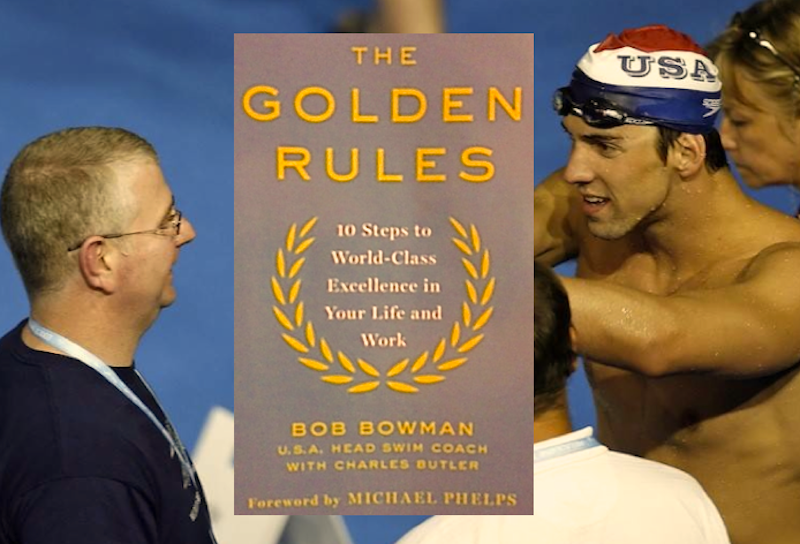
“If you can take care of your physical well-being & your mental well-being, & put them together, you become a superhero.” - Michael Phelps
More on that here, in Bob Bowman's The Golden Rules:
 Craig Lord
Taking care of yourself is vital for maintaining your physical and mental health and supporting your overall wellbeing. By making self-care a priority, you can build healthy habits that help you cope with everyday demands and manage stressful situations more effectively.
Self-care isn't selfish, nor should it only be something you think about when you feel overwhelmed. It is an important part of maintaining a healthy balance, supporting recovery, building resilience and helping you perform consistently in sport, school and everyday life.
There are several practical ways to look after yourself and support your physical and mental wellbeing. These include:
- Taking micro-breaks: Give yourself short opportunities throughout the day to pause, reset and recharge, particularly when balancing schoolwork, training and other commitments.
- Protecting your self-worth: Remember that your value as a person is not determined by your sporting results, academic grades or what other people think of you. Recognise that you are much more than your performance.
- Prioritising sleep: Follow recommended sleep guidelines and develop consistent sleep routines that support physical and mental recovery.
- Practising relaxation: Make time for activities that help you unwind, calm your mind and reduce tension. Find what works best for you, whether that's listening to music, reading, spending time outdoors or practising relaxation techniques.
- Maintaining balance: Make time for friends, family, hobbies and activities that you enjoy outside sport and school. Remember that being a successful athlete also means looking after yourself as a person, not just focusing on performance.
- Asking for support: Recognise when you need help and don't be afraid to speak to someone you trust. Talking about your worries and concerns can help you gain perspective and feel supported.
Bringing It All Together: Stress, Recovery and Reaching Your Potential
Remember, stress is a normal part of life, and learning to manage it is an important skill that can benefit you in sport, school and everyday life.
You cannot always control the challenges you face, but you can learn to manage your thoughts, influence your responses and make positive choices that support your wellbeing and performance.
Take these five key principles with you:
The Five Rs:
- Recognise: Become aware of your thoughts and how they influence your feelings and behaviour.
- Regulate: Challenge unhelpful thinking and develop more constructive responses to challenging situations.
- Refocus: Direct your attention towards what you can control and the task in front of you.
- Recover: Prioritise sleep, relaxation and opportunities to rest, recharge and restore your energy.
- Reach out: Recognise when you need help and don't be afraid to seek support from others.
The Message to Remember
Stress management isn't about eliminating stress, thinking positively all the time or pushing yourself harder.
It's about learning to recognise and regulate your thoughts, challenge unhelpful thinking patterns and refocus your attention on what you can control.
It's about developing the mental skills to manage life's challenges, recognising when you need support and giving your body and mind the time and opportunity to rest, recover and recharge.
By finding the right balance between regulating your thoughts, managing stress and prioritising recovery, you can enhance your physical and mental wellbeing, build resilience, maximise your potential and equip yourself with the skills and confidence to thrive in sport, achieve academic success and navigate the challenges of everyday life.
Dr. Bruce Lawrie ©2026 (published at SOS with kind permission)
You can find more information about the work of Dr. Lawrie at his website: