On This Day ... Koshevaya Halts DDR Gold Rush As USA Men's 4x200 Quartets Sink WR Twice
TIMELINE - January - April- The SOS Daily Trawl of official World long-course records (plus all pre 1954 standards, all pools and metrics) set this day throughout history.


This week in our Timeline includes the 50th anniversary of the Montreal 1976 Olympic Games, with its 29 World records:
 Craig Lord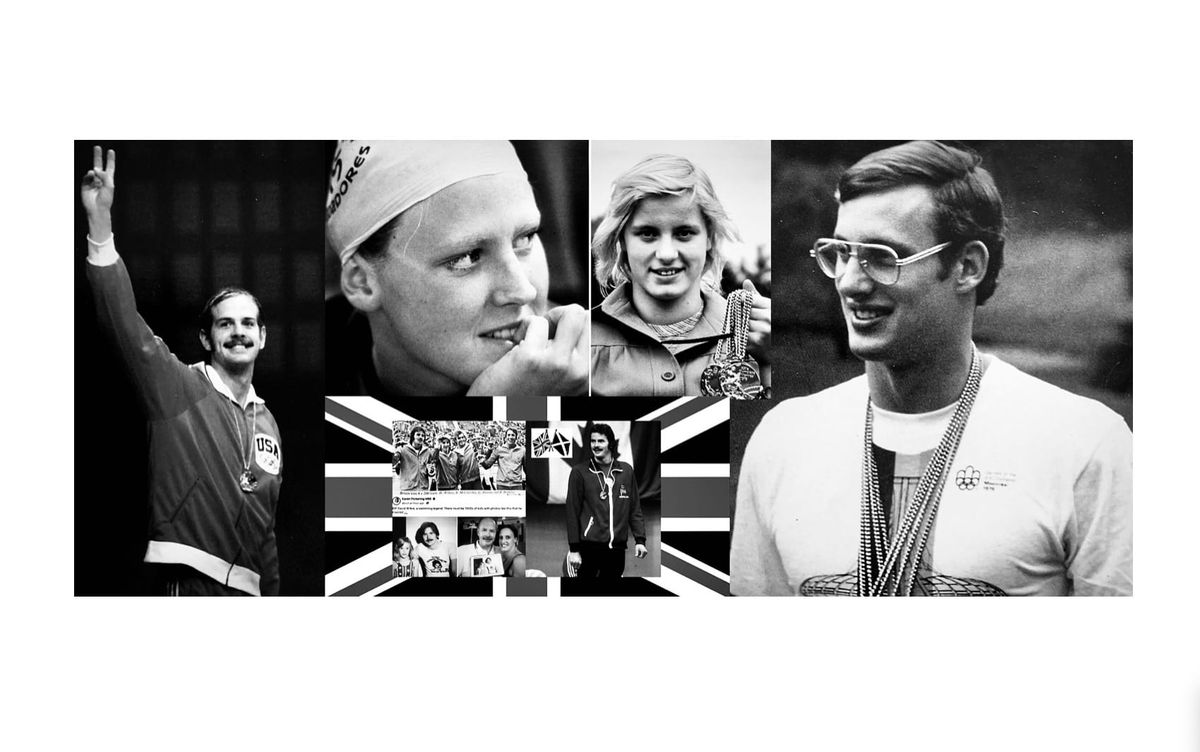
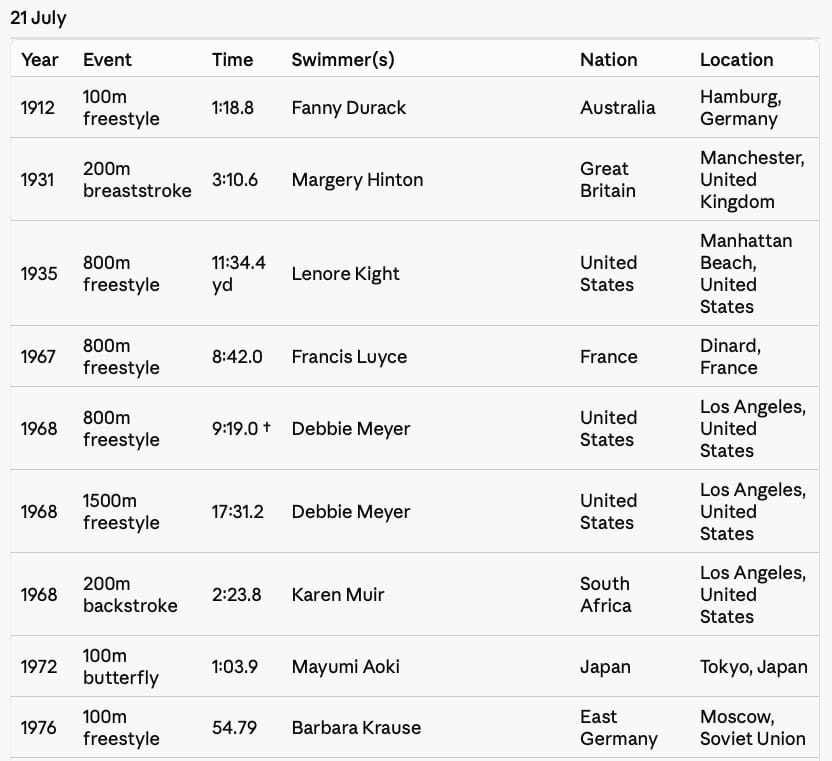
On This Day, July 21, throughout history...
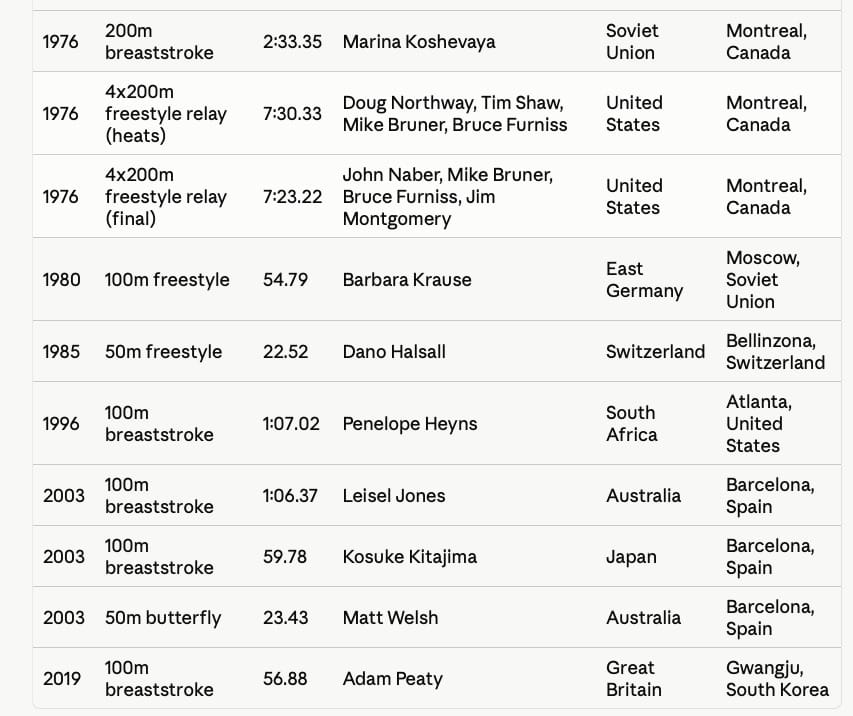
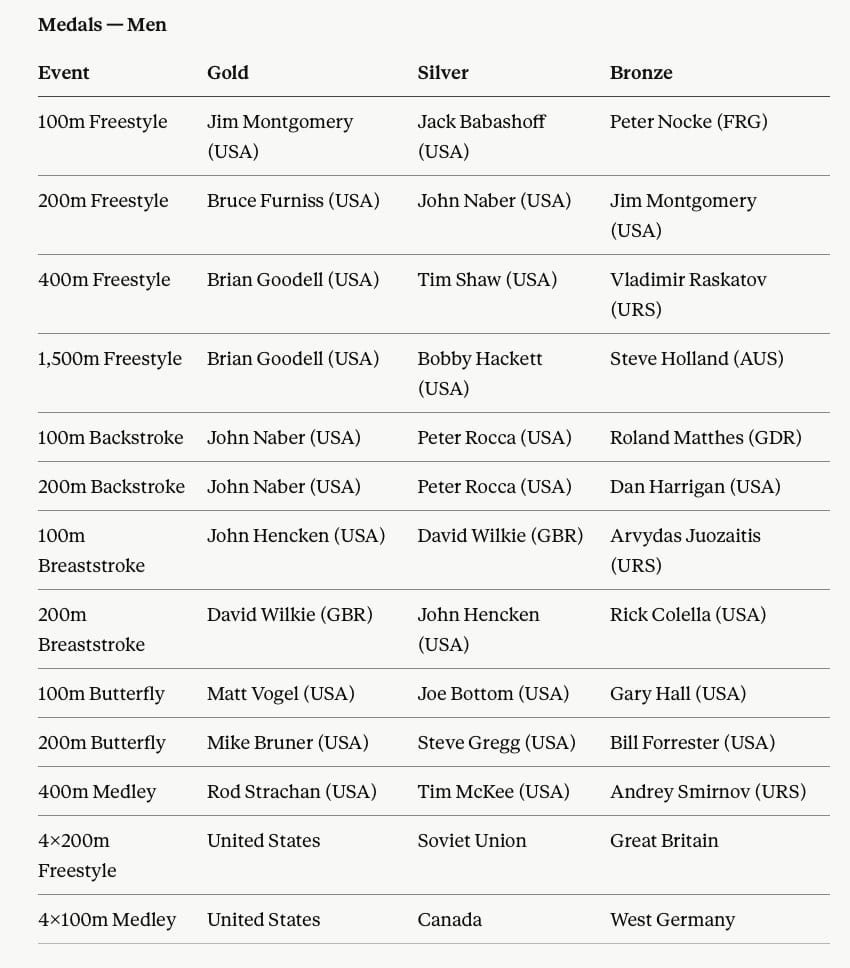
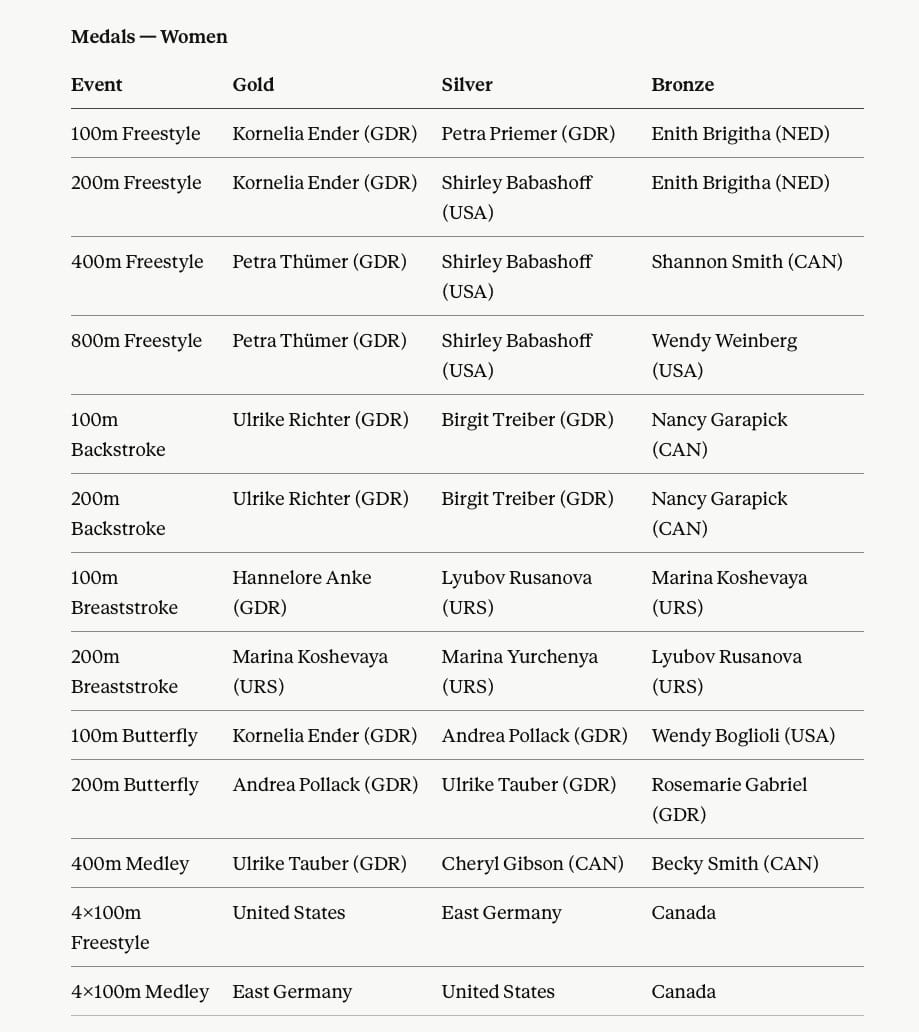
Day 4 at the Montreal Olympic Games 50 years ago today witnessed three World records: a 2:33.35 in the 200m breaststroke by Marina Koshevaya at the helm of a Soviet sweep in the only women's solo-event final in the pool that did not grant gold to East Germany; and two 4x200m free global standards in a day, heats and finals for male quartets from the United States, the champions John Naber, Mike Bruner, Bruce Furniss and Jim Montgomery after Tim Shaw and Doug Northway had helped line the path in heats.
Memories of those finals follow the full list for July 21, which includes two global standards in one race from Debbie Meyer, over 800 and then 1500m free in Los Angeles on her way to becoming the first solo-event triple gold medal winner in women's Olympic swimming history with victories over 200m, 400m and 800m freestyle at Mexico City 1968, the first Games to feature the shortest and longest races (200, 800) in that sequence as the light bulb finally went on among male blazers that women were perfectly capable of going the distance - and being excellent across a range of distances, too!
This day also marks the 7th anniversary of one of the most stunning swims in history: 56.88, the 100m breaststroke World record set by Adam Peaty en route to his third straight global title in the event, at Gwangju 2019:
The list, followed by profiles and features on a sorority of pioneers and a couple of memories from the history file of Montreal 1976.
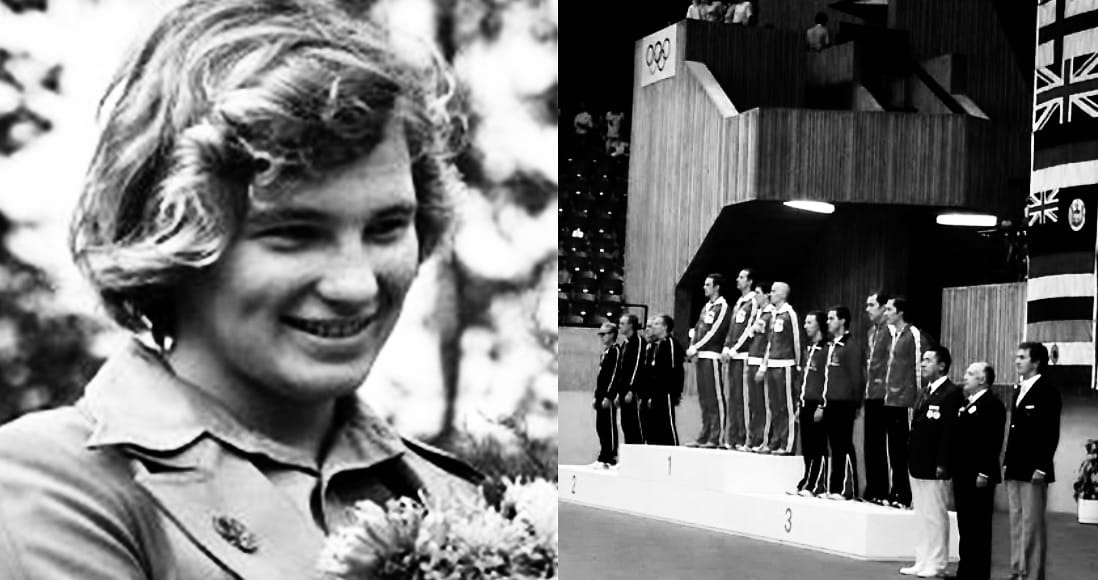
Profiles and features on some of the female pioneers of pace who set the above standards:
 Craig Lord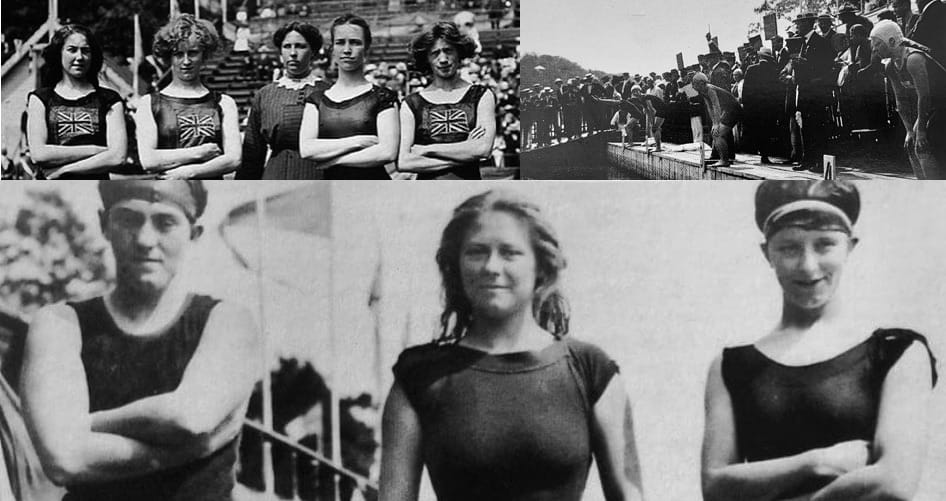
 Craig Lord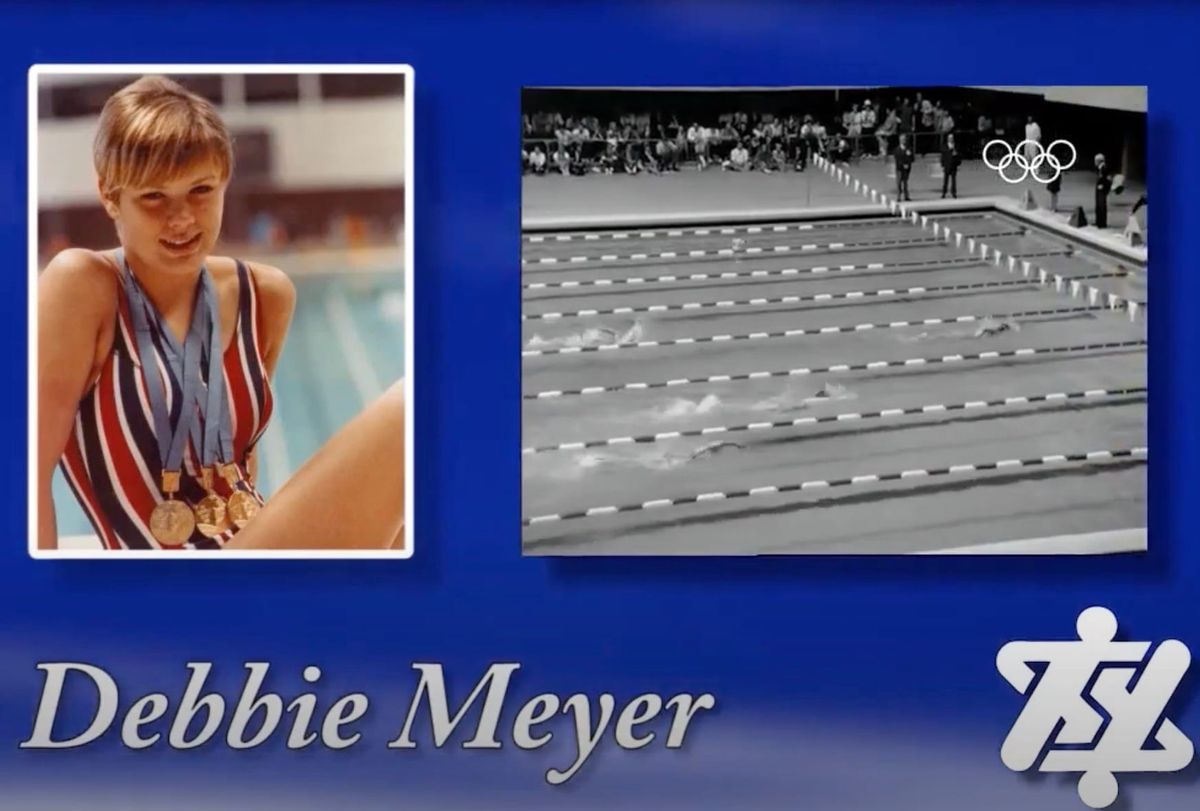
 Craig Lord
 Craig Lord
 Craig Lord
 Craig Lord
Montreal 1976 - Day 4 Finals:
Women's 200m breaststroke:
Between 1964 and 1980, Soviet women won 10 of the 18 Olympic medals on offer over 200m breaststroke. Galina Prozumenshikova (later Stepanova) got the ball rolling, winning in 1964 and taking bronze in 1968 and 1972. Winner of silver medals in the 100m in 1968 and 1972, she was the first breaststroke specialist to reach the podium at three Games and remains the only one to have won five Olympic medals. Then, in 1976, Marina Koshevaya led teammates Marina Yurchenya and Lyubov Rusanova home for a Montreal 1976 sweep in a world record of 2:33.35; and Lithuanian Lina Kachushite (2:29.54, Olympic record) led Svetlana Varganova and Yulia Bogdanova home in a 1980 home Games sweep. The boycott of 1984 killed a tradition: no swimmer from a former Soviet state made the Olympic 200m breaststroke podium for 28 years after that.
Men's 4x200m freestyle:
- Heats: the USA team of Doug Northway, Tim Shaw, Mike Bruner and Bruce Furniss set a world record of 7:30.33 to set up a storm gathering.
- Final: almost 2sec per swimmer was wiped off the mark in a 7:23.22 victory for the USA quartet of John Naber, Mike Bruner, Bruce Furniss and Jim Montgomery.
- The Soviet team of Vladimir Raskatov, Andrei Bogdanov, Sergey Kopliakov and Andrey Krylov also raced well inside the heats WR, for silver in a European record of 7:27.97, while Alan McClatchey, Brian Brinkley, Gordon Downie and David Dunne put Great Britain on the 4x200 podium for the first time since 1920, in a Commonwealth and British record of 7:32.11.
Naber was one of the biggest presences at the 1976 Olympic Games – literally: 1.98cm (6ft 6) tall and weighing in at 87kg (195lb). Having clocked 56.19 in the semis of the 100 back to end Roland Matthes’ nine-year world-record reign, Naber took another axe to the clock in the final to win in 55.49.
For Naber, victory was the fulfilment of a childhood dream: at nine he visited Olympia in Greece and told his parents that his destiny was to be an Olympic champion.
An hour after the 100 back final, Naber took silver over 200m freestyle 0.21sec behind teammate Furniss (1:50.29, World record) and 0.08sec ahead of Montgomery in a USA sweep and the tightest podium finish in the history of the event all the way to Paris 2024, where the record was broken, and four men finished within 0.15sec of each other, two of them from Great Britain's golden 4x200m quartets of 2020one and 2024, Matt Richards and Duncan Scott:
 Craig Lord
That 1976 final continued to roll on in the warm-down pool, where Naber and Furniss found themselves speeding up in response to each other's attempt to ease down ahead of their closest opponent. No stopping the will to race and win.
Two days later, Naber and Furniss took gold as members of the 4x200m freestyle quartet (7:23.22, world record, and the second World record in a day for Furniss, who was also a member of the quartet that broke the standard in heats), with Bruner and Montgomery. One day after that, it was another gold for Naber, in the 4x100m medley (3:42.22, world record), and on July 24 he brought his campaign to a close with a fourth gold, lowering his 2:00.64 world record over 200m backstroke to 1:59.19 to become the first man below 2 minutes.
Day 4 also featured a 54.35sec victory for American Matt Vogel in the 100m butterfly - and that was the only men's event that did not produce a World record at the 1976 Games in the pool. The survivor: Mark Spitz's 54.27 from Munich 1972, his effort still the Olympic record after the waters settled at boycotted Moscow 1980 :
 Craig Lord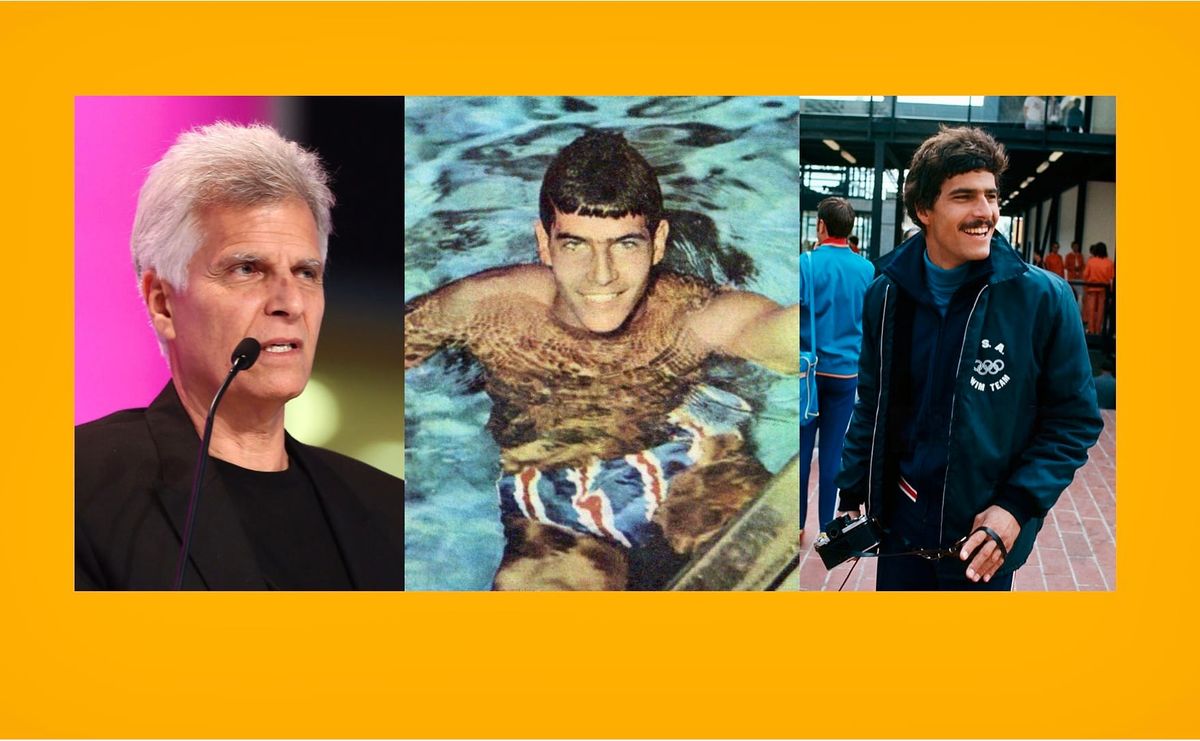
On this Day... July 20
When Goodell, Hackett & Holland Made The 1500 A Sprint & Naber & Furniss Added To USA Men's Gold Rush At Pioneering Pace
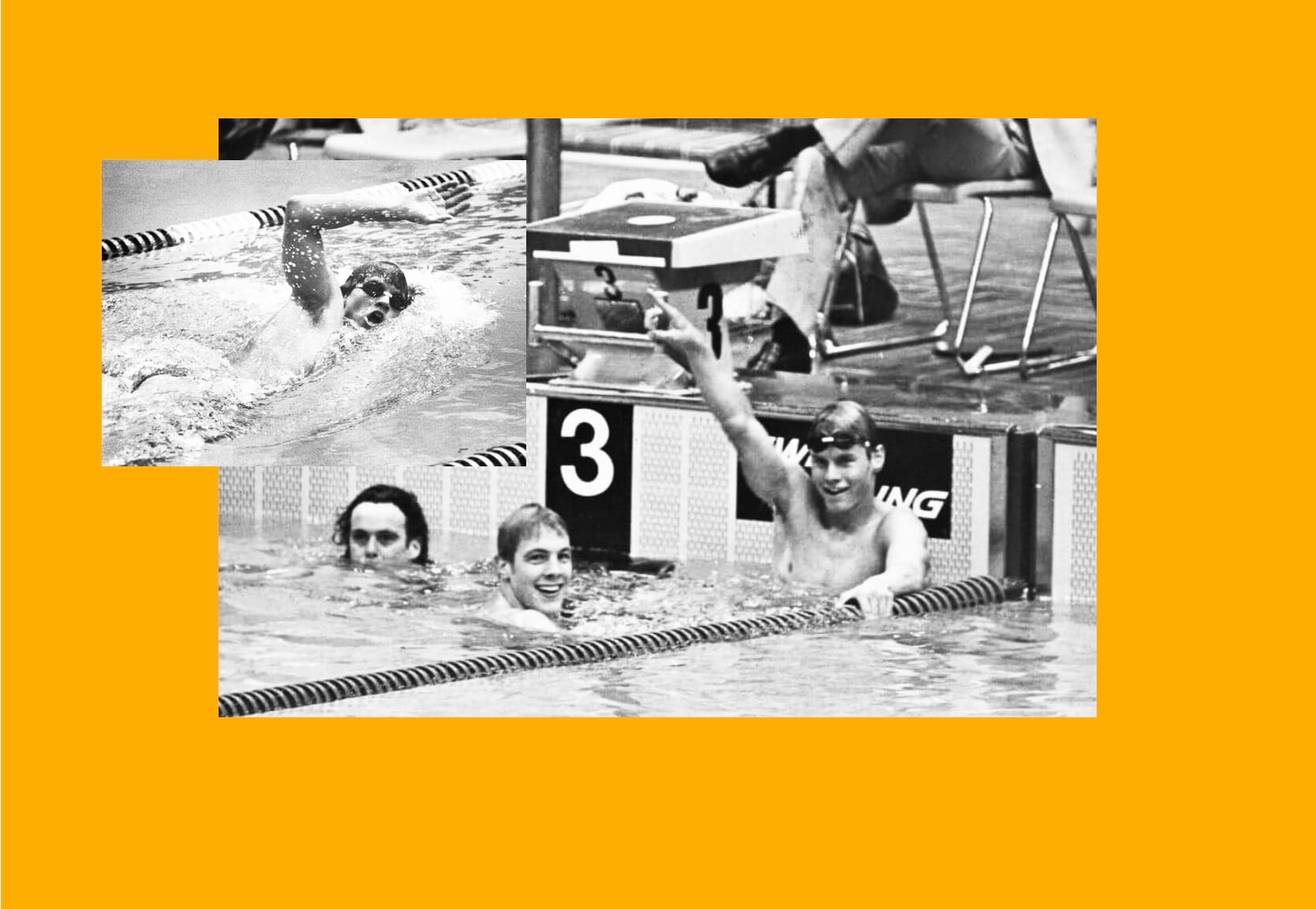
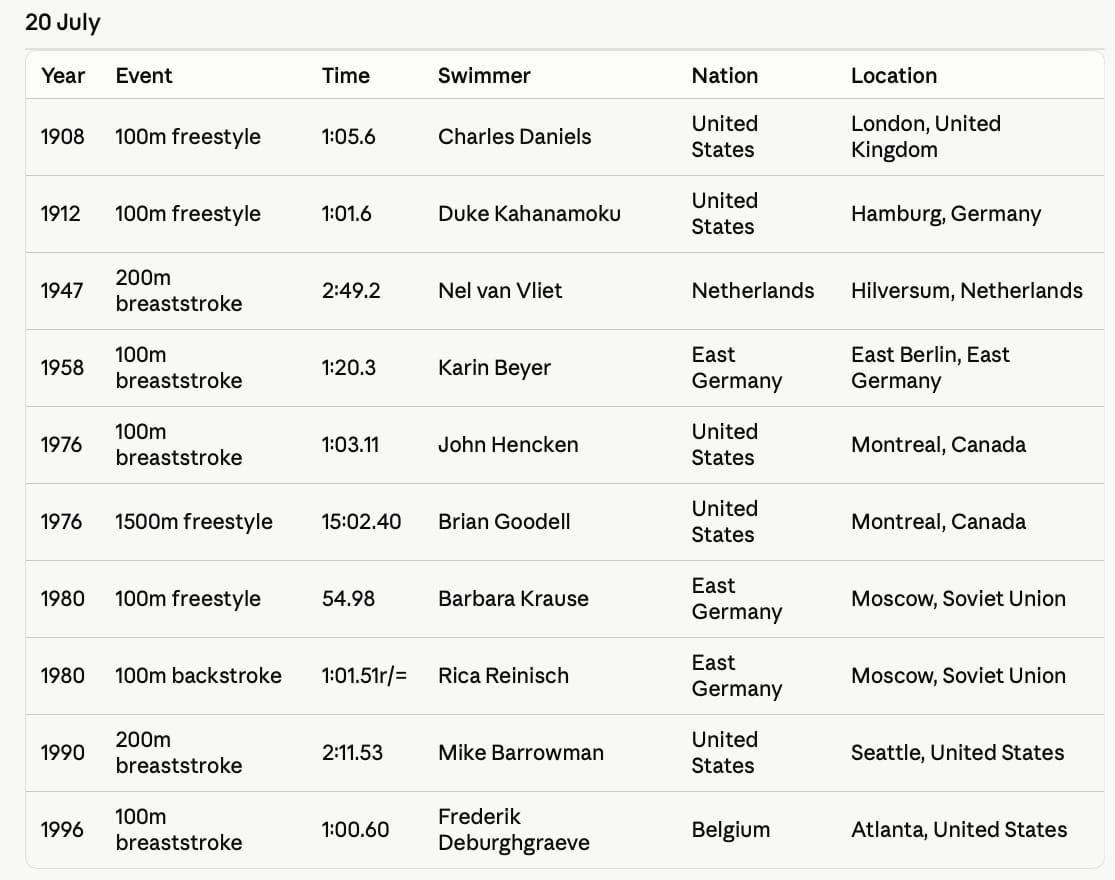
Day 3 in Montreal completed a clean sweep of three World records in all rounds of the 100m breaststroke: the USA's John Hencken equalled his own World record of 1:03.88 in heats, reduced it to 1:03.62 in semis and then moved it on apace for gold in 1:03.11, pressed by Great Britain's David Wilkie, who raced inside the previous two standards set by the American to claim silver in a European, Commonwealth, British and Scottish record of 1:03.43, among his reasons to be cheerful with such a lining the fuel he would take to his blocks in the 200m.
If that wasn't enough of a thrill, day 3 also witnessed what remains one of the greatest and most iconic 1500m swims of them all: a cliff-hanger challenge to the 15-min mark, topped by Brian Goodell in 15:02.40, with teammate Bobby Hackett second in 15:03.91, and Australia's Stephen Holland third in 15:04.66. Brazil's Djan Madruga is another who can say they beat Vladimir Salnikov in Olympic waters, his 15:19.84 10sec ahead of the 16-year-old Soviet swimmer and a 15:29.45 for 5th place at his debut Olympics four years before taking gold in the first sub-15-mins at a home Games in 1980.
At US Olympic trials in Long Beach, California, 17-year-old Goodell had thrown down the gauntlet to the world by defeating triple World champion Tim Shaw (200m, 400m, 1,500m) in world records of 3:53.08 over 400m and 15:06.66 in the 1,500m. While the year leading up to the 1976 had been golden for Goodell, it had brought woe upon woe for Shaw: he suffered tendonitis and anaemia, had to sit back while all his world records in the 200m, 400m, 800m and 1,500m freestyle were broken by others and then qualified for the Games in just one race, the 400m (there were no 800m races for men at Olympic and World levels in this days).
The 1,500m final in Montreal quickly turned into a three-man race between Goodell, Hackett and Holland, who had broken the world record four times between lifting the inaugural World title in Belgrade in 1973 and Goodell’s US trials time.
Hackett led the way until 950m, all three men racing inside world-record pace for much of the race. Hackett turned in 57.55, to Goodell’s 59.14 world-record pace; then 1:58.13 ( to 1:59.81); and 4:00.15 (4:02.32). At the 500m mark, his 5:01.38 compared to record-pace of 5:03.02 and splits of 5:03.22 for Goodell and 5:03.47 for Holland.
At that point, the third American in the race, Paul Hartloff, was still in touch, on 5:05.32, but from there the pack melted away. At 800m, Hackett turned in 8:03.50, shy of the 8:01.54 world record he had set on the way to 1,500m selection at the US trials.
Goodell, on 8:05.66 and behind Holland, on 8:05.02, had seen it all before at trials - and kept his powder dry. By 1,000m, Holland had taken the lead in 10:04.19, 0.5sec ahead of Hackett, 2.08sec ahead of Goodell, and was now racing faster than his first 500m, with a second 500m split of 5:00.72. By 1,200m, the Americans were just over a second away, Hackett still ahead by a touch, Goodell gaining with every stroke.
With 100m remaining, the teenage World-record holder was motoring. He got his feet on the wall first for the first time in the fight: 14:04.67 to Hackett’s 14:04.95 and Holland’s 14:04.99. The crowd was on its feet, the teams were one their feet and, in my household, no seat had a friend. This was no time to lean back. The last 100m splits sealed the vault of Olympic immorality for all three men: 57.73 for Goddell; 58.96 for Hackett; and 59.67 for Holland.
The battle was over, the tightest 1,500m podium in history concluded in a world record of 15:02.40 for Goodell, who was on a roll. Two days later in the 400m final, he won an another epic battle, against Shaw, to join Henry Taylor (1908), Norman Ross (1920), Murray Rose (1956) and Mike Burton (1968) in the club of men who won the 400m and 1,500m crowns at the same Games. Both Goodell and Shaw raced inside the world record, but the 1,500m champion claimed gold in 3:51.93 to Shaw’s lifetime best, of 3:52.54.
Boycott deprived the sport and the Games of what might have been a mighty battle 400-1500 battle once m ore in Moscow, instead of the lonely victory that sealed Salnikov's place as a 30-length pioneer.
Meanwhile, the Montreal 1500m is etched in the memory as one of those races that remind broadcasters and folk with an attention span that struggles top stretch beyond a sprint that epic's take a little longer. Goodell is on the list of the next wave of profiles heading for our Hall of Fame when time allows beyond the impending coverage of this season's biggest internationals.
July 20, 1976 - and other World records etc this day in history.
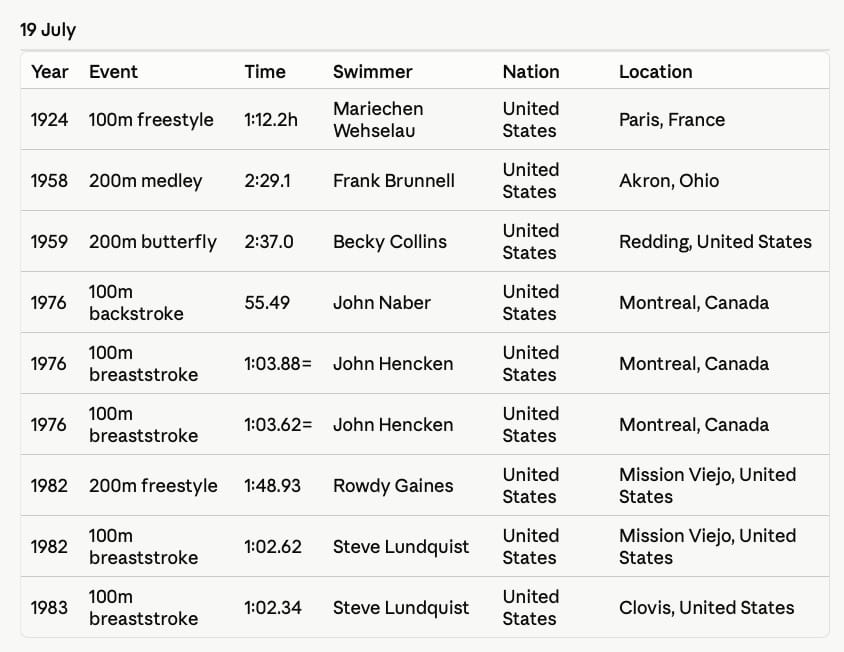
Day 2 - July 19
Naber Flips From Back Gold T o Free Silver By A Slither Behind Furniss - & Hencken Makes it 2 100m breast WRs in a Day
American John Naber followed up on his World 100m back record in semis with a scorching 55.49 game-changer in the final for the first of his four Olympic gold medals at Montreal 1976. The silver in his collection was the only event in which he did not set a World record - and it unfolded just an hour after victory in the 100m backstroke ahead of teammate Peter Rocca and East German legend Roland Matthes, the 1968 and 1972 double-double backstroke champion. Matthes bronze made him the only backstroke swimmer ever to win a medal at three separate Games on the stroke, American Aaron Peirsol the next Olympic champion to join that club in 2008. For Naber in 1976, victory was the fulfilment of a childhood dream: at nine he visited Olympia in Greece and told his parents that his destiny was to be an Olympic champion.
An hour after the 100m final, Naber took silver over 200m freestyle 0.21sec behind Bruce Furniss (1:50.29) and 0.08sec ahead of Montgomery in a USA sweep and the tightest podium finish in the history of the event. The 'race' continued in the warm-down pool, where Naber and Furniss found themselves speeding up in response to each other's attempt to ease down ahead of their closest opponent. No stopping the will to race and win.
John Hencken was the other American world-record setter on Day 2, with standards in the heats and semis of the 100m breaststroke on his way to gold in a third pioneering mark in the final a day later.
On this day, July 18
The 50th Anniversary of Montreal 1976 - Let The Highs & Lows Of The Doping Games Begin
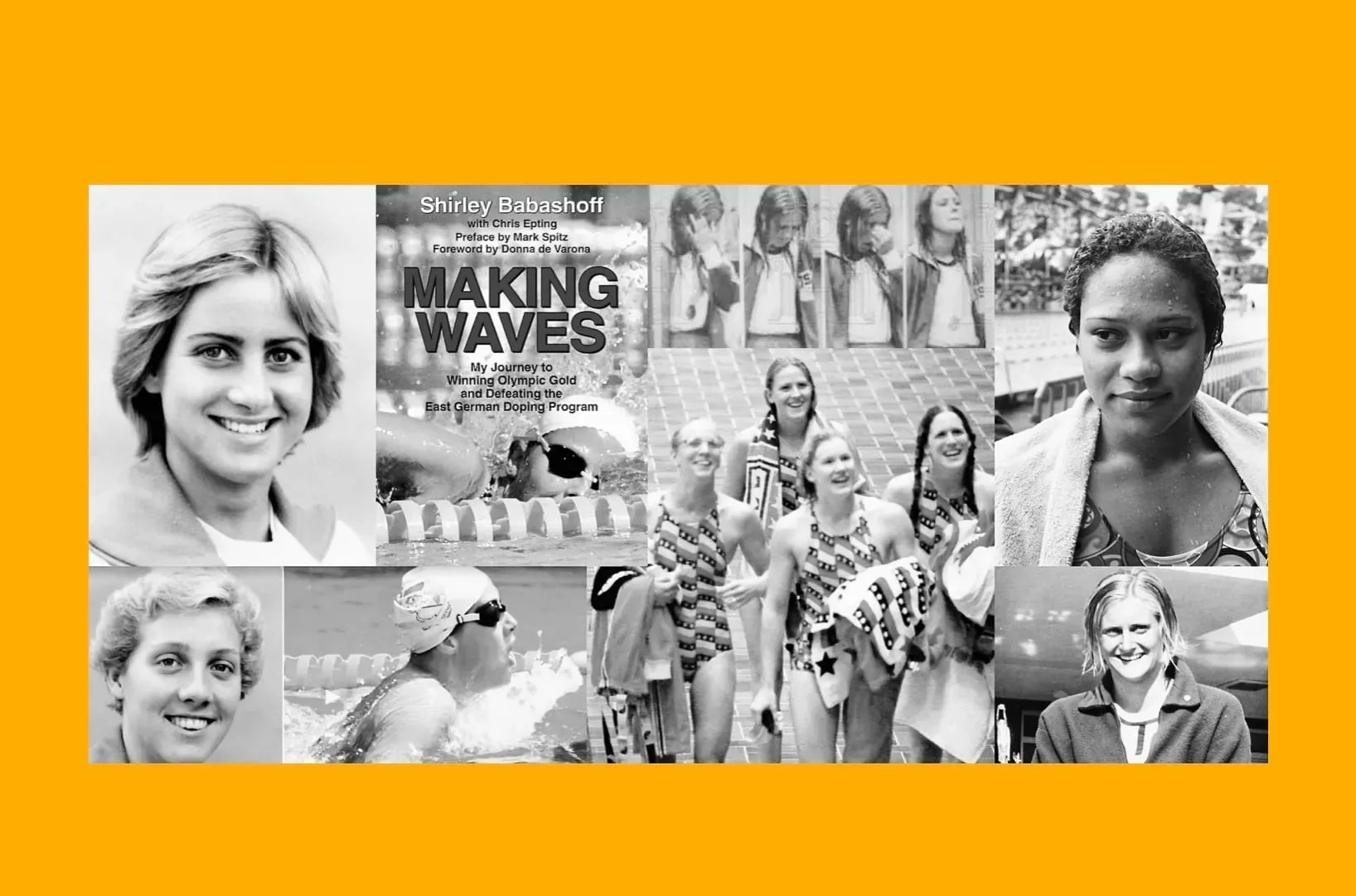
Today marks the 50th anniversary of the start of the Montreal 1976 Olympic Games, and in the week ahead we'll celebrate some of the many pioneering moments in the pool in Canada.
Montreal 1976 holds huge significance in swimming history and the evolution of the sport, for athletes, coaches, and the blazers and bureaucrats who failed both those latter categories of stakeholders in Olympic sport.
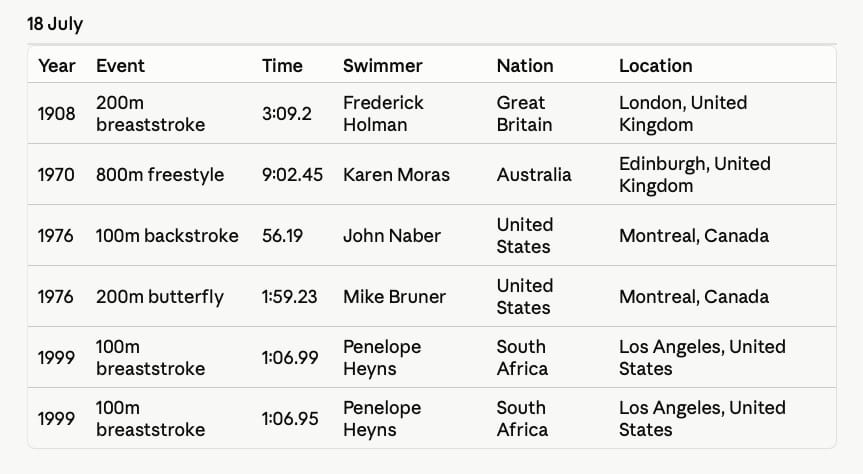
For today, SOS is on a go-slow, with a big family birthday to celebrate, but the Timeline never stops, so here are the World records set this day in history, including the first two of an avalanche of standards in Montreal, John Naber's 56.19sec in a 100m backstroke semi-final that marked the changing of the guard, with Roland Matthes, the 100-200m champion of 1968 and 1972, taking bronze the next day when Naber took gold in a stunning 55.49 to seal his career. Naber changed the game, just as Matthes had before him as the owner of what remains the most decorated Olympic backstroke career in history.
Mike Bruner's win in the 200m butterfly was the other Day 1 World record in Montreal. July 18 was also the day when Fred Holman took gold for Great Britain at a home Olympics in London; Karen Moras claimed Commonwealth-Games gold for Australia in Edinburgh the 800m free; and Penny Heyns made it four world records in two days, heats and finals of the 200m and then the 100m breaststroke, at the Janet Evans International in Los Angeles (see July 17 for more details and her SOS Hall of Fame profile):
More profiles and features of the legends of Montreal will appear in the Hall in the week ahead. Meanwhile, here's a basic overview of the stats from the 1976 Games, and a reminder of the darkest chapter in swimming history, one that governors at IOC and World Aquatics levels, and all below them, have done nothing about for half a century, 36 years of which have passed with massive amounts of truth told and yet not a single effort to do the right thing by athletes and the sport of swimming by reaching for a truth, reconciliation and recognition process that would go along way to healing the wounds and harm of while lifetimes, some of which, like that of Canada's Nancy Garapick, have passed.
 Craig Lord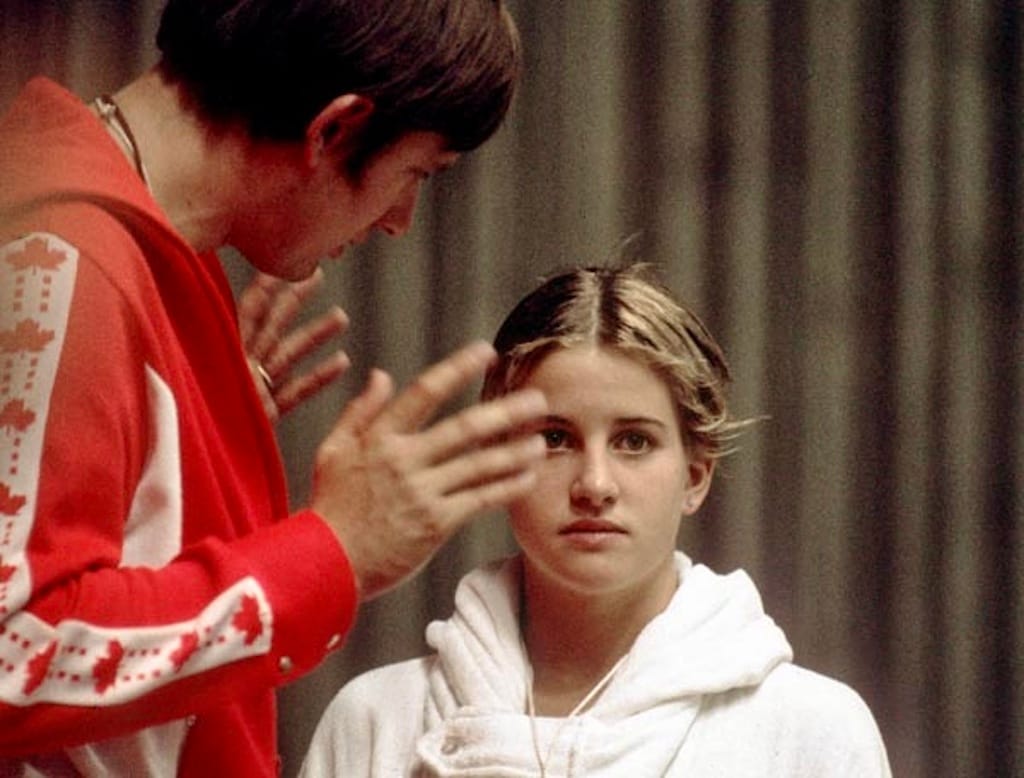
 Craig Lord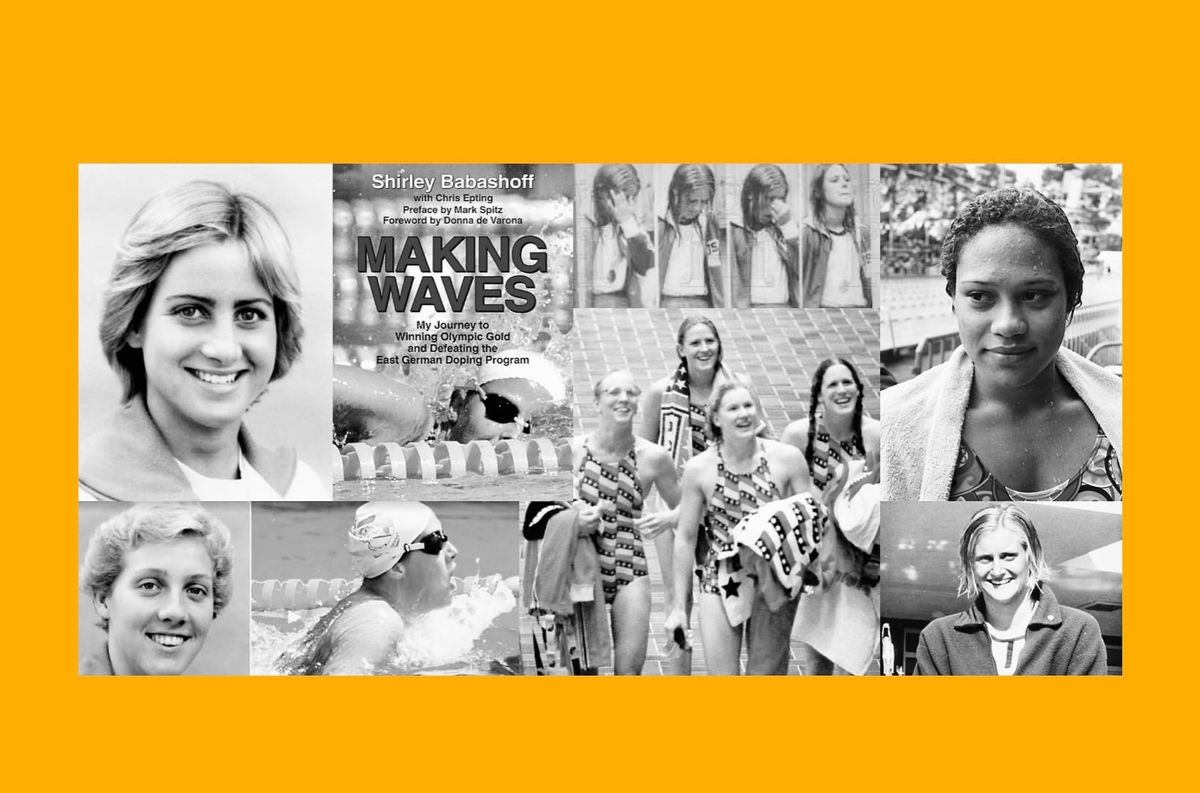
 Craig Lord
A short extract from Unfair Play by Sharron Davies, with Craig Lord:
East German officials dumped the leftover serum and syringes in the St. Lawrence River, newly uncovered documents indicate.
A chance discovery in the Berlin archives of the notorious Stasi, the East German secret police, led University of Waterloo history professor Gary Bruce to a 95-page file on the spy service’s operations at the Montreal Games.
A Stasi officer’s final report on the Games contains a none-too-subtle reference to the drug program under the subheading, “Destruction of the Rest of the Special Medicine.”
About 10 suitcases of medical packaging, needles, tubular instruments, etc. were sunk in the St. Lawrence River.
Bruce explained:
"The documents make it clear that Stasi chief Erich Mielke saw the Games as a means to improve East Germany’s standing in the world by ensuring all went well on the athletic field and that nothing went wrong away from it. He put the fabled Markus Wolf, head of the Stasi’s foreign espionage wing, in charge of Operation Finale, a tightly controlled effort to monitor East German athletes in the years leading up to the ‘76 Olympics as well as during the 16-day sporting festival… Officers from the Stasi and other East Bloc security services met at KGB headquarters in Moscow before the Games to coordinate efforts."
"To the GDR, sport was about business, power and politics. For me, the Montreal Games were all about soaking up the incredible experience. Four years later at 17, I would be a contender and the significance of GDR cheating would sting me and my teammates not just on the day but for decades after." - Sharron Davies
"My Olympic-debut focus was the 200m backstroke. I entered as the third-fastest on the Britain team and left the competition the fastest Brit, mid-field among all the world’s best swimmers. A key definition of satisfaction in performance sport is seeing the rewards for all your hard work.
"The East Germans worked hard, too, some of them enduring regimes that were beyond what many of us could manage without breaking down, without sustaining serious injury or without burning out. The big question, one that ran through our heads at every passing competition, was: how were they getting away with it?" - Sharron Davies
The truth started to flow not long after the fall of the Berlin Wall in 1989 – but not everyone wanted to hear it.
 Craig Lord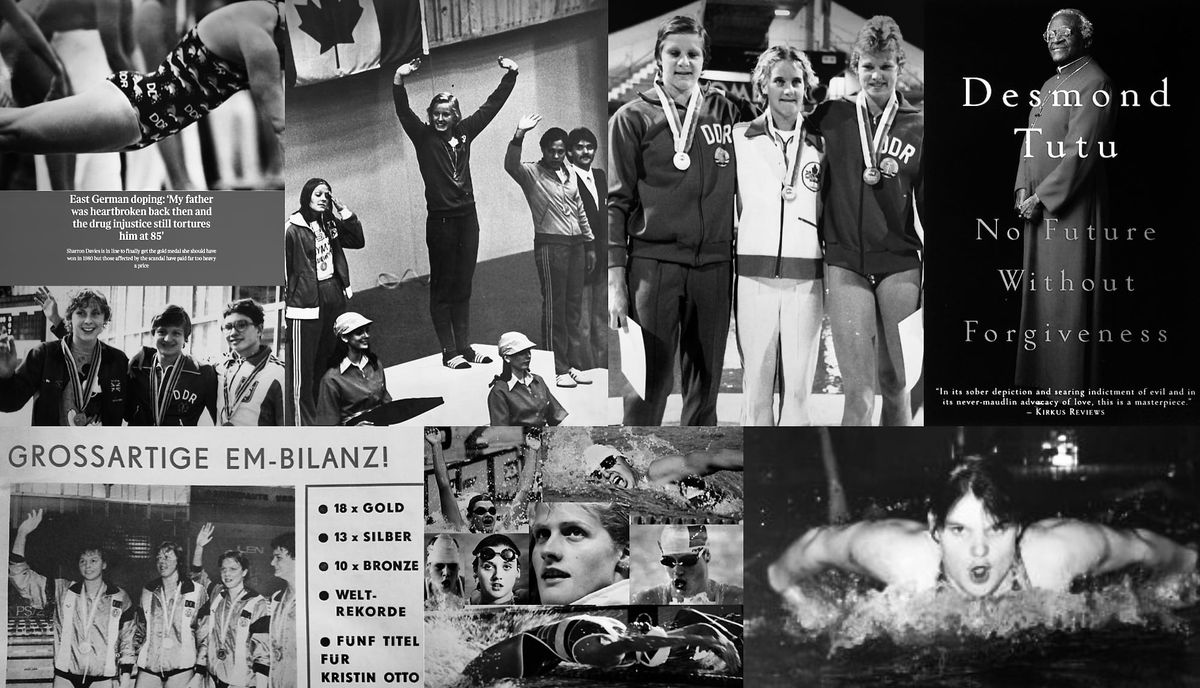
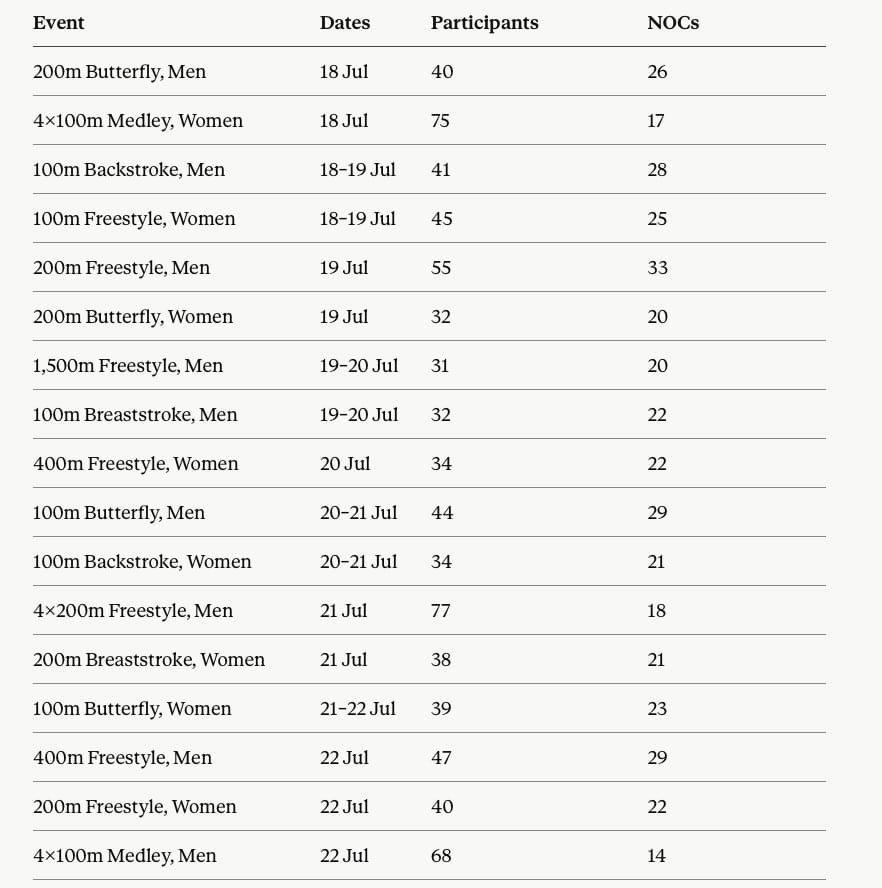
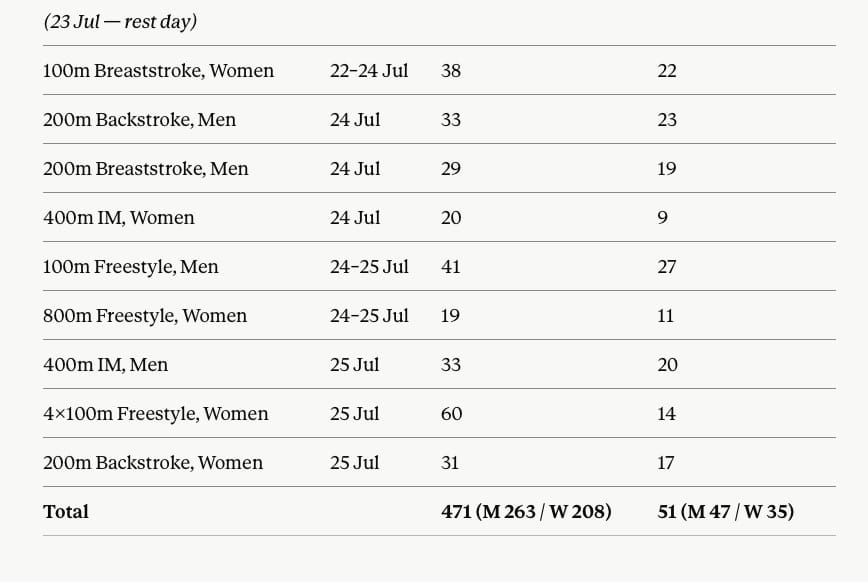
And so, to the stats... Montreal 1976:
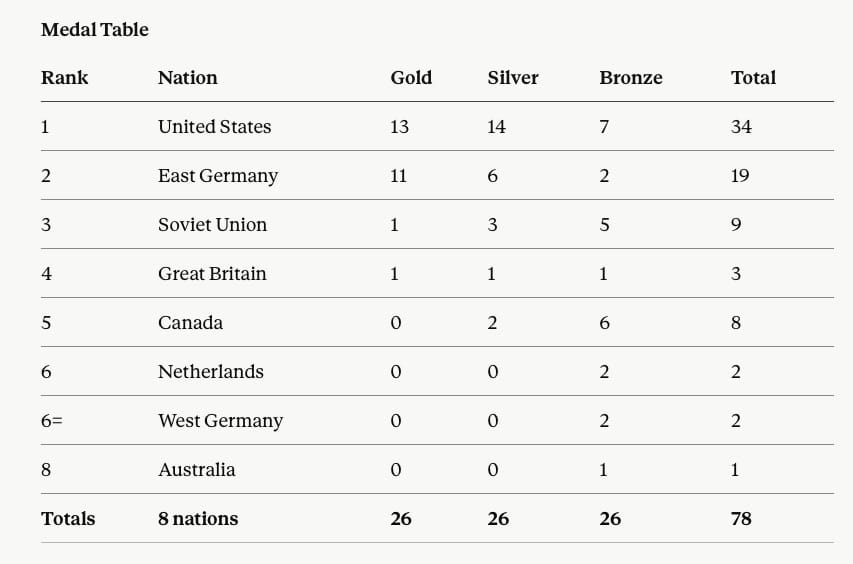
(subscribers have access to the full Timeline content in our daily trawl of pioneering moments in swimming history - and the accompanying profiles in our SOS Hall of Fame as we build the library).
