What A Week That Was For Pioneers Durack, Wylie & Great Britain's 4x100 Free Quartet
“We swam only after working hours and they were 12 hours and six days a week. We were told bathing suits were shocking and indecent, and even when entering competition, we were covered with a floor-length cloak until we entered the water." - Jennie Fletcher, Olympic champion 100 years ago


What a week this was for Australian pioneers Sarah Frances “Fanny” Durack, Mina Wylie and Great Britain's Jennie Fletcher, the first three women to make an Olympic swimming podium in a solo event, and Fletcher with teammates Isabella Moore, Annie Speirs and Irene Steer, the first female champion relay quartet.
Durack became the first women to claim Olympic gold in swimming 100 years ago this day - July 12, 1912 at the games in Stockholm.
Durack and Wylie did not only claimed the inaugural gold and silver in the 100m freestyle, they also won a battle against the men who told them that all the money for travelling top the Games was for the blokes and they would not be going to Sweden.
Born in Elizabeth Street, Sydney, on October 27, 1889 and departed on March 21, 1956, Durack was the third daughter and sixth child of Irish parents Thomas Durack, a publican, and his wife Mary, née Mason. By the time their talent offspring showed up in Stockholm, she’s had a fight on her hands just to get there, having never won a national title, her only domestic trophy the New South Wales 100m breaststroke title in 1906. The lack of a national crown was no great shakes: Durack was already a seasoned international tourer on a growing circuit in swimming.
She learned to swim in Sydney’s Coogee Baths using breaststroke, the only stroke open to women at the time. In 1906 she won her first crown and at the start of a career in which she dominated the Australian swimming scene among women. In 1911, Mina Wylie beat Durack in the 100 yards breaststroke and the 100 and 220 yards freestyle at the Australian Swimming Championships at Rose Bay.
The two went on to become close friends but it was Durack who, later in 1911, converted trudgen to a two-beat-kick Australian crawl, her efforts helping to spread modern crawl around the world – and helping to keep rivals at bay.
The Aussie men in charge of selecting the team for the 1912 Games declared that it a waste of time and money to send women to Sweden. And anyway, all the money there was had already been allocated to the blokes.
The rule book didn’t help either: the New South Wales Ladies’ Amateur Swimming Association regulations held that no women could compete at events where men were present. A public outcry resulted in a vote and rule change at the association and Durack and Wylie were allowed to make the journey to Europe – provided they paid for themselves, plus a chaperone.
The wife of Hugh McIntosh, a sporting and theatrical entrepreneur and newspaper proprietor, launched a successful appeal for funds and with money donated by the public, family and friends, Durack sailed for Sweden via London, where she was reported to have trained ‘half a mile a day’.
Those who contributed were not disappointed. In the heats at the 100m saltwater pool built in Stockholm Harbour for the Games on July 9, Durack clocked 1:19.8 to shave 0.8sec off the 1:20.6 world record held by England’s Daisy Curwen, who raced the semi-final but was then taken straight to hospital for an emergency appendectomy and missed the final. Durack could not replicate her best in the showdown, a 1:22.2 good enough to win: she finished 3.2sec ahead of Wylie, with Britain’s Jennie Fletcher third in 1:27.0.
In the fat archive of amusing tales on the Olympic trail is a request for Durack and Wylie to swim two legs each of a relay race (which they may well have won): they were turned down by the organisers of the Games, including representatives from the International Olympic Committee and FINA.
The First Olympic Relay Crown For Women
Britain had the best foursome, Jennie Fletcher adding to her bronze alongside Isabella Moore, Annie Speirs and Irene Steer. The quartet who clocked a 5:52.8 world record for the first relay Olympic gold in swimming, over 4x100m freestyle. Fletcher would say years later:
“We swam only after working hours and they were 12 hours and six days a week. We were told bathing suits were shocking and indecent, and even when entering competition, we were covered with a floor-length cloak until we entered the water."
The home quartet from Sweden, which finished fourth, included 17-year-old Margareta “Greta” Johansson, who two days before the relay, on July 13, had become the first female Olympic diving champion off the platform. The same year she married Sweden teammate Ernst Brandsten, later famous for the Brandsten Board and coaching several US Olympic diving champions.
Johansson, born on January 9, 1895, was the darling of her home Games, special applause reserved for her, according to the official Olympic report, when she was presented with her diving gold medal and laurel wreath. A product of a social welfare tradition in Sweden that considered sport and health as one long before many other nations around the world, Johansson learned to swim and dive in Stockholm’s municipal baths with free tickets issued through her school.
After the Stockholm Games, Johansson and Brandsten coached diving at Stanford University in the USA from 1915 to 1948, and operated Scarsville Lake Park, a profitable family-owned sports recreation business, for 27 years.
Meantime, Durack was teaching the world new lessons. Her development of a two-beat Australian crawl helped her to take the record down to 1:16.8 by 1915 but the Great War would dictate that there would be no Olympic defence for the first woman champion.
Her legacy kick-started a surge in interest in swimming fast Down Under, a glimpse of that spirit in the early days captured in this fab film.
Durack set 11 world records between 1912 and 1918, three of those over what remains the recognised sprint distance of 100m on freestyle. Her other records stretched from 100 yards to the mile, while Durack’s was the first name to be recognised as holding global standards over 220 and 500 yards and the mile.
The Australian held world records over 100 yards freestyle (1912 to 1921), 100m freestyle (1912 to 1920, until the advent of another pioneer of women’s swimming, American Ethelda Bleibtry); the 220-yard freestyle (1915 to 1921); the 500m freestyle (1915 to 1917); and the mile (1914 to 1926). Durack, via her world tours, did more to promote swimming than any woman with the possible exception of fellow Australian Annette Kellerman, who gave the world of women a suit they could swim in.
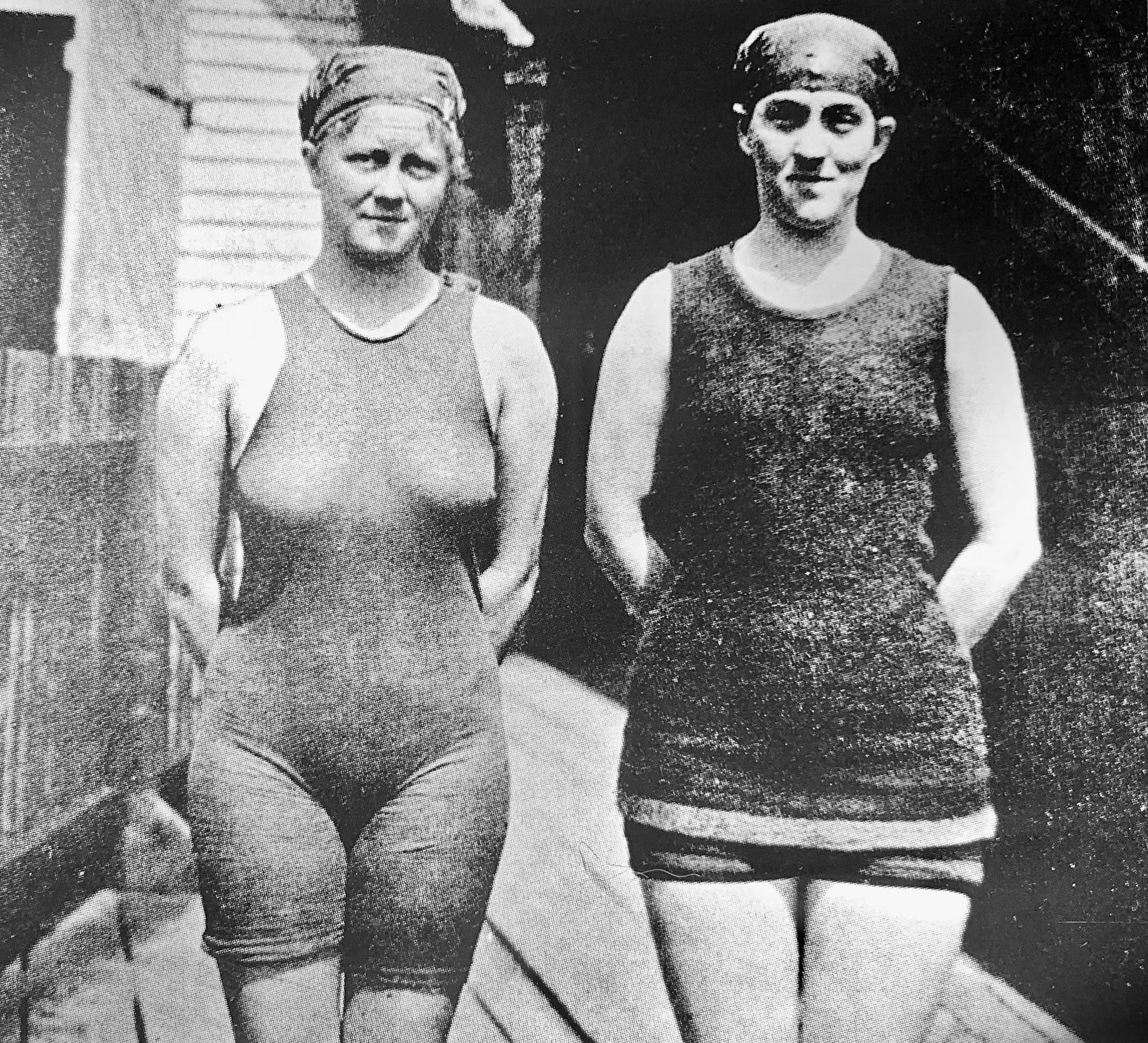
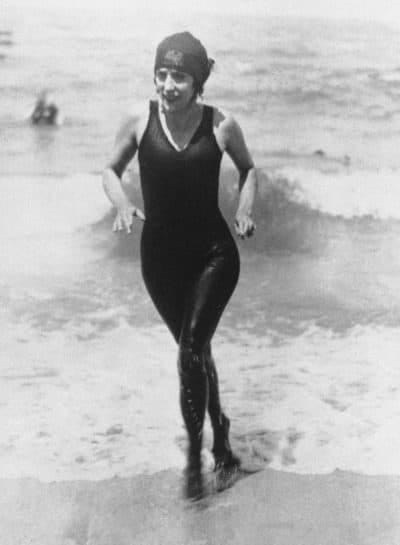
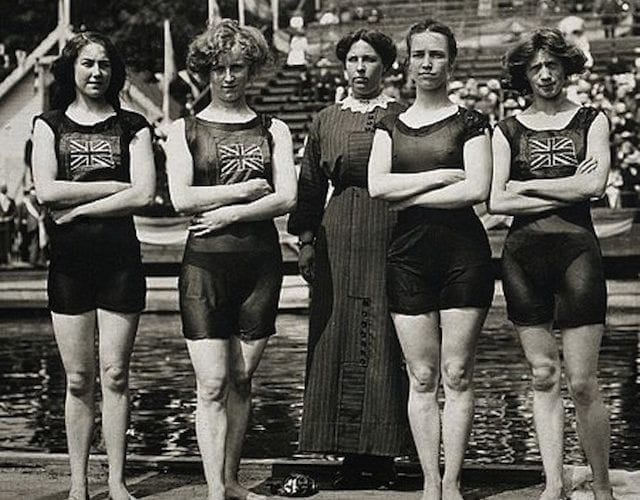
clockwise from top left: Mina Wylie and Fanny Durack; Annette Kellerman; Ethelda Bleibtry; and the GBR 4x100m free champions of 1912 (l-r) Isabella Moore, Jennie Fletcher, chaperone Clara Jarvis, Annie Speirs and Irene Steer
On one US tour in Olympic year in 1912, Durack won plaudits not only for the Australian crawl, marked by a two-beat kick, that she helped to popularise across the world but for “holding all championships for deep diving and for staying under water continuously”.
In 1918, Durack and Wylie arrived in America without official sanction to find themselves banned by the Amateur Swimming Union of Australia. Next year the Amateur Athletic Union of the United States threatened to suspend their amateur status, when they refused to swim until their manager’s expenses were paid. After being defeated in two carnivals by American girls, Durack tried to limit her appearances until she had practised the new American crawl.
Ordered by officials to swim at Chicago she jumped the starter’s gun, swam half a length and leapt out of the water. The tour was thus cut short. Durack was due to defend her Olympic crown at the 1920 Games in Antwerp but had an appendectomy, as well as suffering typhoid fever and pneumonia in the week before the Australians were due to set sail for Europe.
She retired in January 1921, when she married horse trainer Bernard Martin Gately at St Mary’s Cathedral, Sydney. She devoted herself to coaching and became an executive (and in 1945 a life) member of the New South Wales Women’s Amateur Swimming Association.
Durack died of cancer at her home at Stanmore in 1956 and was buried in the Catholic section of Waverley cemetery, Sydney. Her brother Frank presented her Olympic gold medal to the State (then Commonwealth) Government that year. The prize is held to this day at the National Library of Australia, in Canberra.
Fanny Durack was posthumously inducted into the International Swimming Hall of Fame in 1967 and the Fanny Durack Pool in Petersham, Sydney, is named in her honour.


