
Yu Zidi, 13, Flies To Games-Record 2:05 Debut Title At Asian Games
20th Asian Games, Day 1: Yu Zidi takes first of likely three titles; hosts Japan cheer 1-2 punch in men's 200IM, Tomoyuki Matsushita & Yemeni Kojima, 17, on pbs of 1:55.30 &1:55.36WJR; at 51.9 in the 100 back, Xu Jiayu, 31, as fast as his peak 9 years ago

Yu Zidi, a month shy of her 14th birthday, claimed the first gold of the 2026 Asian Games at the Tokyo Aquatics Centre in Nagoya, Aichi, Japan, with a dominant 2:05.03 victory in there 200m butterfly.
The win - one of six out of seven finals for China, and a career best inside the 2:05.71 she clocked at the China Open in March - also marked her first Asian Games title and the first of a likely three golds in the week ahead: her fourth-place finishes in the 200 'fly matched by the same result in the 200 and 400m medley at the World Championships last year when just 12 years old placed her on a prodigious, yet uncertain, pathway to a prospective Olympic debut and title hope for China at the LA2028 Olympic Games.
Born October 16, 2012, Yu is the poster girl for a regulatory farce in swimming: she is not eligible to hold World Junior records until she is 14, yet she can race at World senior titles and can set World senior records. And all of that three and a half decades after rules were changed in Aquatics sports because of a key case in diving:
It was January 1991 when Fu Mingxia claimed the World 10m platform diving title at the age of 12. That made her the youngest diving champ of all time. The age rule was then changed in her sport, after complaints from other nations based on two key things: 1. how much training an athlete just 12 years old would have to have done to reach that standard Fu had put on show (some of those concerns noting images of the young diver seated with legs outstretched as her adult male coach sat on her knees to place weight on the joint in an effort to stretch the young athlete's flexibility); 2. because Fu was so diminutive, rivals from around the world complained that adult athletes had no chance of replicating sthe frequency of twists, turns and overall dives she was capable of.
The rule was changed by FINA so that only athletes who turned 14 or over in the year of competition were eligible to compete. As such, a year after Perth 1991, Fu became one of the youngest Olympic diving champions in history, with platform gold at the 1992 Barcelona Games aged 13 years and 345 days old.
More than three decades on, the age rules in relation to records, participation, and integrity issues, continue to be poorly framed, neither one thing nor the other.
In Japan this evening, Yu's 2:05.08 Games record came off the following splits:
- 27.77; 59.38; 1:31.59; 2:05.08
Yu was followed home by China teammate Chang Mohan, also a young teen, at 15, on 2:08.44, while the bronze went to the host's Misa Okuzono in 2:09.67.
The winning time marks a big improvement on the 2:09.21 Yu clocked for fourth place at Singapore World Championships last year, while Chang came home today in a time faster than Silver behind Summer McIntosh last year:
 Craig Lord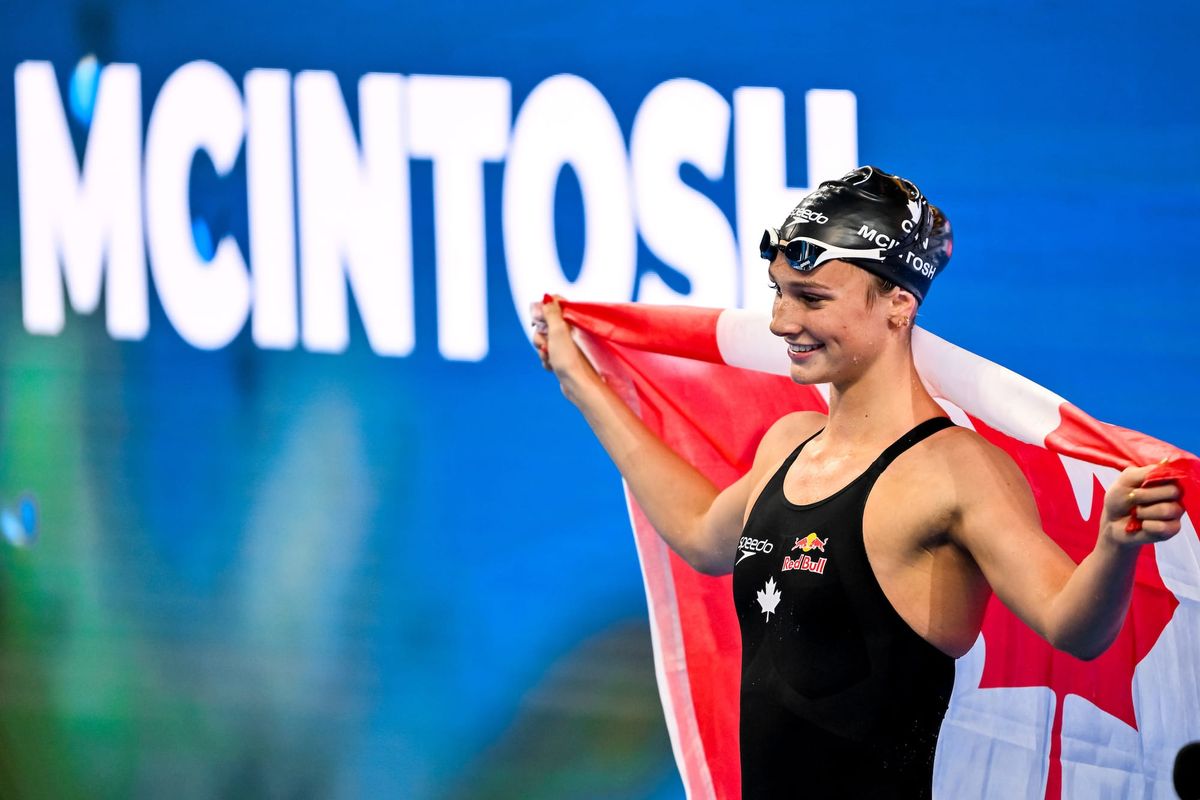
Yu must make another big leap on the clock to take down the Chinese records, of course: it has stood at 2:01.81 to Liu Zige is since the last season of shiny suits in 2009, and until earlier this year was the World record, 2024 Olympic champion MCintosh, of Canada, the new owner:
 Craig Lord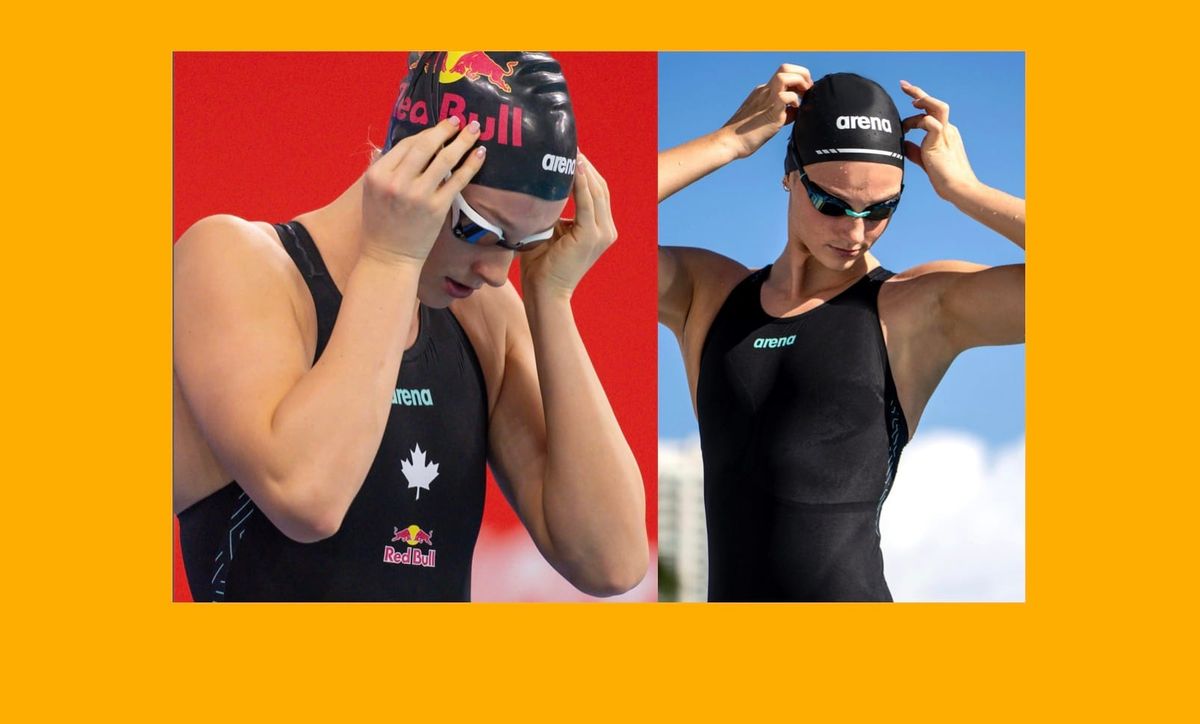
Yu Zidi is now fourth-fastest Chinese swimmer in history, after Liu (2008 Olympic champion), Zhang Yufei (2:03.96, 2020ne Olympic champion), and Jiao Liuyang (2:04.06, 2012 Olympic champion).
In terms of the speed/age curve, McIntosh was 15 before she clocked consistent 2:07 swims on her way to setting the World junior record of 2:05.79 that same year, 2022. That time is now McIntosh's No15, the slowest of the Canadian top 15 efforts all in her name before Audrey Lacroix comes in at No16. At global level, McIntosh owns five of the fastest six times and eight of the top 20 performances in history.
At the other end of age spectrum in a sport with champions from 13 to well into their 30s, the last solo final of day 1 saw China's Xu Jiayu become the latest thirty something to not only win a major title in the pool but do so in a time that makes him as fast as he's ever been throughout his long career.
The 31-year-old clocked a Games record of 51.98 flor gold in the 100m backstroke, just shy of the Asian Games record of 51.86 he set nine years ago at home in Qingdao. The Games record had stood at 52.02 to Xu since a home Games in 2023, when the event was held in Hangzhou.
Inside 52sec, Xu was a league apart from the rest, silver to Japan's Hidekazu Takehara in 53.93, Korea's Juho Lee third in 53.94.
In other finals
Men's 200m medley
Japan's Tomoyuki Matsushita and 17-year-old teammate Yemeni Kojima were split by just 0.06sec, Matsushita the champion in 1:55.30, Kojima inside his own World junior record, and the bronze to China's Wang Shun.
Matsushita's win shaved 0.21sec off the personal best he set in home college competition just 15 days ago. Kojima also celebrated another career high: in March at the Japan Open this year he clocked a World Junior record of 1:56.53.
The top two in the race are now ranked respectively No12 and equal No13 all-time.
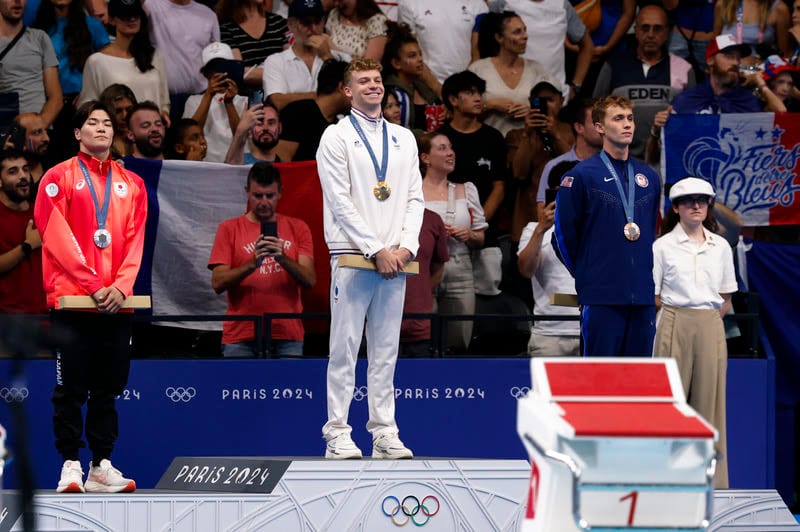
Matsushita claimed silver in the 400m medley adrift hero of the home Paris 2024 Olympic Léon Marchand in 2024:
Meanwhile, Wang's Asian record of 1:54.62 from September 2023 survived the day, as did a controversial history in which the 2020ne Olympic champion has twice tested positive for banned substances but allowed to go free by the anti-doping system that has allowed something of a monopoly factor to weaken strict liability: contamination has been used as a get-out-of-jail-card by China on more than 40 occasions in the past decade.
Women's 1500m freestyle
The title went to the swimmer Yu Zidi has described as her 'big sister' in training, Li Bingjie, whose 15:53.52 was the sole sub-16 in the field.
The silver went to Singapore's Ching Hwee in 16:00.45, bronze to Japan's Ichika Kajimoto in 16:06.83.
Men's 100m freestyle:
The first Asian Games podium of 47sec swims is in the books, the race topped by Olympic champion Pan Zhanle in 47.61, silver to Korea's Kim Youngbeom, just 0.094sec shy of upset in 47.65, his teammate Hwang Sunwoo on 47.79 for bronze.
The Asian record was a distant dream: 46.40, the World record set by Pan for Paris 2024 gold when Pan cause pandemonium in the sprint ranks with an off-the-chart swim as the first in history to win the blue ribband race at the Games by more than a second since Johnny Weissmuller in 1928:
 Craig Lord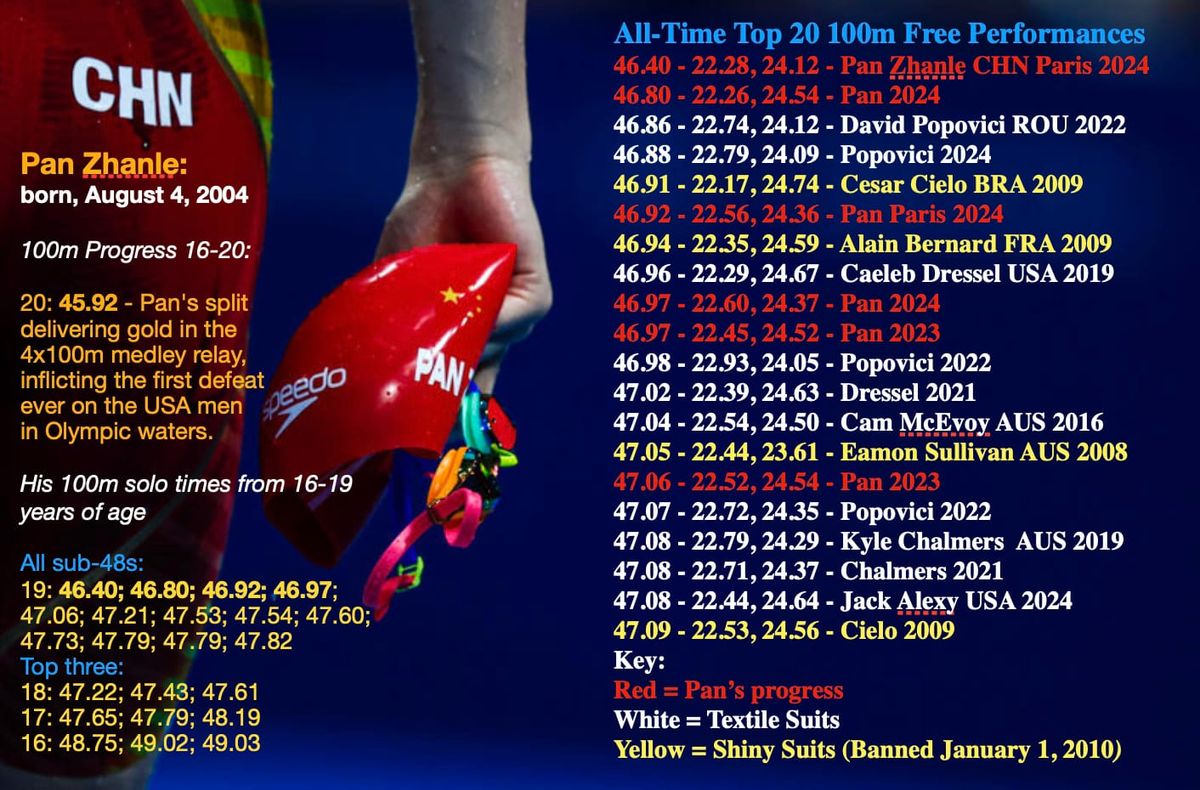
 Craig Lord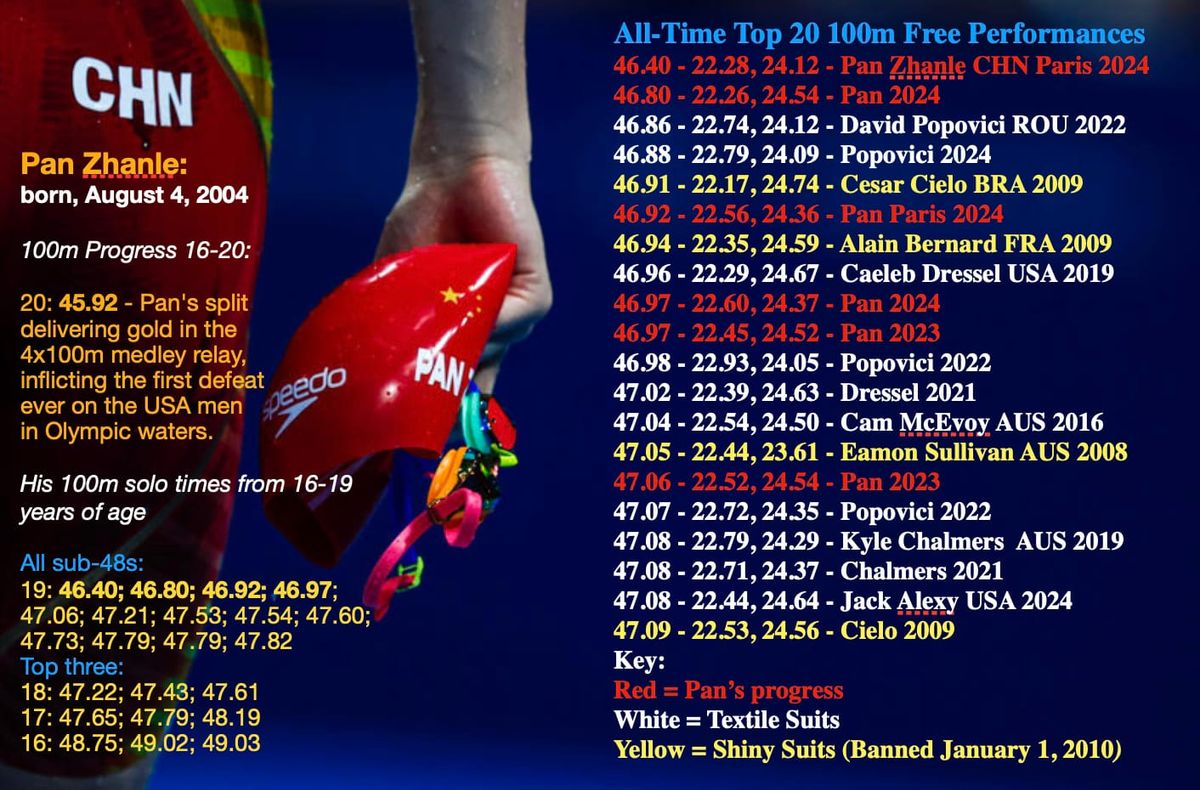
Women's 50m breaststroke
Back in March at the China Open, Tang Qianting set an Asian record of 29.44. Just 0.01sec shy of that today, she sprinted to the Asian title in a Games record or 29.45 ahead of Japan's Suzuki Satomi, 29.91. The bronze went to the winner's teammate Chang Yang in 30.24.
Women's 4x100m freestyle
China claimed the sixth out of seven titles available on day 1 in the last showdown of the evening.
The time of 3:33.10 was well shy of China's Asian record of 3:30.30, set at the Paris 2024 Olympics, but comfortably good enough for a dominant win.
- Yu Yiting (53.39) was followed by Zhang Yufei (52.99), Cheng Yujie (53.79) and Wu Qingfeng (52.93) for gold.
- Hong Kong were closest, in 3:36.59: Ma Gilaine, Siobhan Haughey (53.22)
Li Sum Yiu and Natalie Cheuk Tung. - The bronze went to Japan in 3:39.09: Ayu Mizoguchi, Rio Suzuki, Nagisa Ikemoto and Shiho Matsumoto.


