
Time To Banish The Art Of Blazers Marking Their Own Homework
It's early days for swimming Integrity Units - there's a long way to go before the system is working as it should, it seems to many in aquatics. AQIU now has before it a submission from the Slovak swim community that makes the eyes water. What happens next will test the entire integrity ecosystem

FORUM - THEMA: A TEST OF INTEGRITY
The Slovak swimming community is fighting for the survival of almost half the clubs in its country. No fewer than 64 of them have been suspended from the state-funded federation that regulates their sport in the country.
A legal challenge has been mounted, and a submission outlining a catalogue of concerns was made to the European Aquatics Integrity Unit, which passed it all on to the global Aquatics Integrity Unit. Some of the key concerns would, sadly, not be unrecognisable among swimming communities worldwide.
It is only in the last couple of years that such concerns can be put before integrity units described as "independent", which means 'not subject to the control, influence, or support of others'.
All good and well, but, given some of the first experiences of those reporting and whistleblowing in aquatics so far, let us not forget to ask such questions as:
- how robust is the system when it comes to safe reporting processes and the protection of witnesses?
- is there reason to believe that leadership figures using the term 'independent' as a shield to accountability, are still seeking to mark their own homework, most particularly when red flags are being waved at them, the executive volunteer class that set the terms and conditions of engagement for and with the integrity unit?
The questions also extend to the nature of independence for a variety of reasons. There are three key things that cause me to question whether an integrity process is truly independent:
- the view in sport - expressed to me several times by a variety of leadership figures, paid and voluntary - that its impossible to have the purest form of independence because you need skilled people in place who understand sport, and specifics of specific sport. It is not an unreasonable view, but does not justify the need for clear and rigid red lines, such as No2:
- any individual who has worked in any capacity directly with a leadership figure at any level of aquatics sports, domestic or international, in any work or professional relationship in which there has been a commercial or remunerative element to that relationship, should automatically be disqualified from playing any role in any integrity unit in the sport. If one does not exist, then a charter of who is eligible to be appointment and who is not should be written and made public for all to see. (if one exists, please point me to it).
- the absence of any discernible evidence, from my perspective, that some of the robust and necessary practices and approaches to integrity inquiry and investigation that David Howman spoke to this author about before swimming had any integrity units have been adopted in aquatics:
 Craig Lord
Concerns about the validity of having an integrity unit at all extend to understanding the nature of the controlling force of the 'volunteer executive', from top tables at international level down through the ranks to domestic level.
On the one hand, some matters that need independent oversight never get beyond the top tables even though the constitution of World Aquatics (formerly FINA) makes clear that the Congress of member nations is the ultimate authority.
The only thing anyone in the sport of swimming should 'fear' is an independent integrity unit and inquiry process that also protects them. Yet, the sense and smell of a different fear remains present at the interface of governance and membership despite the accepted recommendations of the FINA Reform Committee, rebranding, and the birth of the World Aquatics era.
Here is an example of volunteer-executive overreach, in which fear runs two ways: the top table fears the view of the membership, so bypasses it, and the leaders of the membership beyond the top table leadership fears the consequences of raising a red flag and citing the constitution to prevent overreach:
 Craig Lord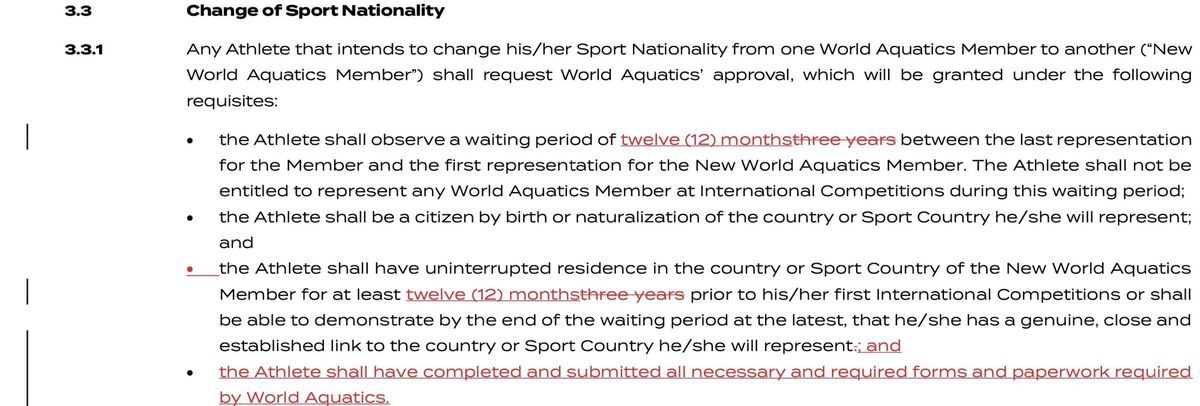
 Craig Lord
A reminder from the very top of the trees of why 'threat' is, sadly, an accurate word - from the exposé titled "Inside the Plot to Kill the Olympics", by investigative journalist Alex Perry:
By then, Grigorishin had other reasons for feeling disquieted. He says that Olympic officials he met often assumed that since he was Ukrainian and rich, he was “like them, fully corrupted.” They would hint at how much they were making from money laundering or embezzlement, then “immediately start to negotiate about some kickbacks.” Meanwhile, in Ukraine, Grigorishin heard that Maglione had come visiting, looking for kompromat: dirt. Email from the time between Marculescu and FINA’s American vice president, Dale Neuberger, reveal that they saw the ISL’s challenge to FINA as existential. “We must win, we will win,” wrote Neuberger. Marculescu wanted to punish swimmers who swam for Grigorishin. Neuberger preferred to go after national officials. “Hurt them badly,” he wrote of one country federation, adding of its chief: “We must kill him … suspend him for years.” At one point, Grigorishin received an anonymous text that read: “Konstantin can have everything for $150 million.” When Grigorishin’s new managing director, Ali Khan, asked officials in Europe and the U.S. for help in talking to FINA, he found them terrified. “In some instances, it got down to one individual saying, ‘I don’t want this to cost me my job,’” Khan said.
Such practices and culture never made it to any oversight body, past - under Ethics rules - or present in the Integrity unit era.
Such practices and culture never make it to any oversight body, Integrity unit or otherwise.
And on the other hand, that fear extends to the Congress of nations, too. The red threads that flow with and alongside fear include the wilful blind eye at the core of a go-along-to-get-along culture run which silence and agreement are the passes and tickets to remaining on the governance train even when pulling the emergency brake would be the right thing to do, because you know the driver and his co-drivers are not going to flick the dead man's switch in the best interests of the sport and the safety of those raising red flags when there's a fallen tree on the line.
The prime example was on show in Singapore last year when president of World Aquatics Husain Al-Musalam talked to the Congress ahead off a vote that installed Antonio Silva and Matt Dunn as "second" and "first" vice-presidents of the regulator. That unfolded with everyone in the room aware of the acrimonious backdrop that ought to have resulted in far more scrutiny of the issues at Congress level, and in one case at Integrity Unit level.
Marks for transparency of process? 1/10, the 1 for what we saw and heard at Congress, which said nothing of any background politics, arrangements, potential coercion or details of what explanations/excuses may have been communicated beyond that rather staged moment of a Congress vote.
The outcome?
- 1. Silva remains in two of the most senior 'voluntary executive' roles in aquatics sport despite having been declared unfit for a governance leadership role in Portuguese aquatics by the highest authority of the country on integrity grounds. The whistleblower filed to the Aquatics Integrity unit - and nothing came of it. The legal issues remain in play, witnesses are currently being interviewed, and there is more to come, while World Aquatics looked the other way, and the man at the heart of that controversy remains in place:
 Craig Lord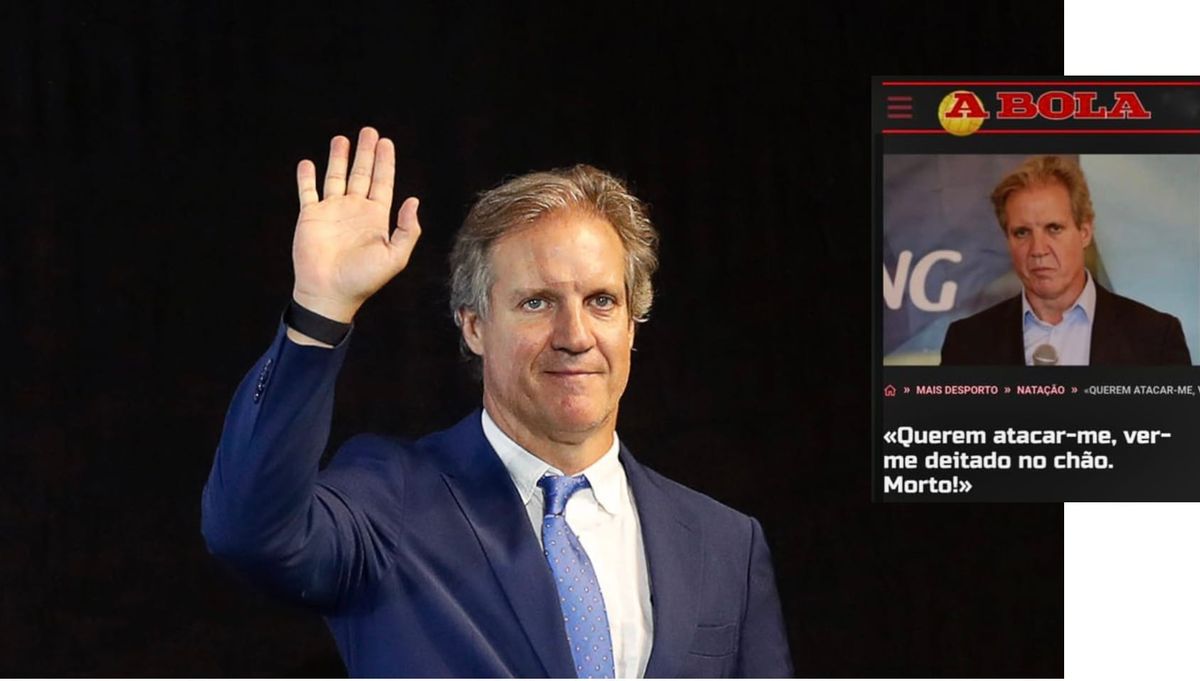
And here are the people the swimming integrity process has basically over-ruled, along with the Portuguese authorities, which in my opinion sends a big message to any would-be whistleblowers and red0-flag raisers: don't bother - the consequences will be yours not their';s.
If one person wishing to make a report about serious matters of concern feels that way about the integrity reporting process, the 'Integrity Unit' becomes nothing more that the keeper of doping scores and penalties, its 'independence' and status as a safe haven for hose alleging malpractice sunk to the ocean floor with a iron ball and chain strapped to a lung pulsing on borrowed time.
- 2. Australia was threatened with whole-nation suspension on a number of grounds that were never set out transparently in the way serious matters really ought to be so that that membership and the wider one can see, understand and take a view on such matters and robust debate can follow to ensure aquatics is a healthy realm. Dunn not only got to stay in his global-regulator top seat, but was elevated, and Swimming Australia was told that they must include him on the board. That, in my opinion, is a form of regulatory overreach in which the wishes of member nations to have the people they elect to represent them are kicked to the curb:
 Craig Lord
It is against that backdrop that the Slovak swimming community finds itself having to submit an integrity submission to ask for regulatory help in resolving a crisis in which almost half the clubs in the country have been shut down and more than 1,000 young athletes have been left in limbo as a result, they say, of a national federations fear of facing a democratic vote on the leadership over deep-seated concerns about how their sport is being governed:
 Craig Lord
So, with all the above - and the question 'are integrity and reporting processes in swimming fit for purpose?' - in mind, let's consider some of the key issues of integrity at play and the the questions all of that raises about the entire integrity ecosystem in aquatics, national level through to international response and responsiveness.
A Catalogue of Concerns
Whatever the Integrity Units, and then before them, whoever was charged with and responsible for listening to the concerns of members of the swimming family, domestic and international, have read and heard, acted upon or ignored, here are some common threads and questions raised from a wide variety of situations brought to my attention by two over-riding sets of people:
- those who have reported to regulatory authorities without satisfactory outcome (sometimes the decision but almost always also involving a failure to follow due process, or even having a due process that makes sense)
- those who have wanted to report but stop short of doing so because they fear consequences for themselves from people and groups of people in positions of power who, frankly, they do not trust to do the right thing, and believe to be too closely networked with the people to whom concerns has to be reported. Some have even talked me through the tiers of ‘if you feel unable to report to x, you can turn to y, then z’ and noted how every one of those tiers has an officer in it that is closely linked with the next, whether through a work or a social relationship, or both.
Some of the Key Fears That Integrity Bosses Must Be Aware Of
Reporting Processes - telling questions:
- Are they robust; will investigators take all evidence seriously and dig deeper by extending their inquiries as far and wide as reasonably possible? This question came from a few people, one of which believed that the report of an official finding of an inquiry relevant to an integrity submission they had made had never been requested for viewing by the swimming authorities charged with investigating. Quote: “All they had to do was ask!”
- What protections are in place to ensure that someone working at a sports organisation, including a national federation, can safely raise a flag when they see that statutory provisions are insufficient to cope with a developing situation that had not been foreseen; and can they safely submit evidence of integrity/ethics codes, rules, statutes, conventions and constitutions, athlete-protection and welfare policies, reporting processes themselves, conflicts of interest and any other concerns of a serious nature that they may have, without fear of reprisal?What provisions are there for penalising anyone who coerces or threatens those who submit their concerns to authorities?
- What provisions are there for professional, independent investigation and transparent adjudication structures, processes and guidelines, with full rights of reply on both sides?
- Whether the evidence subsequently stacks up or not does not matter. The process has to be robust and secure enough for potential whistleblowers to take the courageous step of coming forward knowing they will be taken seriously and, in particular circumstances, their names will not end up in the hands of those subject to complaint and in a position to punish them.
Conflicts of interest:
Time and again down the years, including in recent times, I've been approached by members of the swimming community who feel they have no-one to turn to in officialdom. Their concerns centred on the following points:
a. Separation of function and responsibilities
- Multiple hats, whether worn at the same time or at different times: regardless of whether the timelines of roles and responsibilities coincide or not, it is almost always problematic when roles collide and/or are contradictory in some way. The history of a crisis still ongoing at Swim England led to several independent reports that raised that precise issue as hugely problematic, with recommendations for a strict division of roles and responsibilities. An example from 2023, on issues that are yet to be fully resolved, to say the least:
 Craig Lord
- Old loyalties, networks and relationships: related to the above, there have been situations in which people felty unable to report concerns because the subject of their unease was directly related to the person in charge of the reporting process, through a variety of ways in which people can be tied: family, friends; boss-employer; teacher-student; parent-offspring; and so on and so forth. To some extent, such issues come down to the relative close-knit communities in which swimming can and does often take place, but even so, there are roles and relationships that can be problematic when disputes arise, and there has to be an independent B plan to cater for such moments.
3. Poor communication
I won’t labour this point but I have lost count of the times I have called to ask someone what happened after they raised a red flag only to be told - weeks, and even months after reporting has taken place - that “… after the initial request for more information, which I sent, I haven’t heard anything since”. I know the feeling: questions sent to the leader of European Aquatics a few years ago now remain unanswered, despite, as I have often pointed out but will do so again, ad nauseam, if necessary (sadly, it is), the Reform Committee’s approved recommendation that swim federations banish their “non-communication communication” culture. It’s still alive and kicking.
4. Threats:
Again, no need to labour this. Threats take many forms, depending on circumstance, and some don’t need top be followed through because the threat itself silences the would-be whistleblower. On some levels, of course, It’s fairly simple, as we can see in the case of the Slovak Swimming community, where what might have been a threat was immediately turned into an act of sports vandalism: 64 clubs have had their membership of the Slovak Swimming Federation (SPF) suspended, more than 1,000 athletes have been told their race results won’t count (neither in international rankings because the SPF will refuse to submit them) nor for the purpose of team selections. That’s to be put to legal test, but before any official judgement, legal or Integrity Unit, I say this: any federation leadership that takes the path we see in Slovakia and has clearly lost the control and respect of its membership should be stepped down from their roles pending investigation. Such people cannot be allowed to be in a position of authority over anyone in those circumstances.
5. Stalling
Another common complaint is that years can go by without professional due process being followed - and, important to note, that can affect - and has affected in my experience - both sides, complainant and the person of entities subject to complaint. Such delays, which can sometimes be described a a wilful dragging of heels (and that even in the hands of lawyers on occasion) can affect people’s health, their right to work, their livelihoods and welfare of their families. I know of cases where that “years can go by” stretches to 3, 4 and even 5 and more years of people innocent of any serious wrongdoing have had their lives and their families lives put on hold or even meant they were forced to change jobs, move houses and change their life goals, when they ought never to have been placed in that position.
What I have heard (and actually seen) from some who have made submissions to AQIU and other related authorities is a very tardy and often curt response. Why? I leave that question there, because it is for AQIU to answer.
Clear timelines and deadlines should be introduced to processes to prevent stalling. And where stalling rears its head, and deadlines are missed, it should carry a financial penalty. In writing that, I have in mind at least 10 different scenarios. Not included in that number is the missed deadline that proved costly for the SPF and its members, as we reported yesterday.
6. Truthfulness and Reliability of Official Statements and Documentation
As above, I’m not here to provide the details of what I’m talking about, because processes are in play, but when any member of the swimming community can look at a statement, when an official at a federation can look at the minutes of a meeting, when any athlete can look at a letter from their guardians at a domestic federation and know they see falsehood, manipulation, the wilfully misleading, and even threats running through the words, its time to raise a red flag. Why don’t more do so. See all the points above.
More Teeth Please
My concern, which I know is shared by many more in many different roles the sport of swimming, is that the lessons learned from such cases such as that now under scrutiny because of the courage of members of the Slovak swimming community and 64 suspended clubs insisting that integrity be front and centre in all decision-making processes and governance, will remain hidden in a file marked confidential.
The truth is that the issues and questions raised above do not belong to one story alone. They are universal in the sport and should instruct the rule book, the constitution... etc and the very terms and conditions of every 'independent' integrity unit out there. If they are to be trusted, if integrity processes are to be meaningful, then the only over-arching guideline required is the simple meaning of integrity itself;

Those are only words, of course: they are the equivalent of every goal a swimmer pencils into his or her log book, every session a coach posts on the board, every pledge in every constitution and rule book out there: worth nothing if no acted upon.
European Aquatics (EA) is a prime example of a federation that:
- a. comes down hard on athletes whop break doping rules, wear a t-0shirt with a slogan on it that officials consider to be political (with no fast, independent adjudication process in place for the athlete who faces expulsion or is, in fact, expelled from a championship, without any chance of having a hearing before loss of a chance and a result that can never be got back).
- b. completely overlooks an integrity decision, based on an inquiry process in a nation's official (and highest) sports authority overseeing Olympic sports, and keeps in power, as president, no less, the very man who has been deemed unfit for office at the helm of a national aquatics federation.
- c. stays loyal to that culture of athletes being held to a high standard of integrity on pain of sever punishment but says 'nothing to see here, move on' when it favours the convenience of a political status quo in governance over an award-winning whistleblower (one bearing hard and proven evidence accepted by a national inquiry process) and the officials supporting the case, them and their evidence kicked to the curb.
European Aquatics uses slogans such as “From Awareness to Action” and “Waves of Change”. It's hard to see any action/any change in precisely the place where it is most urgently needed: where the subject of concern and complaint is the leadership, one figure or more.
What's lacking? The will to do it. Actually, make that passion, because to do the best by athletes and those many good operators they work, and keep rogues at bay requires the kind of passion Pygmalion's Eliza Doolittle belts out in "Show Me" (screen adaptation, My Fair Lady - lyrics by Alan Jay Lerner, composition by Frederick Loewe).
Words!
Words! Words! I'm so sick of words!
I get words all day through;
First from him, now from you! Is that all you blighters can do?
Don't talk of stars Burning above; If you're in love,
Show me! Tell me no dreams
Filled with desire. If you're on fire,
Show me! Here we are together in the middle of the night!
Don't talk of spring! Just hold me tight!
Anyone who's ever been in love'll tell you that
This is no time for a chat! Haven't your lips
Longed for my touch? Don't say how much,
Show me! Show me! Don't talk of love lasting through time.
Make me no undying vow. Show me now!
Sing me no song! Read me no rhyme!
Don't waste my time, Show me!
Don't talk of June, Don't talk of fall!
Don't talk at all! Show me!
Never do I ever want to hear another word.
There isn't one I haven't heard.
Here we are together in what ought to be a dream;
Say one more word and I'll scream!
Haven't your arms Hungered for mine?
Please don't "expl'ine," Show me! Show me!
Don't wait until wrinkles and lines
Pop out all over my brow,
Show me now!
Words count, of course. They have to be carefully thought about, crafted so that the terms and conditions and the clear and critical lines of separation of functions between what's internal and what must be external and independent, for example.
And then when you've found the right words, lights, action must follow, or the entire integrity ecosystem is dead, buzz words 'reform' and 'integrity' as archaic and obsolete as these examples in the English language:
- Groak: To silently watch someone while they are eating, in the hopes that they will share their food with you.
- Apricity: The warmth of the sun on a cold winter's day.
- Overmorrow: The day after tomorrow.
- Yestereven: The evening of yesterday (last night).
- Slugabed: A lazy person who chooses to stay in bed late into the morning.
- Galliard: A brisk, bright, or lively person (originally referring to a spirited, energetic dance).
- Quacksalver: An ignorant pretender to medical skill (the origin of our modern word "quack").
- Integrity: the quality of being honest and having strong principles that you refuse to change, but not when inconvenient to self
So, let's not groak at the governance feast of words from yestereven followed by a failure to act on many overmorrows to come ... let's insist the wisdom of the integrity process is a transparent and robust tool available to all without fear or favour.
Our link above shows how David Howman was happy to talk about the challenge get of integrity units and the kind of robust measures essential to getting it right.
I'll be calling AQUI this week to see if they'd be happy to have a chat about it all.
Meanwhile, athletes and coaches and others are held to account in rules and in the results (outcome) they achieve. Those are critical parts of their 'job'. Integrity units should be charged with judging whether the same strong principles of accountability are applied to every governor in just the same way and with just the same force as athletes when they make mistakes.
For athletes, that may mean, for example, falling foul of anti-doping rules, or wearing the wrong t-shirt, or even logo or brand, as Tatjana Smith reminded us recently when she took on South African Swimming, won, and highlighted the kind of nonsense athletes are forced to put up with:
 Craig Lord
Then there are cases governors love to highlight as examples of how well they are doing in the battle for integrity and high ethical standards. For example:
To demonstrate that the integrity units are working, the AQIU and European Aquatics heavily publicised a concluded joint investigation into betting-related rule breaches in July 2026 involving Maltese water polo players. Good that they did it, on the one hand. On the other, such cases allow the regulatory bodies to showcase active, penalising enforcement on rank-and-file infractions - while maintaining complete radio silence on leadership files.
From the official communications of both global and continental regulators, there is no public indication that the AQIU has moved the Portuguese file off ice. Instead, the institutional strategy appears to be a heavy reliance on three things:
- much noise on 'we got 'em' cases, silence on the matters that raise serious challenges for leadership figures
- a bronze integrity award for EA, from SIGA, which represents "good", below 'better' and 'best' status. At no point in the media statements on that bronze award did the EA mention that António Silva is a member of the SIGA Council. That does not necessarily mean a red flag but it is something that ought to be mentioned (and even explained) when an organisation and its president brag about how well things are going on 'integrity'.
- conferences that serve a similar purpose: on the day before we ran the news on what the Slovak swim community is enduring, EA delegates and the invited were gathered in Baku for the "Waves of Change" Conference. The event explicitly hosted panels on "how to achieve sporting integrity in practice," a deeply ironic backdrop given the unresolved nature of his domestic dismissal.
Here's a short reminder of that:
- The Catalyst: A whistleblower (former general secretary of the FPN, Alexandra Jorge, who in the course of events was happy to reveal her identity) triggered an official inquiry by Portugal's highest sports authority, the Portuguese Institute of Sport and Youth (IPDJ).
- The Evidence: beyond Jorge's evidence from inside the organisation, regional federations, Nuno Recarei, the head of the North Portugal Swimming Association who nailed a series of questions backed by financial calculations and other information that raised red flags over transparency in governance.
- The Finding: The five-month government inquiry found that Silva had personally registered a water-safety intellectual property brand before later transferring it to the Portuguese Swimming Federation (FPN), a direct violation of national sports federation legal regimes.
- Formal Dismissal: The IPDJ ruled his behaviour incompatible with public sports leadership and ordered his formal dismissal from the FPN.
- Tribunal Defeat and effective end to Silva's domestic reign: Silva and the FPN leadership spent months deploying legal delaying tactics to stall the order. However, the Sintra Tribunal crushed those efforts, forcing an effective end to his domestic reign.
- And then, one of Silva's men sought the presidency himself and the membership voted for other candidate, so sick were they off all that had been going on for a decade:
 Craig Lord
Whatever the outcome of all of the above in this feature and the various cases now in play, both in swimming and in common law, the Slovak case or any other, all three bodies, WA, EA and AQIU need to demonstrate clearly that integrity standards do not discriminate in any way between athletes and all others, including governors from highest to lowest.
No athlete, coach, employee, official, federation delegate nor domestic club representative should ever be afraid of the consequences of raising legitimate questions, offering criticism and flying red flags to highlight integrity concerns.
The whole point of an independent integrity unit is that any and all members have a safe have to turn and talk top without fear of reprisal, retaliation, threats and even dismissal. When integrity units get that right, it's not only athletes and members who are protected but the federations themselves and the trust members place in them.
It's time we heard from AQIU precisely why there has been no decision, judgement, action or advancement in the submission that asks integrity investigators to consider the evidence that led to António Silva being deemed unfit for high office in aquatics at home in Portugal. The two positions are incompatible.
Waves of Change? Let them roll over everything that needs washing away..


