
FORUM: Why The EU Aims To Block Swim Funding Over Bosses Courting Sanctioned Russians
Part 1: A meeting in Kazan, at which a World & European swim executive sat down with senior Russians, 3 of them EC-sanctioned over the war on Ukraine highlights risks of sports' autonomy bubble in a world full of sharp objects

Thema: The Politics Sport Cannot Ignore
November 3 brought a development that shifts the governance dial, and sends a stark reminder to sports leaders who appear to think adhering to EU sanctions on Russians don't apply to them.
In this feature:
- Kazan handshakes: Europe’s swim chief sits down with sanctioned Russian officials.
- The begging-bowl paradox: Asking Brussels for money while courting Moscow.
- Brussels pushes back: Autonomy is no shield from EU sanctions.
- Autonomy’s double standard: An athlete’s grief punished as being 'political'; a swim boss's meeting with sanctioned Russians waved through
- Reform under question: Removed at home, rising abroad.
- Follow the money: From the Kazan table to a drone-struck chemical plant.
In mid-October 2026, as Russian missile strikes continued to rain down on Ukrainian civilians and civil infrastructure, a profoundly different kind of ‘negotiation’ was taking place in the Kremlin-backed sports hub of Kazan. António Silva, president of European Aquatics and vice-president of World Aquatics, was to be found at a summit there. He was smiling, pressing the flesh and discussing “progressive reintegration” and long-term sports cooperation with ‘sports officials’.
It was framed as standard sports diplomacy. European Aquatics described it as reaffirming “its commitment to constructive dialogue with all its Member Federations, while maintaining the highest standards of integrity, anti-doping and athlete safety”. All of it was wrapped up in the noble, autonomous ideals of the Olympic Charter.
It was nothing of the kind, of course. It was a display of wilful, breathtaking geopolitical blindness. Among the folk Silva sat down with were three men sanctioned by the EU, each for a reason linked to Russia's war on Ukraine, including Rustam Minnikhanov, head of the Republic of Tatarstan, who stands accused of facilitating the unlawful deportation, forcible transfer, and placement of Ukrainian children into camps located within Tatarstan.
The swim talks with Silva took place inside the bubble Olympic sport has blown for itself, a bubble that seems indifferent to a world full of sharp objects, such as those that ended the lives of hundreds of Ukrainian athletes, among the many thousands of civilians killed.
According to the most recent official data and statements from the Ministry of Youth and Sports of Ukraine, more than 800 Ukrainian athletes and coaches have been killed as a result of the full-scale Russian invasion.
The Ministry of Foreign Affairs of Ukraine stated earlier this year:
Hundreds of Ukrainian athletes will never again take part in international competitions because of Russia. Russian attacks destroyed more than 800 sports facilities, including over 20 Olympic, Paralympic, and Deaflympic training centres. The memory of the fallen and the documented crimes committed against Ukraine and its athletes must not be forgotten or silenced.
 Contributors to Wikimedia projects
For those who survive, sport is no longer an escape. They train in freezing, bomb-damaged facilities with shattered roofs, their routines set by air-raid sirens rather than stopwatches. Entire cohorts of young Ukrainian swimmers have been displaced across Europe, their athletic development fractured alongside their lives.
Now, those governors who may feel safe inside the bubble of self-proclaimed autonomy in sport could find themselves the collateral damage of their version of "neutrality", the European Union, home to two houses of international swimming governance, determined to block blazers who hold out one hand for European taxpayer money while pressing the flesh of sanctioned Russians with the other in the hope of commercial and hosting ventures.
That dark balance is being challenged. Nine EU nations asked the Commission in July to take "the necessary steps to ensure that organisations whose actions are inconsistent with the values of the European Union do not benefit from EU financial support". They added:
"While fully respecting the autonomy of sports organisations, the EU Sports Ministers have consistently called on international sports bodies to uphold and defend these principles. We would like to express serious concern that certain international sports organisations [World Aquatics among them] have chosen not to align their decisions with these fundamental values. By doing so, they have demonstrated a clear divergence from the values on which the European Union is founded."
Despite that and the imposition of earlier EU sanctions imposed on three of the men in that room in Kazan on October 13, Silva, a man ordered out of office as head of the Portuguese swimming federation (FPN) in an integrity inquiry ruling against him on January 16, 2024, opted for a course that risks placing European aquatics among the organisations for nine states describe as having "demonstrated a clear divergence from the values on which the European Union is founded".
From Portugal, here is a reminder of the story of the whistleblowers whose evidence and testimony contributed to the Portuguese Institute for Sport and Youth (IPDJ) instructing the FPN to dismiss Silva from the presidency of the federation under threat of defunding the organisation and removing its right to select national teams:
 Craig Lord
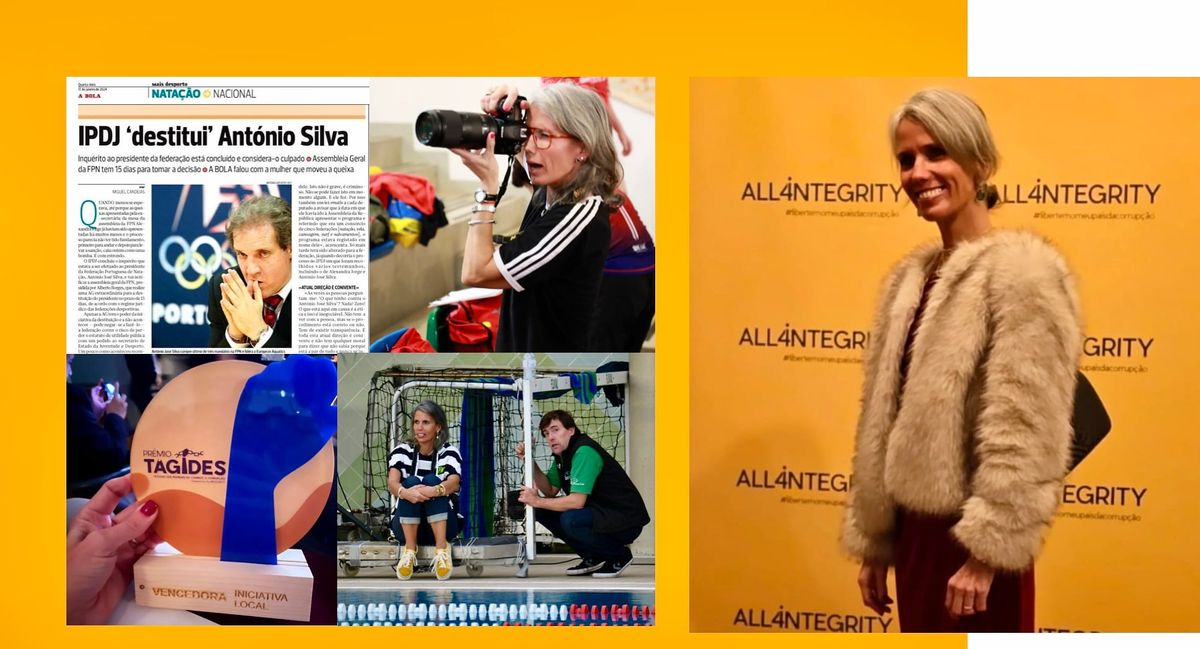
None of which prevented European Aquatics officials from voting for Silva to remain as president of the continental regular, nor World Aquatics delegates from backing his nomination to become the second vice-president of the global regulator.
That instruction by the Portuguese Institute for Sport and Youth (IPDJ) instructing the FPN to dismiss Silva from the presidency of the federation under threat of defunding the organisation and removing its right to select national teams was set aside by international sports authorities that formed their first integrity units in the past few years. The global Aquatics Integrity Unit received the same information as that submitted to Portuguese authorities but, as far as State of Swimming understands, the file has been on ice since without any explanation given for the lack of action.
All of which has left Silva free to remain in the class of 'executive volunteers' in international sport who get to decide whether to meet sanctioned individuals or not.
He has made his choice clear. And so has the EU. On 3 November 2026, after a controversial Court of Arbitration for Sport (CAS) ruling ordered the provisional return of Russian national teams to international ice hockey, the European Commission stepped into the arena. Which is when spokesperson Eva Hrncirova said that normalising Russian participation while the war continues “is not something we want to support”, and that “sport should not serve as a tool of propaganda” and the EU Commission noted that autonomy must over override its instruction, that “... both federations and member states must act in accordance with the European Union’s sanctions and restrictive measures”.
Who Was In The Room In Kazan
António Silva did not simply attend a 'sports meeting' in Kazan last month. He walked into an active, sanctioned node of the Russian state’s political apparatus. His hosts were not independent sports administrators. They are tied directly to the machinery of a wartime state.
This is who he sat down with to share a laugh and ‘constructive dialogue’, as European Aquatics’ own published photograph confirms. All of it took place ‘while maintaining the highest standards of integrity’:
- Mikhail Degtyarev (Russian Minister of Sport & ROC President): A former LDPR State Duma deputy who completed training at the Military Academy of the General Staff. He is under EU sanctions, which are part of a catalogue of international sanctions imposed since 2014, as described on Wikipedia, which does not include his latest EU sanction imposed on July 23, 2026 (Financial sanction reference:
2026/1845). The sanctions include those in the EU's 21st package, which references his roles as Russia's Sports Minister and head of the Russian Olympic Committee, for supporting the war in Ukraine, penalties including frozen assets and a travel ban to Europe. Degtyarev has also been charged in absentia by the Security Service of Ukraine (SBU) with allegedly financing illegal armed formations in the Donbas: the details of those allegations can be read here:
 Межа
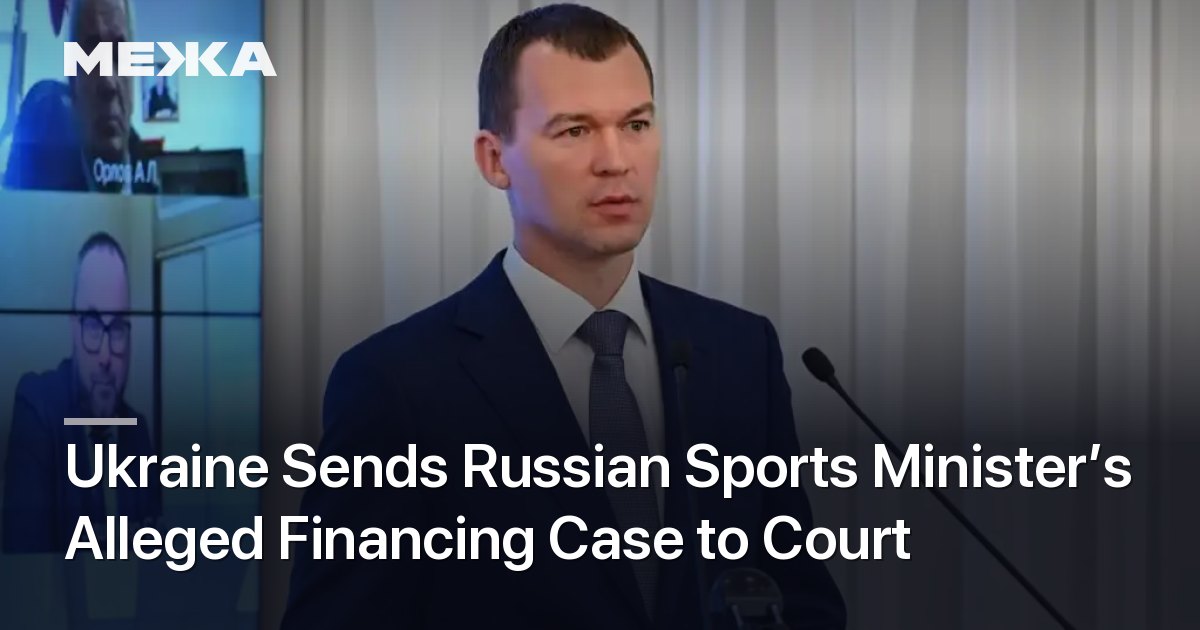
He has also been accused of regularly using occupied territories for high-profile propaganda events.
- Dmitry Mazepin (President of the Russian swimming federation): The billionaire founder of fertiliser giant Uralchem. The EU Council lists him personally as a significant source of revenue for the Kremlin’s war economy. On the day of the invasion, he was among the business leaders summoned to the Kremlin to sit with Vladimir Putin and plan for economic resilience. Dmitry Mazepin was originally designated on March 9, 2022, under Council Decision 2022/397 CFSP due to his involvement in revenue-generating sectors supporting the Russian economy. When he appealed his designation, the EU General Court explicitly confirmed the asset freeze and dismissed his appeal.
- Rustam Minnikhanov (Head of the Republic of Tatarstan): The Council of the European Union added Rustam Minnikhanov to its sanctions list on September 28, 2026.
• Reason: The EU penalized him for facilitating the unlawful deportation, forcible transfer, and placement of Ukrainian children into camps located within Tatarstan (such as the "Miras" camp in the Zelenodolsky district).
• Measures: The sanctions include an asset freeze, a prohibition against EU citizens and companies making funds or economic resources available to him, and a travel ban preventing entry into or transit through EU territories. - Vladimir Leonov (Tatarstan Minister of Sport): The architect of Kazan’s transformation into Putin’s premier “sports diplomacy” hub.
You can read European Aquatics’ statement on the meeting here, with an image of António Silva sharing a laugh with Dmitry Mazepin last month:
 Juliana LEN
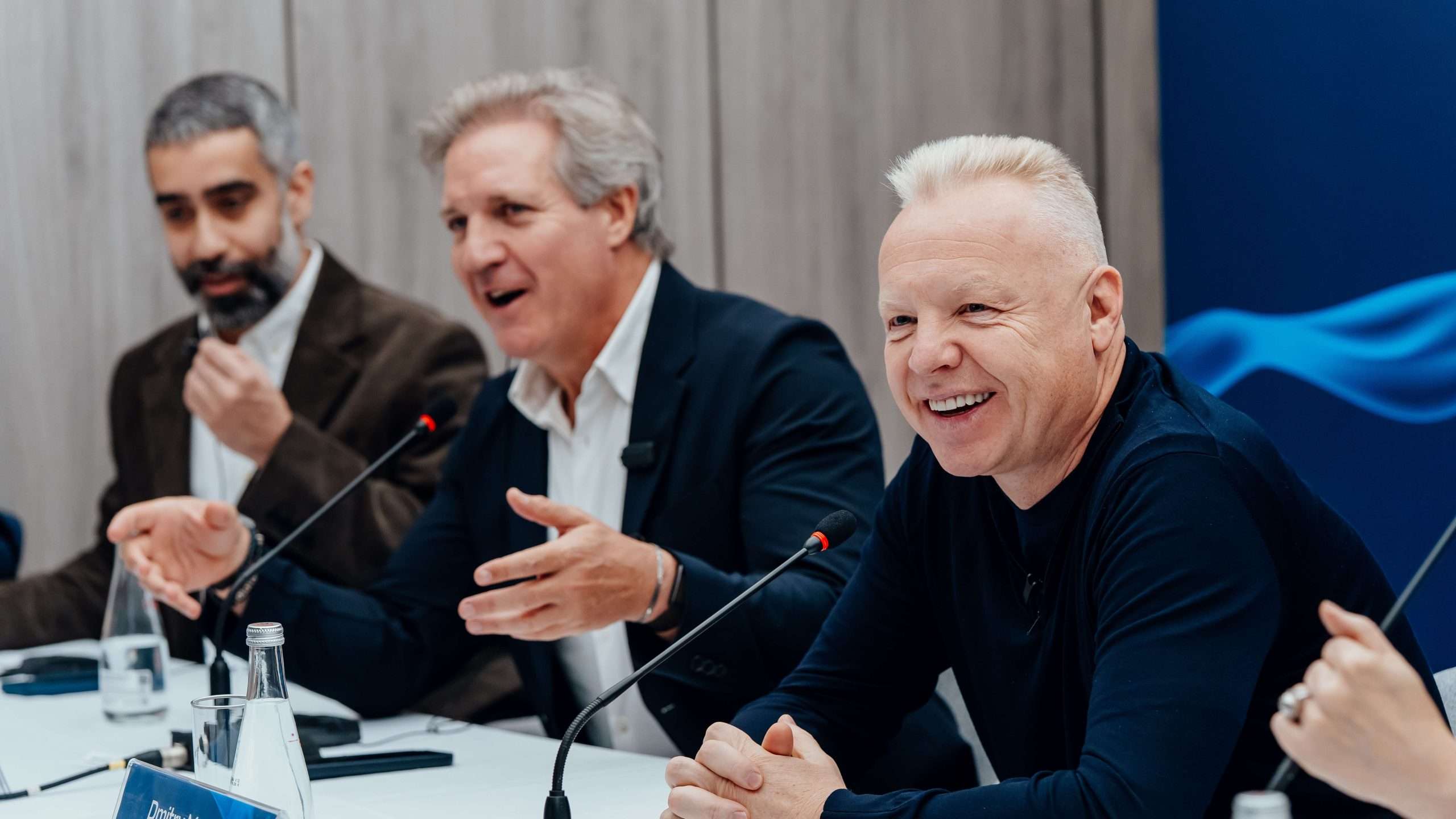
That statement raises the possibility of Kazan hosting the European Aquatics Championships in 2030. A plan to host them in 2028 has been postponed. Russia is keen to plug itself back into Olympic sport as a nation, replacing the ‘neutral athlete’ arrangements that had allowed Ukrainian and Russian athletes to compete without the trappings of a Putin-led pariah state waging war on a sovereign European neighbour.
In the rest of this feature:
- The Depth Of Dark Waters Swim Bosses Are Wading Into
- ‘Disgraceful’: The Reaction, And The Empty Lanes
- The Poison Paradox In The Pool
- Backdrop: Plunging Into Sanctions Hot Water
- What Brussels can and cannot do
- 3 November: The EU draws the line
- The Autonomy Double Standard
- Questions About The Meaning Of Reform
- The Chemistry Of The Money Round The Talks Table


