
Great Britain's 4x200 Olympic & World Champion Men Fend Off Yet Another Onslaught
There's no 'I' in 'team'. And the one thing we said before walking out is 'just do your part and try and get the best outcome possible'. - James Guy after being singled out for his 1:44.07 leg for Great Britain

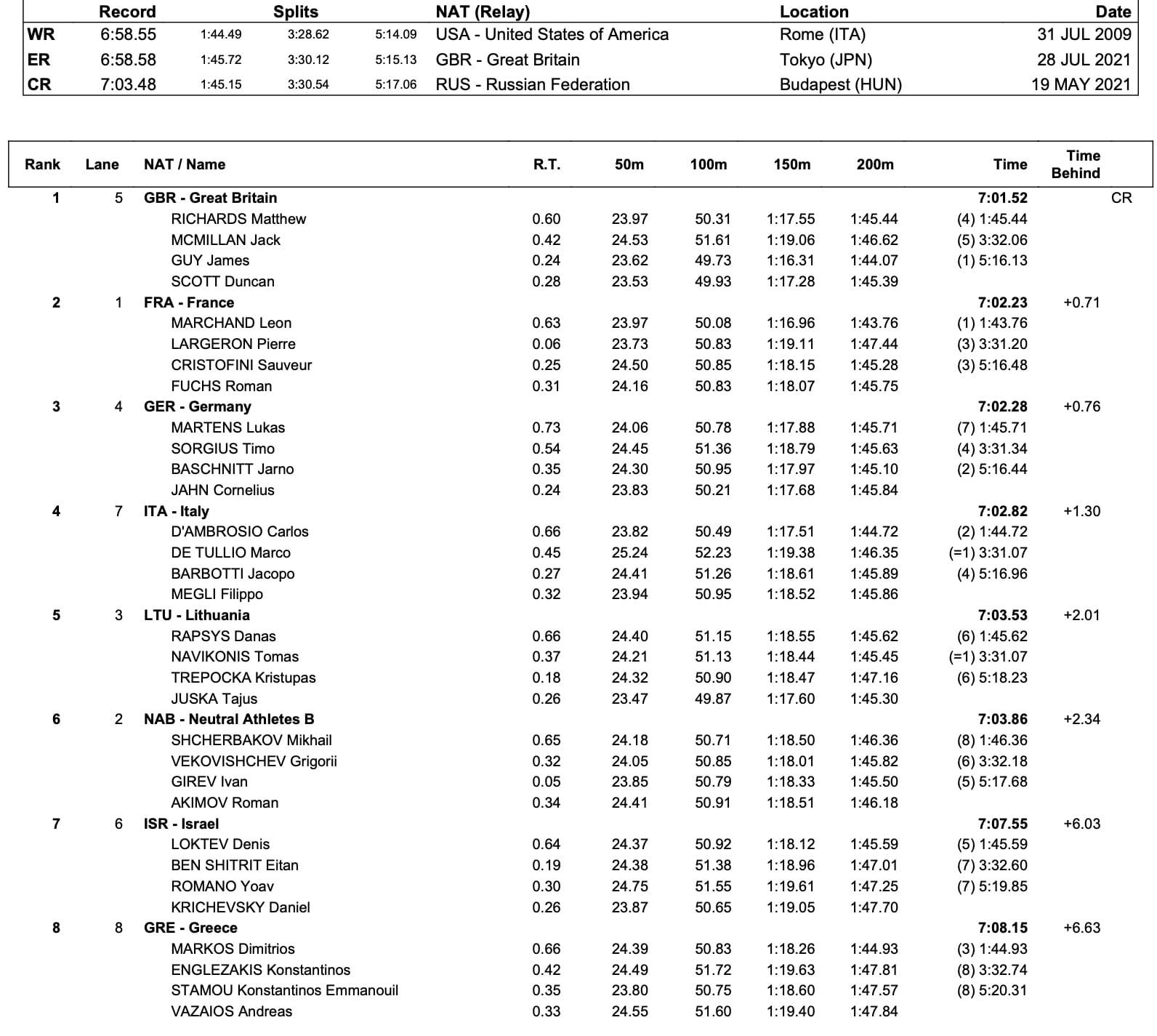
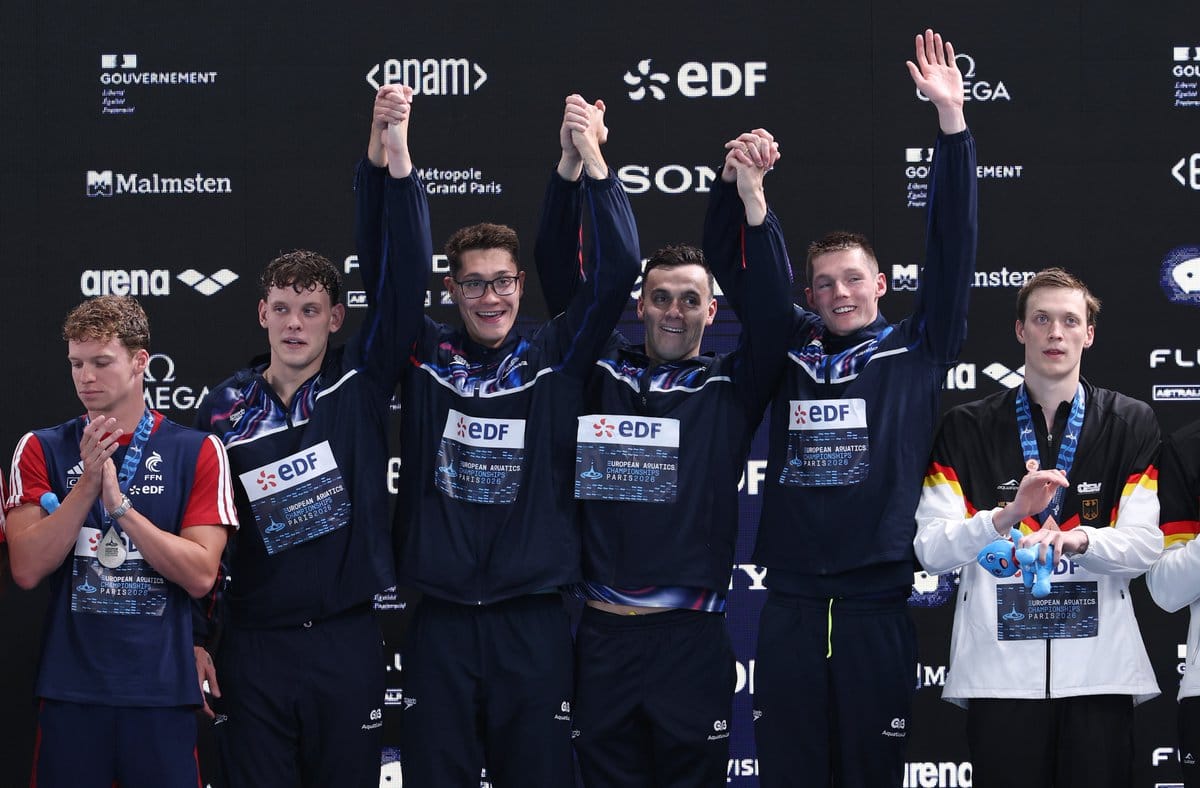
Great Britain. Again. The time was a championship record of 7:01.52. France, Germany and Italy threw everything they had at it but ultimately, Matt Richards, Jack McMillan, 30-year-old trailblazer James Guy, and Duncan Scott parked their ambitions in the bay marked 'minor spoils'.
The British quartet had just witnessed gold for their nation in the women's final, too:
 Craig Lord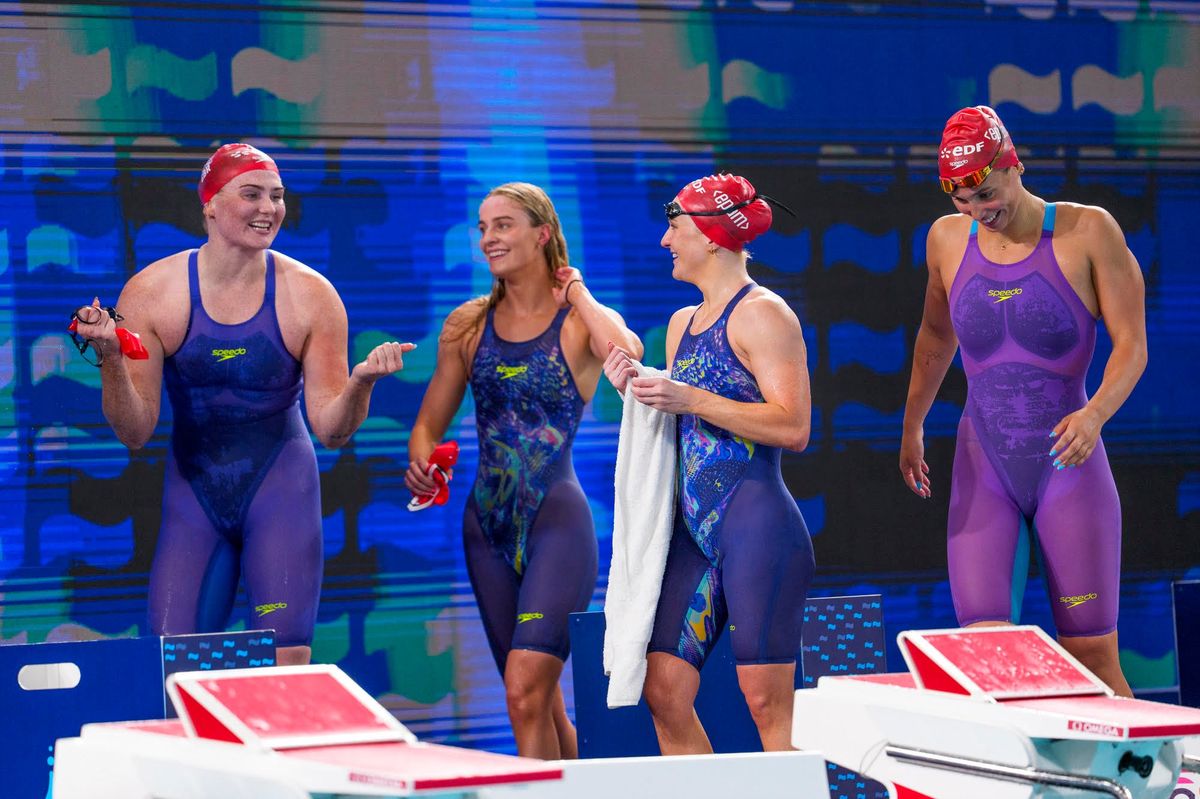
In other action:
 Craig Lord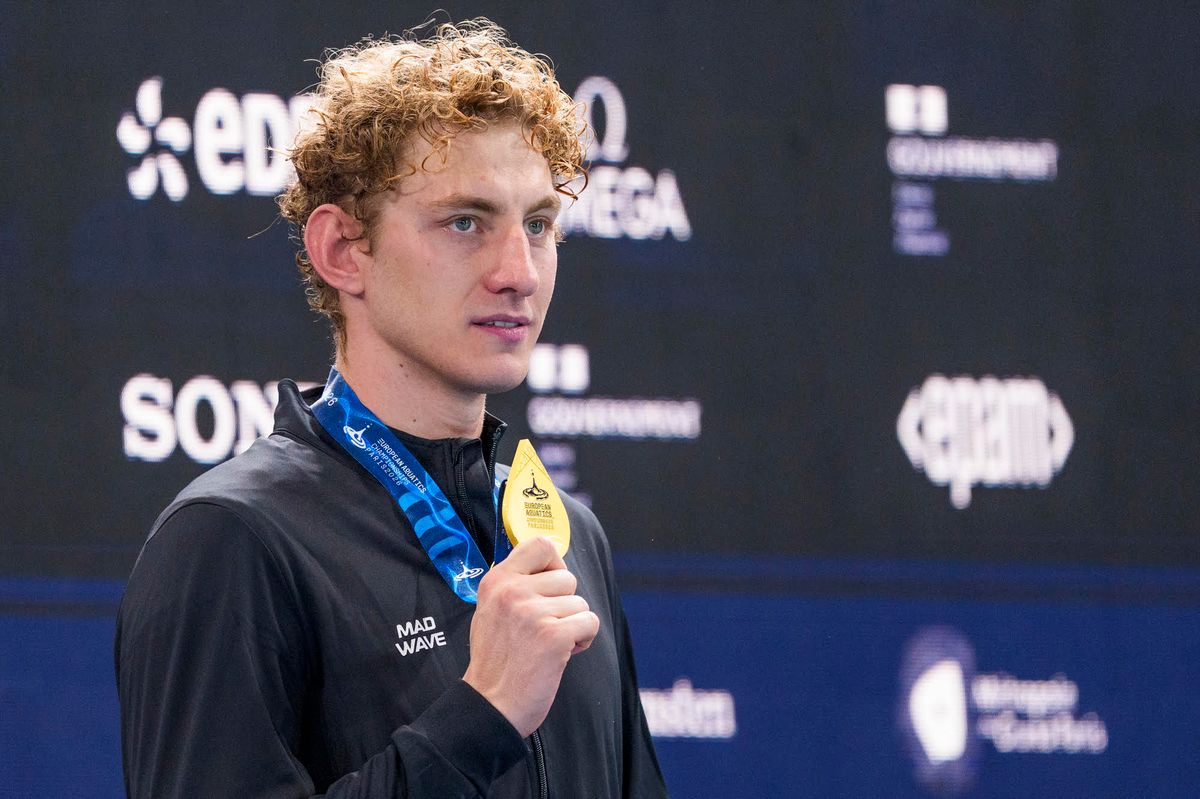
 Craig Lord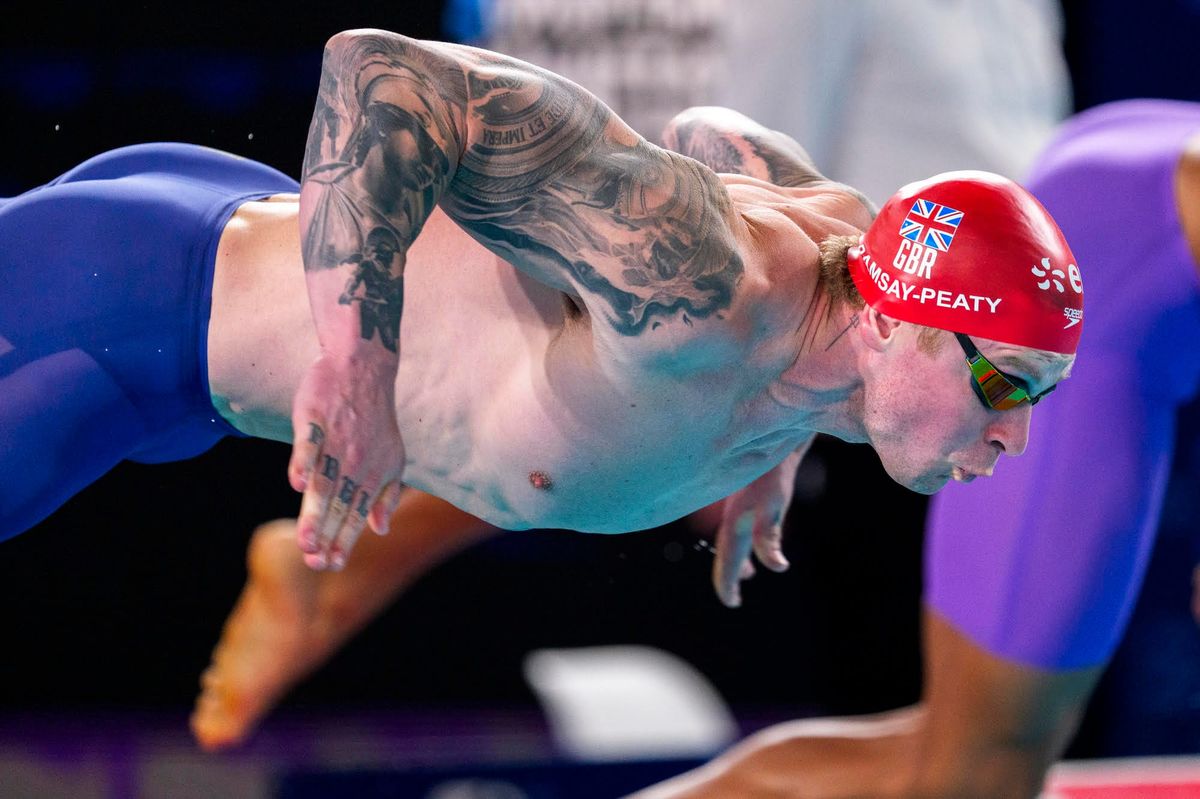
The men's 4x200 splits without the names grant us a glimpse of the flow and ebb and flow of fortunes:
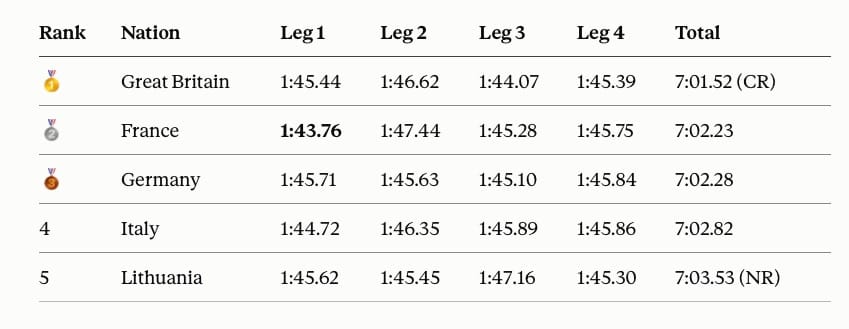
Much will doubtless be made of Léon Marchand's sub-1:44. Great swim - but ultimately to no golden avail this day, though the silver lining for France by 0.05sec ahead of Germany was solace enough for a home crowd valiantly urging its boys on with hearty energy that generously fed many more racers than the French.
Marchand got within the same 1:43 zone as Yannick Agnel's French record from 2012 - long the world textile best - but at opposite ends, the standard safe at 1:43.14.
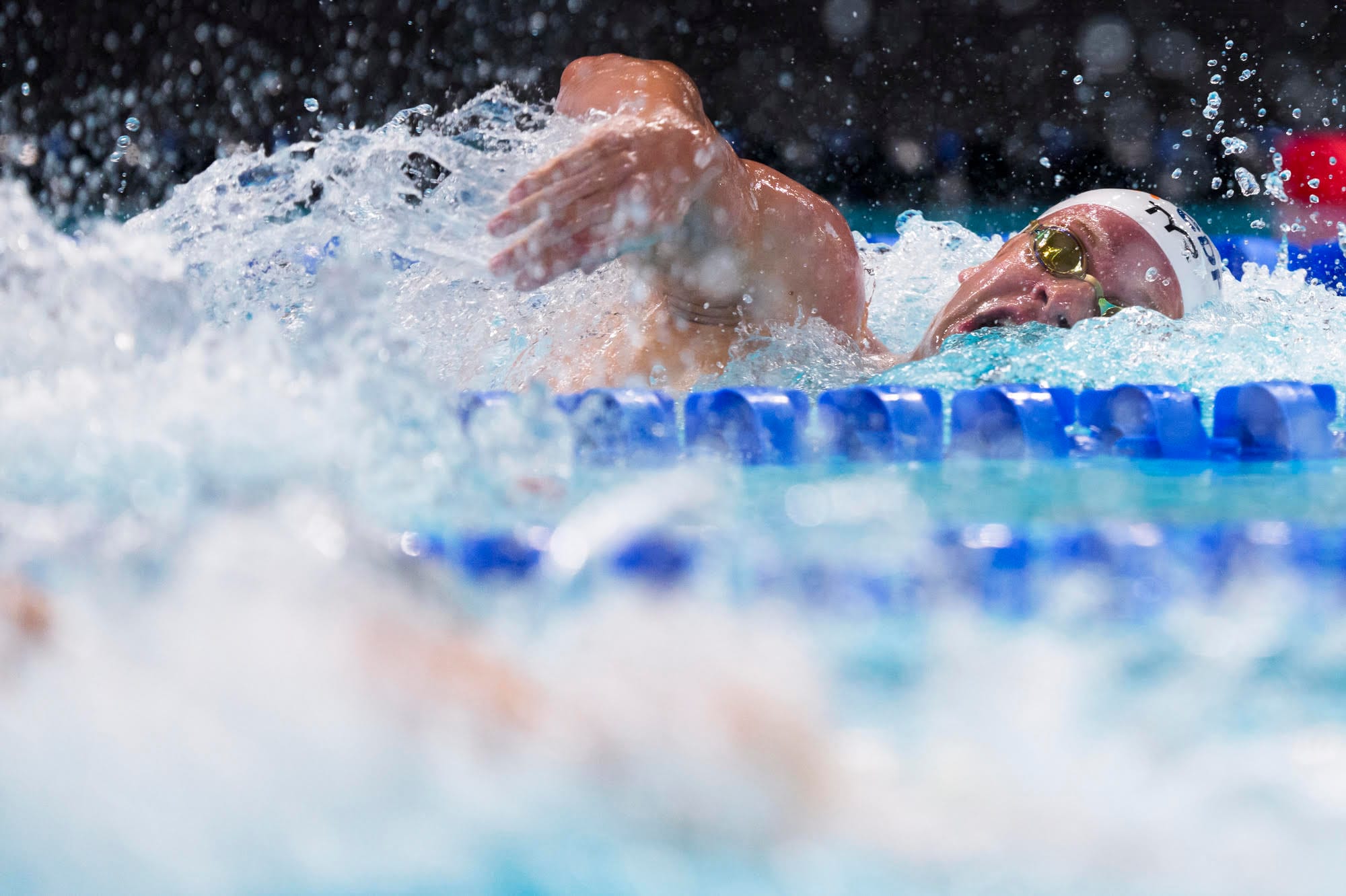
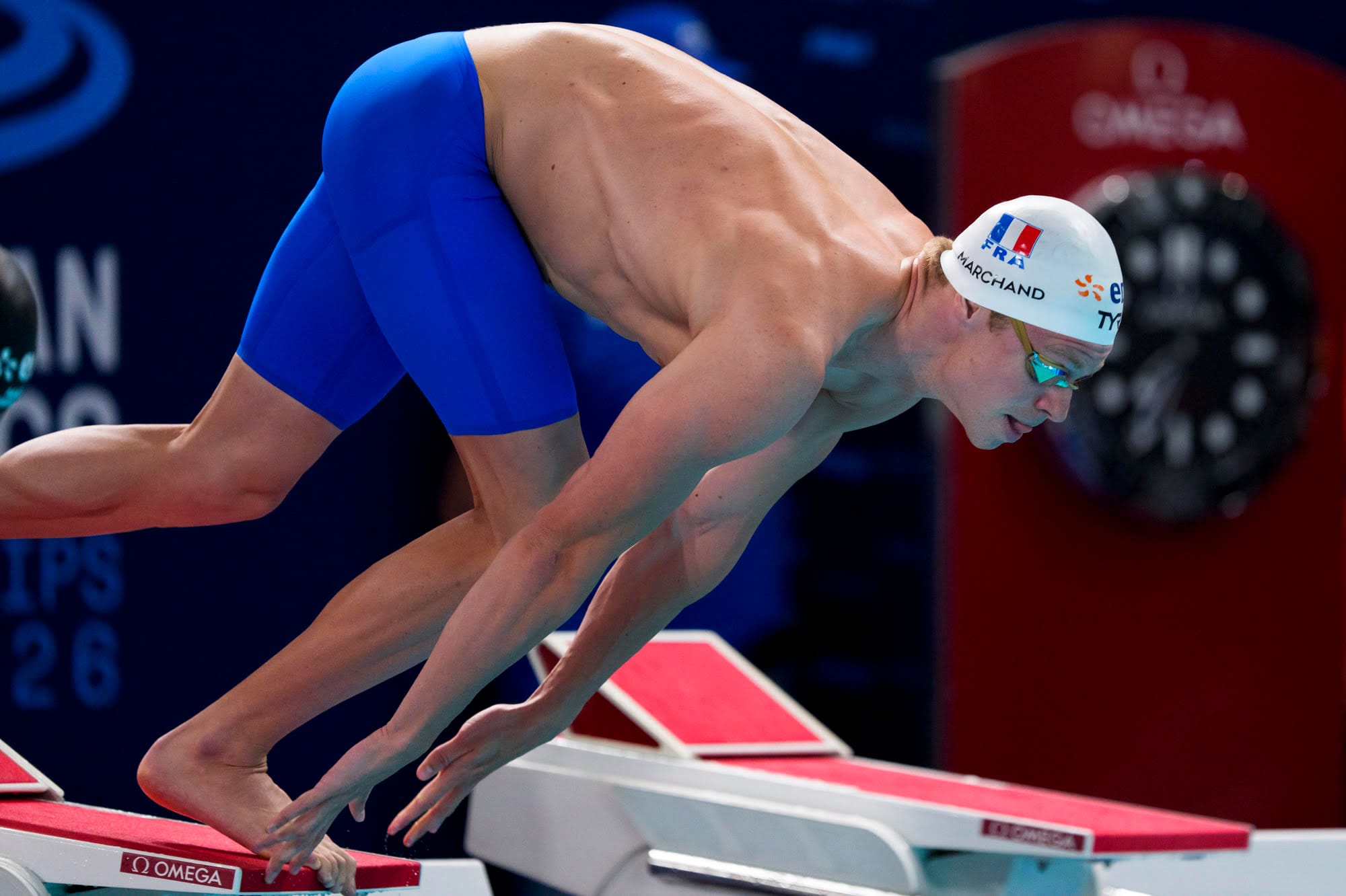
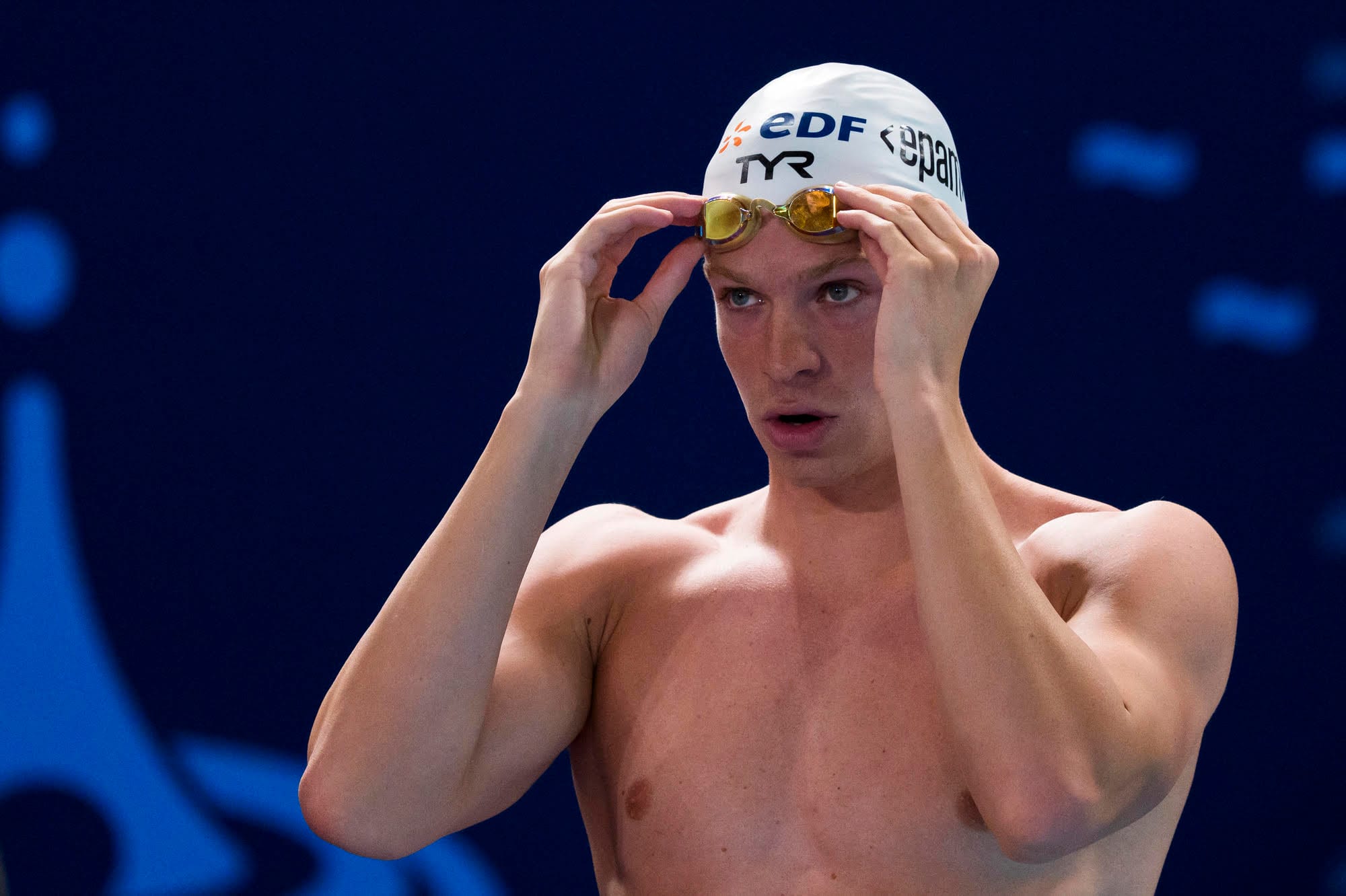
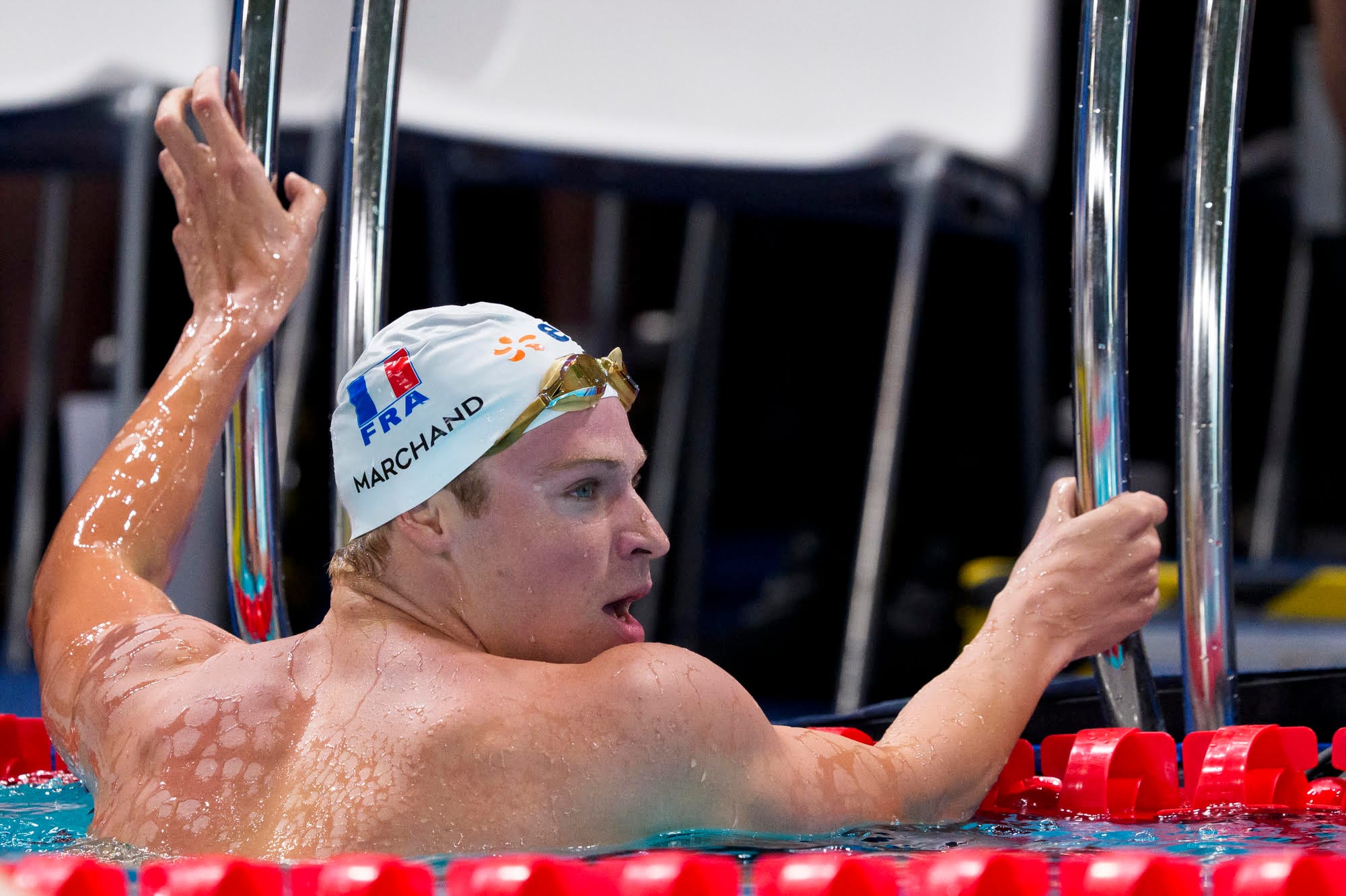
Marchand ticks another Phelpsian box, adding the 200 free to his armoury of winning four lap speed on any stroke he chooses, injury of no injury ... Photos by Patrick B. Kraemer
Some other quick takes beyond the final result:
Kings of Splits
- Leg 1: Marchand (France) — 1:43.76, faster lead by a clog, fastest split overall
- Leg 2: Rapšys (Lithuania) — 1:45.45
- Leg 3: Guy (Great Britain) — 1:44.07, the standout split of the race, for its impact on victory
- Leg 4: Juška (Lithuania) — 1:45.30, very tight with Scott (GB) 1:45.39, the fastest of the top four teams gunning for gold.
Great Britain's win was built on that huge Guy anchor-adjacent split, while Marchand gave France the start they needed before pace attrition set in, and Germany emerges from the race as a growing force with the most consistent team — all four splits within 0.7s of each other — which accounts for the podium place ion the absence of a single standout leg like those in the Britain.and France quartets.
What was coursing through his sines as he turned fifth to 'right there with 'em' after just one length of his leg? He was having no special status stuff. Says James:
"Yeah, I feel it for everyone, that everyone would be part of this team, it's about just doing your job to the best of your ability. There's no 'I' in 'team'. And the one thing we said before walking out is 'just do your part and try and get the best outcome possible'. And I knew my race plan going into it. I knew that it could be quite tight after the second leg, so just my race plan, sticking to it. The overall time is pretty good."
Not nearly good enough, thinks Scott ... and we'll get to that later...
Matt, solid opener, with Léon shaking his mane in lane 1. Richards says:
"Yeah, I mean, it was perfectly solid, a little bit quicker than I swam at Commonwealths, which is a good result. But you know, most importantly, it's another championship gold for the team. Great to be a part of that with the four boys tonight. Hats off, and thanks to the guys this morning as well, for letting us rest up." [Tom Dean, Tyler Melbourne-Smith, Gabriel Shepherd]."
Had Jack felt he'd been pincered by the forces either side of him? There's no dividing these men. Their answers bleed with the brotherhood and bond that explains their success - and longevity.
In 2018, the team included Scott in heats, Guy and Dean in the final. The legacy runs deep, and we at SOS have charted it several times in several ways... here's one of them, from Paris 2024:
 Craig Lord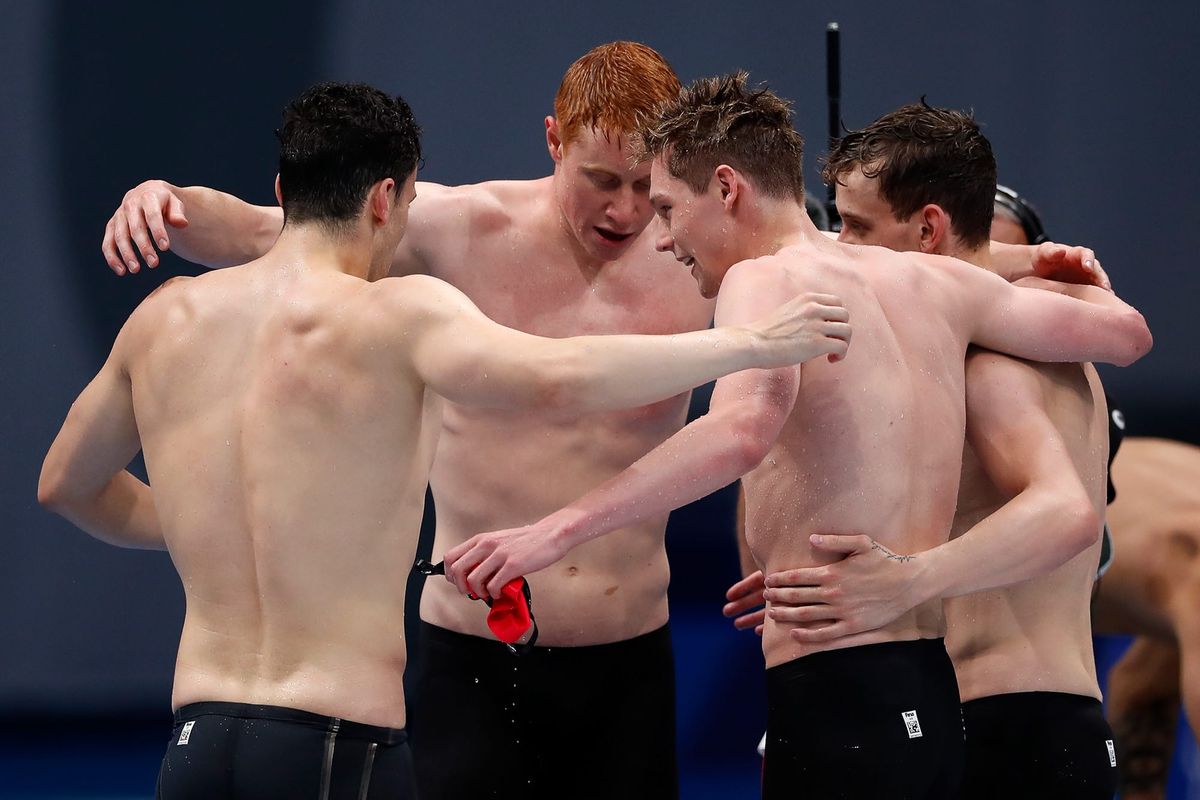
So, the keep is defended in water, in words, in every approach to them and a spectacular, and in some regards, unique and pioneering legacy. Jack's a relative newcomer, but steeped in the give-no-quarter culture. Felt pincered?
"No, it's just about keeping to your process and just doing what each of us have set out to do: coming together as a team and putting our best performance in. And, you know, to, to get obviously the boys, um, from the heat into the final then, and then doubling up is, is something that I'm still trying to, trying to keep doing and keep pushing myself on. And, you know, again, it's a championship gold medal, and this will be my first time part of, you know, the European Championship team. So yeah, it's great.
And to be a part of that legacy?
"It's awesome. It's what we train for, it's what we want to do. And I guess the outcome's always, you know, there, but it's more of the process and the journey getting there. So, you know, proud of the boys tonight, and we put our best performance on."
So, Duncan Scott. All armies out to get you... and you hung on! He smiles and says:
"I think hung on's probably the correct term, yeah. I think I probably want that swim back again. I paced it how you'd probably tell anyone not to pace a swim in freestyle when they're rolling. You know, once again it was pretty close with teams surrounding us. And it was similar last year, at Worlds. I kind of wanted to be on the front foot and be quite aggressive on that front 75. Probably got a little bit ahead of myself and got a bit excited with that, and it probably bit me a little bit on the back 75. ... ":
Sure, but you kind of have no choice, right? Because you don't know what they're going to do, or whether they're capable of hanging on, or not...
"You can play around with it a little bit... Anchoring is... there's probably different skill assets that come with it: one of them is looking at it like, you know, 'I really take this out to 1-2 full on... it forces them to come with me or just surrender. And that's kind of the way that I did it last year at Worlds and then really pushed on in that third 50. A couple of weeks ago at Commies (when he missed the 200m free solo final), probably dented my confidence in the 2-3, but it's not an event I've probably swum as much this year. Which probably is reflective on that split as well, but I thought I put together a good race and as the boys said, it's just championship finals are championship finals. You have to get into the habit of doing it, and reading the race when you're in it..."
"It's something that we want to try and build with that 4x100, about getting in the habit of being on a podium and fighting for place and being comfortable in that race. So I thought it was a good job again."
He then had more to say on why the time on the clock was not good enough... and that, we'll post on a separate file...
The event, meanwhile, was on the program from the birth of European l/c Championships in 1926. As such, it has a vast history, as our history file below shows.
Germany and Italy top the medals table among nations that still exist.


