Tatjana Smith Sends Red Warning To Feds In Switch To Orange Of The Netherlands
South African double Olympic champion and four-times medal winner has switched sporting nationality after dispute with national federation that ends with these words: "I also believe our athletes deserve a system that gives them the opportunity to thrive, not just survive.”


South Africa’s most decorated Olympian, Tatjana Smith, has switched sporting nationality and will seek Olympic selection for The Netherlands at the 2028 Games in Los Angeles.
Smith, coached by Rocco Meiring, won gold in the 200m breaststroke and silver in the 100m under her maiden name, Schoenmaker, at Tokyo2020ne, and then gold in the 100m, silver in the 200m, three years later at Paris 2024. She recently made a comeback from retirement, a moment that highlighted a long-0standing dispute with the Swimming South Africa (SSA) federation:
 Craig Lord
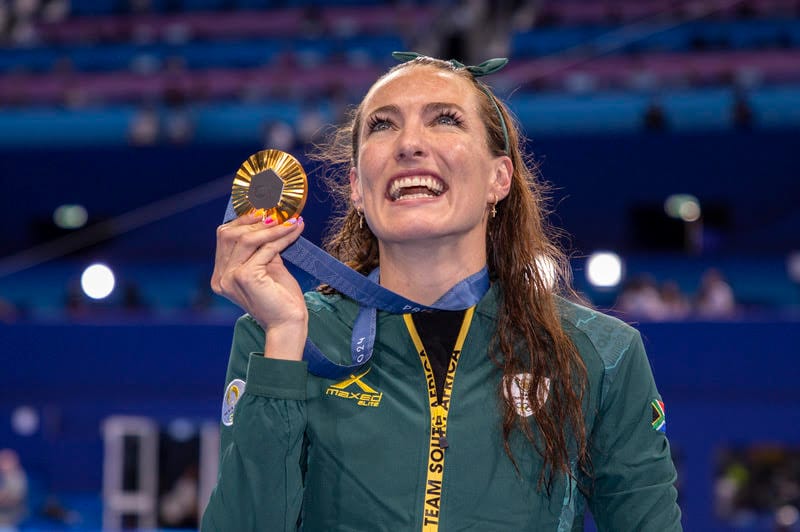
Today, Smith, of dual South-African and Dutch nationality, announced:
“For the next chapter my dream looks different. I have always been both Dutch and South African – both countries are a part of who I am – but sport requires you to choose one to represent.
“At the beginning of my career I chose South Africa, a decision I will always treasure. Now, I’ve made the decision to represent the Netherlands in the next chapter of my swimming career.
“This gives me the opportunity to explore another part of my identity and the heritage that I’ve never experienced through sport.
“Choosing this path doesn’t take away from the first. It doesn’t diminish the medals I’ve won, the pride I’ve felt singing the South African national anthem or everything I’ve achieved together. That will always be part of my story.”
The Troubles With SA Swimming
On her comeback, Smith hit the headlines with that legal challenge to SSA for unpaid interest on prize money the federation had withheld for a year after the 2023 World Championships. The matter was settled but the underlying and long-standing concerns about how the sport is governed - and in whose interests - are far from being resolved, in South Africa, and far beyond.
Smith's decision and chance to switch sporting nationality in time for LA2028 was made easier by a World Aquatics move that in itself raised some serious questions about decision-making processes in swimming:
 Craig Lord
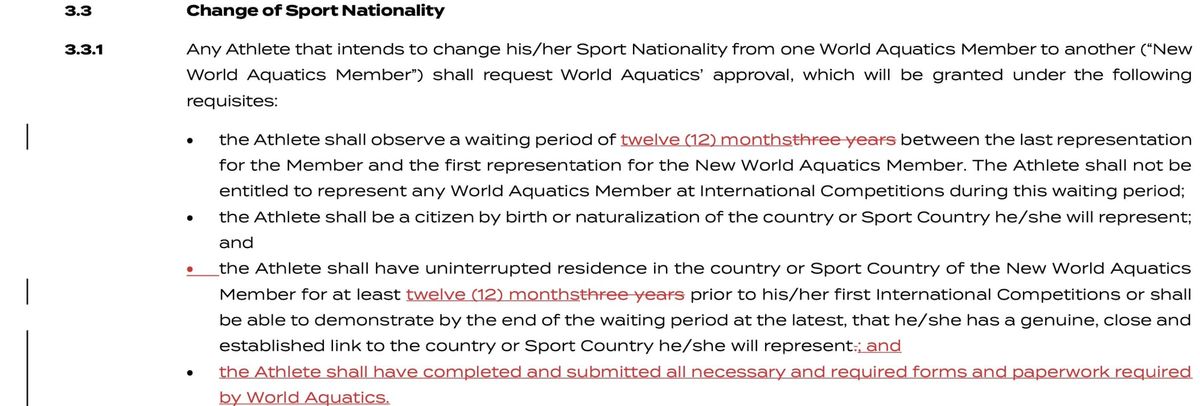
That switch makes it much easier for a disgruntled athlete to leave a federation they do not believe to be serving their best interests. At the same time, it allows switches of convenience and those made largely on financial grounds in an era in which it is now easier for a wealthy nation that has not invested in elite performance sport to simply buy world-class performance into their programs.
Smith, of course, does not fit into that latter category. She said she felt she could learn from the Dutch system in an attempt to bring some of those expertise back to her home country.
She also confirmed she would continue to live and train in South Africa.
“I believe there is so much we can learn from other sporting systems, and sometimes making a difference means stepping outside the system to understand how we can make it better, from a different position."
“I chose South Africa at the beginning of my career because I wanted to prove what was possible, even when the system didn’t make it easy, and I did. But I also believe our athletes deserve a system that gives them the opportunity to thrive, not just survive.”


