In 2026: Will Olympic Rules Reflect Coventry's Stance That "We Are Protecting The Female Category"?
On the cusp of the SOS Awards for 2025, we take a moment to look ahead to what is set to be one of the most significant developments in Olympic sport next year


"We are going to try our best to ensure that when we are talking about the female category, we are protecting the female category and we are doing that in the most fair way," - Kirsty Coventry
In 2026, possibly as early as February on the eve of the Winter Olympics, we could see the International Olympic Committee change course on male access to female sport with new rules that would finally preserve the women's category on the basis of sex not gender identity.
The Olympic Charter states: "The practice of sport is a human right ... without discrimination of any kind in respect of internationally recognized human rights."
This month, Coventry stated:
"That stance is never going to change. Sport is, at grassroot levels and in any form of recreation, for everybody and you should have access for everybody to partake. But we are going to try our best to ensure that when we are talking about the female category, we are protecting the female category and we are doing that in the most fair way."
Any move to preserve the women's category for female athletes only would follow a decade of bitter and preventable debate that stretched to death threats made against female athletes who expressed their view that allowing males into women's competition represented unfair play and unsafe play.
Debate was inflamed by a lack of acknowledgement from Games bosses that fair, and sometimes safe, play have been undermined by two key sets of IOC guidelines that have discriminated against female athletes ever since the Olympic Committee voted in late 2015 to remove the only remaining barrier to males being granted a ticket to female space.
Up until that vote, all males who wanted to compete in the women's category on the basis of gender identity had to proof that they had undergone sex-change surgery, including the removal of male organs. While there were arguments against sport being in the business of deciding categories on the basis of life-changing surgery, taking down that barrier to biological males without having a worthy replacement policy at the ready proved to be pure folly.
In terms of women’s sport, the IOC had one job: to ensure that female and sex-based equality rights were preserved in whatever new inclusion rules they came up with. They refused to heed the facts, science and warnings of experts in biology, physiology, performance sport, law and ethics, resulting in not one but two versions of a failed policy. In doing so, the IOC heeded and bought into the false notion that hormone reduction therapy would be enough to ensure fair play.
They were wrong.
Read the Chronology and History of the IOC & Sex Vs Gender
... and its impact across multiple sports over the past decade, in
Unfair Play by Sharron Davies with Craig Lord:
 Author profile page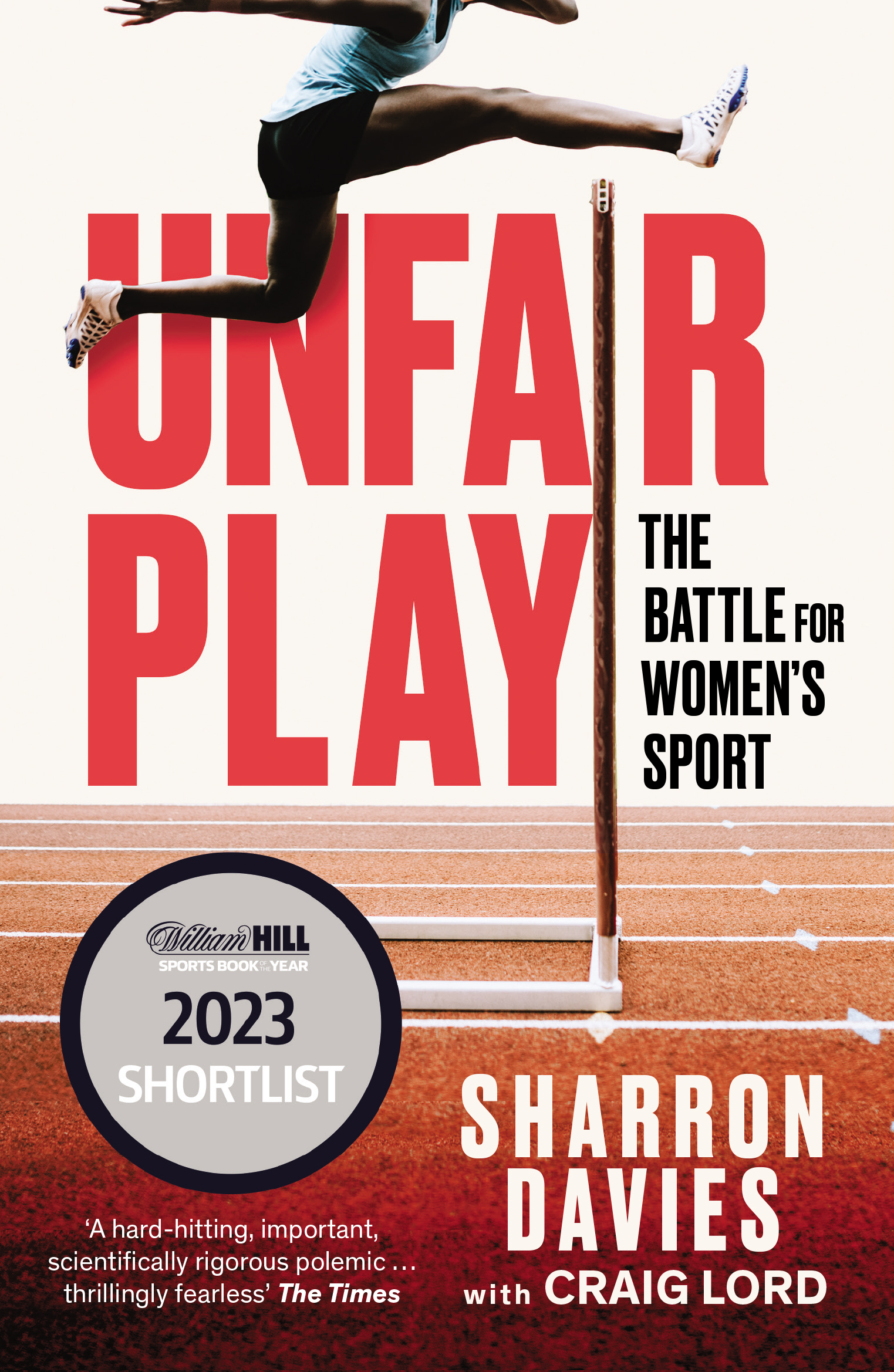
Ultimately, the IOC guidelines were not followed by global regulators for Aquatics, Athletics, Rugby and more recently a few others among world governing bodies left to decide on their own rules. Most placed - and continue to place - their loyalty to the IOC over their obligations for fair play for female athletes.
Sharron Davies, the first swimmer home with a clean record in the 400IM at the 1980 Olympics, was named as one of three new Conservative peers in the UK's House of Lords. She was nominated by Conservative leader Kemi Badenoch.
Following her nomination, Davies said it would be "exciting to carry on fighting for women's rights and safeguarding as well as trying to get as many kids, in particular, doing sport as possible".

That news coincides this month with the IOC's change of direction. Almost 10 years to the day since that aforementioned 2015 vote, the IOC, under the new leadership of Coventry after the last term of Thomas Bach, has set a target of early 2026 to detail a new policy on eligibility in female sports.
It is likely to exclude transgender athletes from competing at the Olympic Games in the category opposite their biological sex. No athlete is barred from sport and many trans athletes already opt to compete in the category of their birth sex.
The vast majority of those opting to do so are women identifying as male outside of sport and observing rules that do not allow athletes to take testosterone-boosting substances.
Males identifying as transwomen in sport are better known for insisting on access to the female category, to which they bring male advantage and significant physical and developmental differences with them, regardless of any hormone-reducing measures/processes. hat's because many of those insisting are 'punching beyond their weight' in whatever sport they do, and taking female prizes/places/spaces when they do. Fact.
Biological differences play out in time gaps of 11-12% between the best male and female swimmers in the world across the whole spectrum of events in the sport. Within that picture, we also see that the top-ranked junior boys/young men in the world aged 15-18 already race faster than all the World records held by the swiftest female swimmers in history.
Indeed, overlays of top 8 (the number of lanes in a big-championship final) junior boys in the U.S. alone (15-17) over the top 8 female seniors in the world in recent years demonstrate the impact of male development: across all Olympic events, just two of those extraordinary women swimmers would have made a final, but not the podium, across the entire spectrum of official race distances in the pool.
That's not because the junior boys are better athletes. It's because they're male.
Such facts and gaps in the reality of sex and sport underpin a June 2022 decision of World Aquatics to exclude any athlete from the women's category who developed through Tanner Stage 2 male puberty.
In comments looking ahead to the delivery of a new IOC policy in 2026, Coventry echoed the stance of Davies and many other women who have campaigned for fair and safe play for female athletes since the early years of that 2015 vote. That message is 'no males in female sports' but always underpinned by what Coventry emphasises as the IOC's 'statutory belief in access to sport being a human right for all people at grassroots and recreational level'.
The two-time Olympic 200m backstroke champion (2004-2008) created a working group to review "protecting the female category" after taking the IOC throne in June after a campaign in which most of the candidates, including World Athletics boss Sebastian Coe, two-times Olympic track (800/1500) champion and a TeamGB contemporary of Davies'.
Coventry has pledged a stronger policy on gender eligibility, saying last week: "I am really hopeful that in the next couple of months, and definitely within the first quarter of next year, that we will have a very clear decision and way forward."
Finding a consensus is "maybe not going to be the easiest thing to do", she suggested, while added the words we quoted above:
"But we are going to try our best to ensure that when we are talking about the female category, we are protecting the female category and we are doing that in the most fair way."
Timetable for Change Against A Contradictory Backdrop
It is likely that we will see at least a draft of a new policy on transgender athletes and athletes with differences on sexual development as soon as February 6, at the IOC meeting to be held on the eve of the opening of the Milan Cortina Winter Games.
A new policy would be in place two years before the Los Angeles 2028 Olympics, an event scheduled to take place against a contradictory backdrop in which politics and political interference is all but assured.
U.S. President Donald Trump's executive order in February "Keeping Men Out of Women's Sports", including a threat to stop funding for sports organisations that allow transwomen into female sport, is part of the winning side of his politics that some of his opponents remain blind to.
The U.S. Olympic and Paralympic Committee has effectively excluded transgender women from competitions since July, telling solo-sport national federations under its Games umbrella that they had an "obligation to comply" with the government order.
It's an easy sell. In Paris last year women's boxing found itself in the headlines the world over as Imane Khelif from Algeria and Lin Yu-ting of Taiwan jabbed their way to gold without having to prove that they were female despite doubts and accusations that either of them were female.
Since then, World Boxing, the new body overseeing Olympic tournaments, has introduced the SRY gene test, which identifies the Y chromosome found in males. World Athletic and the International Ski and Snowboard Federation also have introduced the tests:
 Craig Lord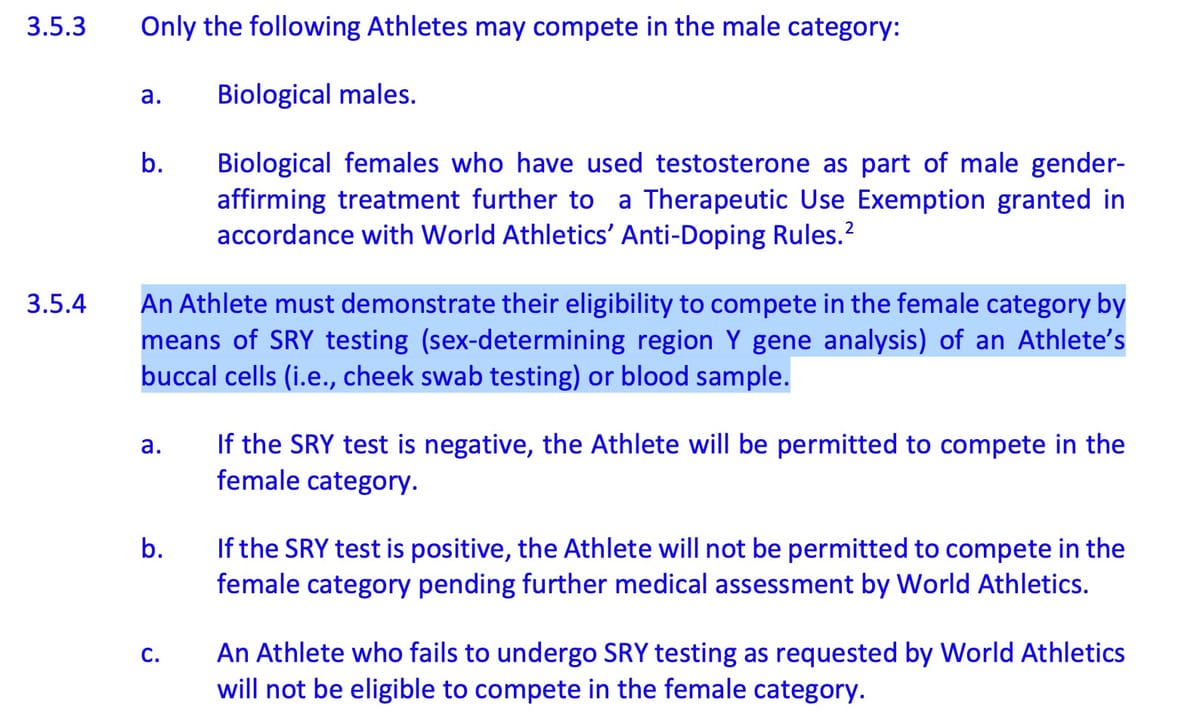
At the same time as opposing the obvious enhancement problem inherent in allowing males into female sport, the current White-House incumbent has also:
- endorsed the Olympic/anti-doping nemesis 'enhanced' project in which his son is an investor and in which a few former competitive swimmers who used to be affiliated in the jurisdiction of World Aquatics have signed up to a mission that allows and even encourages the use of what are banned substances in the Olympic realm. A couple of coaches have also signed ups to the enhanced project, the latest Cody Miller, whose misguided arguments were highlighted in this editorial of late:
 Craig Lord
- endorsed a project which is now suing World Aquatics and other clean-sport regulators in swimming for $800m because of a by-law that bars the return of any former affiliated member who opts into a project that is entirely incompatible with anti-doping sport, regardless of whether cheats will cheat, how many of them are caught and whether or not rules are being applied with the same robustness and evenness the world over.
- indicated that the social media posts of tourists, and possibly others, visiting LA for the Games will be checked for political content. That could see the exclusion of parents, coaches and even athletes, from the Games on political grounds. Bad enough. "Criminals" can already be excluded, no special process required, so quite what is intended remains a question and debating point.
Some things are clear, however: If any such process were to stretch to media and international/international affiliate and/or national sports organisations (and any outfits representing or working for them) sharing data of journalists, what is too often a fragile trust in the IOC, the Olympic Movement and clean sport would be dealt a serious blow.
One for Coventry and Co, as well as all other guardians of the WADA Code, to keep a keen eye on.


