
How World Aquatics Is At Risk Of Repeating Catastrophic Mistakes From Sports Politics History
Time for athletes and swimming federations around the world to tell international regulators happy to see sport played out in a political battlefield: "NO! NO WAY! NYET!" ... here's why...

It's hard for 'western' folk who grew up in places where the notion of state oppression was not something their lives were affected by, let alone an overriding, life-shaping reality, to fathom the risk World Aquatics is now taking with its policy to welcome back into the fold, Russia, flags, strip, old, state-controlled culture and the darkness it holds hands.
Here's how The Insider starts its investigation into what it describes as an "Olympic deception", its headline as follows:
Russia’s doping program is run by the same FSB team that poisoned Navalny
FSB colonel Dmitry Kovalev has traveled the world to support Team Russia, sitting with his colleagues in the stands at hockey matches in South Korea and appearing before Swiss courts to argue, in his professional capacity, against the decisions of international authorities to punish Russian athletes over their state's systematic doping programs. Most notably, however, Kovalev is not only a prominent player in Moscow's sports chemistry schemes, he and his colleagues also play a key role in the Kremlin's efforts to eliminate political opponents via the use of weapons grade poisons like Novichok, the nerve agent that was deployed against Alexei Navalny and Sergei Skripal, among multiple others. As The Insider has discovered, Russia's doping program and its political assassination program not only share personnel — they also share a physical address and the same director. This is not by coincidence. For Vladimir Putin's Kremlin, beating the "collective West" in the medals table and suppressing dissent at home are part of the same struggle for power.
NB: The Insider has received numerous international awards, including the "Innovation Award" from the Council of Europe (2018), The European Press Prize (2019), Free Media Award (2020), stories and films based on The Insider investigations have received Emmy (2021), Oscar (2023) and BAFTA (2023) awards. You can read more from and about the project on its website.
For those who need clarification: created in 1995, the Federal Security Service of the Russian Federation (FSB) is Russia's primary domestic security, counterintelligence, and border control agency, acting as the main successor to the Soviet-era KGB.
Here's The Insider investigation in full, which we'll come back to beyond a short reminder of why World Aquatics is about to make the same catastrophic mistake that the International Olympic Committee, FINA and its new-brand World Aquatics have made (and continue to make) ever since 1973:
 Michael Weiss and Roman Dobrokhotov and Christo Grozev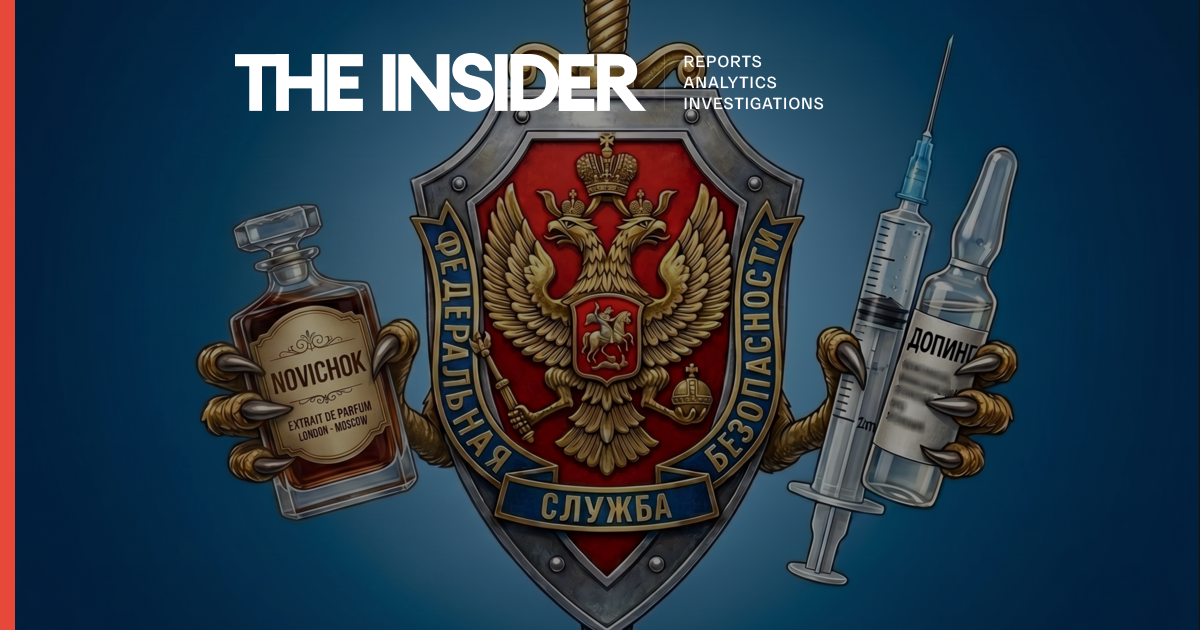
What's the FSB equivalence in terms of its controlling hand on the throat of sport in ways that make it abundantly clear that sport is politics in Russia, just as it was in the Soviet era and just as it has been under Putin's post-communist regime?
Try the below, from material taken from:
- The Bundesarchiv (Federal Archives) is Germany's central government institution responsible for permanently preserving, organizing, and making available essential historical documents, files, images, films, and maps from the German Reich (1867), German Democratic Republic (GDR/East Germany), and the Federal Republic of Germany. Established in 1952 in Koblenz, it safeguards federal records, including Stasi files, for public and scientific research.
The Stasi (short for Staatssicherheit, or State Security) was the official secret police, intelligence, and surveillance agency of the German Democratic Republic (GDR/East Germany) from 1950 to 1990.
Known as the "Shield and Sword of the Party" (referring to the ruling Socialist Unity Party, or SED), the Stasi functioned as a highly effective and repressive instrument to maintain the Communist regime's grip on power by monitoring, infiltrating, and controlling nearly all aspects of daily life.
Bundesarchiv + Key Aspects of the Stasi
- Mission: To identify and eliminate any "hostile-negative elements"—meaning any form of opposition, dissent, or non-conformity—to ensure the survival of the SED regime.
- Mass Surveillance: The Stasi created one of the most pervasive surveillance apparatuses in history. By 1989, it employed over 91,000 full-time staff and utilized roughly 173,000–200,000 unofficial collaborators (informants, known as Inoffizielle Mitarbeiter or IM).
- "Listen and Nab": Colloquially known as Horch und Greif (Listen and Nab) or "The Company" (Die Firma), the Stasi had a network so dense that at its peak, about one in every 63 people in the GDR collaborated with them.
- Methods: They used bugging, wiretapping, mail opening, illegal apartment entries, and psychological warfare.
"Zersetzung": In the 1970s and 80s, the Stasi shifted from overt physical violence to Zersetzung (decomposition or corrosion)—a subtle form of psychological destruction designed to ruin individuals' careers, reputations, and mental health without leaving physical traces.
Structure and Operations
- Headquarters: Based in East Berlin-Lichtenberg (Normannenstraße), with extensive district offices across the GDR.
- Foreign Intelligence: The Hauptverwaltung Aufklärung (HVA) was the foreign intelligence branch, famously effective at placing spies in West German government and business circles.
International Reach: The Stasi provided training and weapons to foreign intelligence services, including in South Yemen, Syria, and Ethiopia.
End of the Stasi
- Storming the HQ: Following the fall of the Berlin Wall, East German citizens, fearing the destruction of incriminating files, stormed the Stasi headquarters on January 15, 1990.
Files: Over 111 kilometers of files, 41 million index cards, and 1.7 million photos were preserved, and in 1992, these files were opened, allowing citizens to read their surveillance reports.
The Stasi's surveillance was often compared to the Gestapo of Nazi Germany, but with a much higher density of informants per capita.
What's That Got To Do With Sport?
Answer: everything
Readers of my work down the decades will need no lengthy reminders of what all of that meant in the sport of swimming, the contributions of subscribers who support our presence in this space able to read some of the fuller coverage in our GDR Doping section:
Craig Lord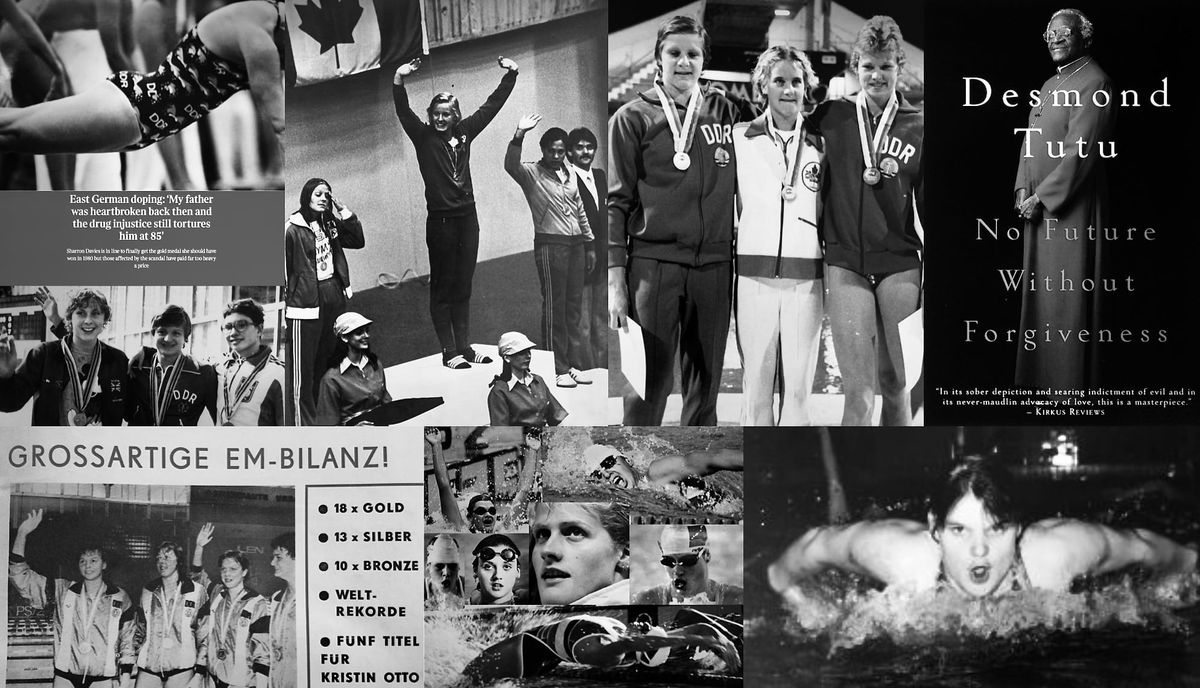
There are many examples to lean on when seeking ways to demonstrate how the lessons of the past appear not to have been learned (and, it is not hard to imagine, wilfully at that). I think this one, which some readers are familiar with, will suffice.
The Bundesachiv includes this horror, unearthed by Prof. Gary Bruce and shared with The Canadian Press in 2009, with absolutely no reaction from the IOC or FINA.
In researching the big lie of an East German official state secret - State Research Plan 14:25 (aka a fiercely-guarded systematic doping that roped many thousands of athletes from many sports into the sports fraud of the 20th century), a University of Waterloo history professor, Prof. Gary Bruce, discovered this in the German federal archive:
After injecting athletes with performance-boosting drugs at the Montreal Olympics, East German officials dumped the leftover serum and syringes in the St. Lawrence River, newly uncovered documents indicate.
A chance discovery in the Berlin archives of the notorious Stasi, the East German secret police, led ... Gary Bruce to a 95-page file on the spy service's operations at the Montreal Games.
A Stasi officer's final report on the Games contains a none-too-subtle reference to the drug program under the subheading, "Destruction of the Rest of the Special Medicine."
About 10 suitcases of medical packaging, needles, tubular instruments, etc. were sunk in the St. Lawrence River.
Bruce explained:
The documents make it clear that Stasi chief Erich Mielke saw the Games as a means to improve East Germany's standing in the world by ensuring all went well on the athletic field and that nothing went wrong away from it. He put the fabled Markus Wolf, head of the Stasi's foreign espionage wing, in charge of Operation Finale, a tightly controlled effort to monitor East German athletes in the years leading up to the '76 Olympics as well as during the 16-day sporting festival… Officers from the Stasi and other East Bloc security services met at KGB headquarters in Moscow before the Games to coordinate efforts.
All on IOC and FINA watch - and the home of the deceit an official IOC-accredited laboratory in Saxony within a short drive of the home of the Soviet KGB agents keeping an eye on East Germans in the 1970s and 1980s. One of them was a certain Vladimir Putin, and I make the point in this context:
The GDR's doping system was a highly organised and recorded experiment that left a clear record of cheating, of the death of the deceit, complete with the names of politicians, doctors, coaches and others who worked with the Stasi, some who supplied and administered doping to under-age (and other) athletes, some who travelled with teams to spy on their fellow citizens and reports back to HQ, some who were actual team members recruited to perform the same poisonous, pervasive, insidious, ubiquitous, intrusive, omnipresent act of betrayal. Those guilty of that, were, of course, subject to and victims of the same oppression and accompanying culture of fear.
The proof of the GDR fraud is massive and monstrous. Less so for the Soviet Union, though in Putin's time in Germany, the GDR was not the only one producing Oral Turinabol. There's a GDR museum not far from that IOC lab in Saxony - and in there you can find packets of Oral Turinabol - the little blue pills of steroids - in display cabinets. Some of them show quite clearly that they were produced for Russia/Russians, the packaging and boxes all in Cyrillic, not German. To think that a Russian spy network would not have known what was happening in East German sport is fanciful, as is the idea that it did nothing about it in response as it built its own sporting arm.
The 1970s and 1980s in swimming represent an era of politics over sport, politics as the controlling force enabled by the very guardians of sport, who were - and have often been so since - captured by the schmooze, grace-and-favour, going-along-to-get-along mindset and culture that marks a borderline between sports and politics supposed to be strong enough go protect athletes and the integrity and neutrality of sport. In reality, that border is a bazaar in which the athlete is a bargaining chip for the personal gain and right to remain on the gravy train of the modern equivalent of the lanistae*.
- * lanista - lanistae: they owned gladiator training schools, known as a ludus, where they bought, fed, housed, and trained combatants to rent them out for public games
There are many folk with good intentions working in many roles, including governance, in international sport. The presence of modern lanistae has just as real.
With that mind mind, let's get back to The Insider and why I recommend anyone reading this read that, in the context of this and the reasons why World Aquatics needs to think again - and fast - the wish to have Russian athlete compete as neutrals one thing, the policy of welcoming the sporting army of Putin - a man stripped of IOC & FINA top honours - back into the fold a ticking time-bomb for sport:
Craig Lord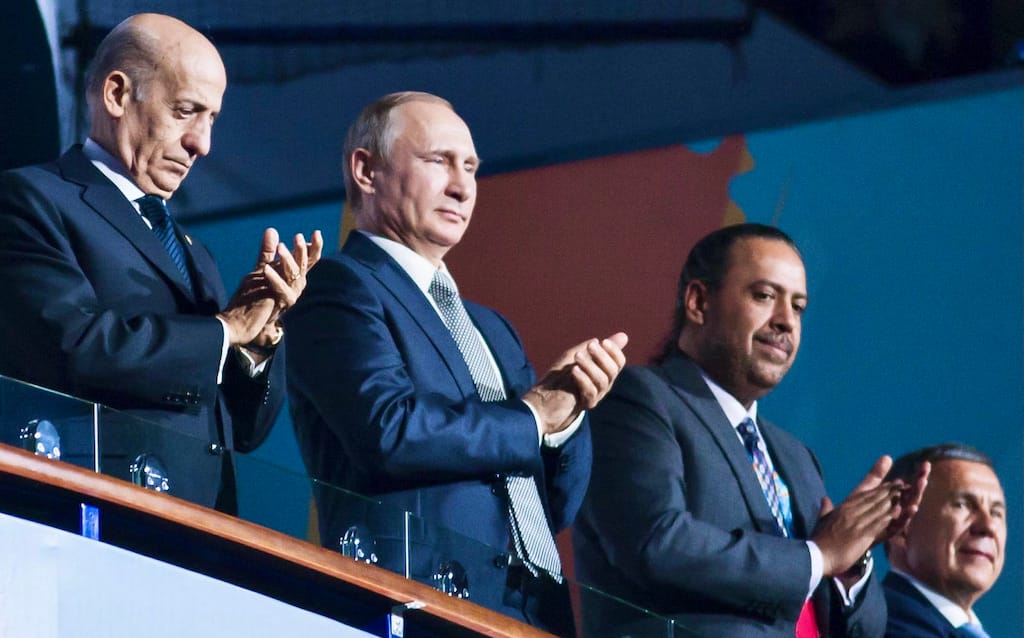
A further development on a line in that story immediately above, from Jens Weinreich at The Inquisitor:
The Court of Arbitration for Sport (CAS) has fully upheld the three-year suspension imposed on Sheikh Ahmad Al-Fahad Al-Ahmed Al-Sabah by the International Olympic Committee (IOC). The appeal lodged by the long-standing and now former Kuwaiti IOC member against the IOC Executive Board's decision of July 2023 has been dismissed. Three years ago, while still under suspension, Ahmad had influenced the presidential election of the Olympic Council of Asia (OCA) in favour of his brother Sheikh Talal Fahad Al-Hamad Al-Sabah.
The award makes public for the first time that, in parallel to the CAS proceedings, Ahmad had filed another civil action before a Swiss court. In Ahmad's decades-long, gigantic chronicle of misconduct, ethics entanglements and court rulings, this is yet another aperçu. The Cour d'appel civile du Tribunal cantonal vaudois confirmed the stay of these Lausanne parallel proceedings. The award CAS 2023/A/9931, which was not accompanied by any press release but recently surfaced in the incomplete list of decisions, is the only publicly accessible source for this matter.
Jens Weinreich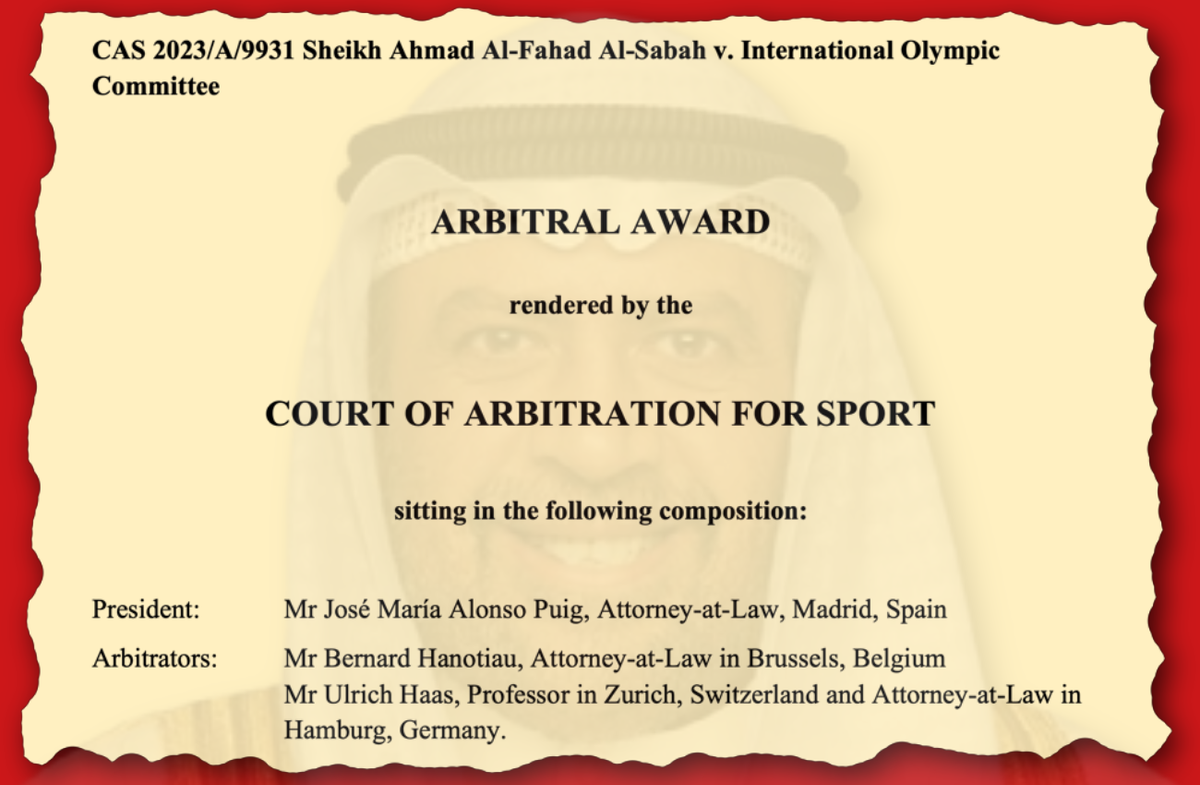
Read on by registering... our editorial continues with a few extracts from The Insider and what we can (and, for the sake of integrity in swimming, must) conclude from them...


